Lesson 1 of 12
Kanji Unit 1 — ten numbers you can already say
about 8 minutes
After this lesson you can
- Read the numbers one to ten written in kanji.
- Say what a radical is, and point to one inside a character.
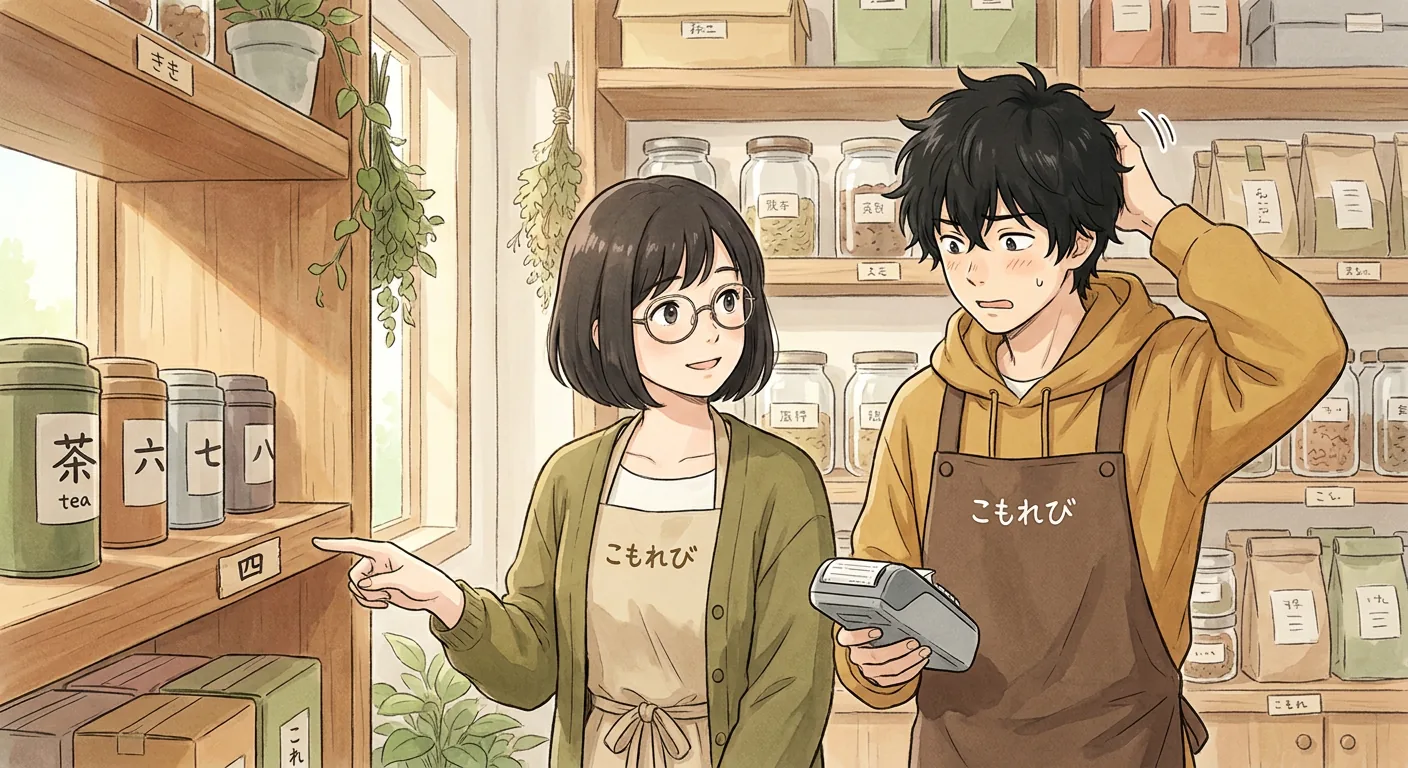
Ren has relabelled the shelf edges with numbers, in kanji, on the grounds that it looks more professional. Aki points out that he has put 四 where 六 goes, and that the tea has been in the wrong place for a week.
Aki
Ten characters is a small enough set that being wrong about one of them is entirely your own fault. That is the good news.
Words this lesson teaches
- 一
- one
- 二
- two
- 三
- three
- 四
- four
- 五
- five
- 六
- six
- 七
- seven
- 八
- eight
- 九
- nine
- 十
- ten
What it explains
A radical is a part with a job
Kanji are not drawn stroke by stroke from nothing. They are assembled from a few hundred parts, and about a dozen of those parts do most of the work at this level. A radical usually tells you roughly what a character is about — water, a person, a tree — and sometimes it only tells you where the character sits in a dictionary. Both are useful. Neither is a rule you have to apply; it is a handle to hold the character by.
One character, two readings, and why
一 is read いち when you count and ひと in ひとつ. Both are correct, and the reason is history: Japan already had a word for one when it borrowed the Chinese character, so the character carries the borrowed sound and the native word at once. You do not choose between them — the surrounding word chooses. Learn them as a pair from the start and this stops being strange.