Kanji Units are short, self-contained passes at the characters the N5 exam expects — numbers, prices, days of the week, time, people, places, verbs and the qualities in between. Each unit takes characters you already meet in speech, shows them on the signs and menus of Komorebi House, and points out the radicals that make the next character easier.
Who it's for
- —You can read kana but kanji still look like shapes rather than words
- —You want the N5 characters in the words you already say, not on flashcards alone
- —You are revising for an exam and want the radicals that hold the characters together
Free preview — lesson 1
Kanji Unit 1 — ten numbers you can already say

After this lesson you can
- Read the numbers one to ten written in kanji.
- Say what a radical is, and point to one inside a character.
Ren has relabelled the shelf edges with numbers, in kanji, on the grounds that it looks more professional. Aki points out that he has put 四 where 六 goes, and that the tea has been in the wrong place for a week.
Aki
Ten characters is a small enough set that being wrong about one of them is entirely your own fault. That is the good news.
Words this lesson teaches
- 一
- one
- 二
- two
- 三
- three
- 四
- four
- 五
- five
- 六
- six
- 七
- seven
- 八
- eight
- 九
- nine
- 十
- ten
What it explains
A radical is a part with a job
Kanji are not drawn stroke by stroke from nothing. They are assembled from a few hundred parts, and about a dozen of those parts do most of the work at this level. A radical usually tells you roughly what a character is about — water, a person, a tree — and sometimes it only tells you where the character sits in a dictionary. Both are useful. Neither is a rule you have to apply; it is a handle to hold the character by.
One character, two readings, and why
一 is read いち when you count and ひと in ひとつ. Both are correct, and the reason is history: Japan already had a word for one when it borrowed the Chinese character, so the character carries the borrowed sound and the native word at once. You do not choose between them — the surrounding word chooses. Learn them as a pair from the start and this stops being strange.
All 12 lessons
1. Kanji Unit 1 — ten numbers you can already say
8 minRead the numbers one to ten written in kanji.
2. Kanji Unit 2 — hundreds, thousands, and yen
7 minRead a price tag written in kanji.
3. Kanji Unit 3 — the seven days are seven radicals
9 minRead the seven days of the week on a sign or a schedule.
4. Kanji Unit 4 — clocks, weeks and the sun inside them
9 minRead a time and a date written in kanji.
5. Kanji Unit 5 — the cast, written down
9 minRead the words for people on a name card or a staff board.
6. Kanji Unit 6 — up, down, and which way to turn
8 minRead a direction sign in a station or a street.
7. Kanji Unit 7 — mountains, rivers and weather
7 minRead 天気 and the words for weather on a forecast.
8. Kanji Unit 8 — eye, ear, mouth, hand, foot
6 minRead the five body-part characters on their own.
9. Kanji Unit 9 — in, out, and the two that look alike
8 minRead the verbs of coming and going in kanji.
10. Kanji Unit 10 — eat, drink, read, say
9 minRead the everyday verbs written with a kanji stem.
11. Kanji Unit 11 — reading a street
9 minRead the shopfronts and station signs on an ordinary street.
12. Kanji Unit 12 — big, small, and a person under a tree
10 minRead the common adjectives written in kanji.
The recurring cast
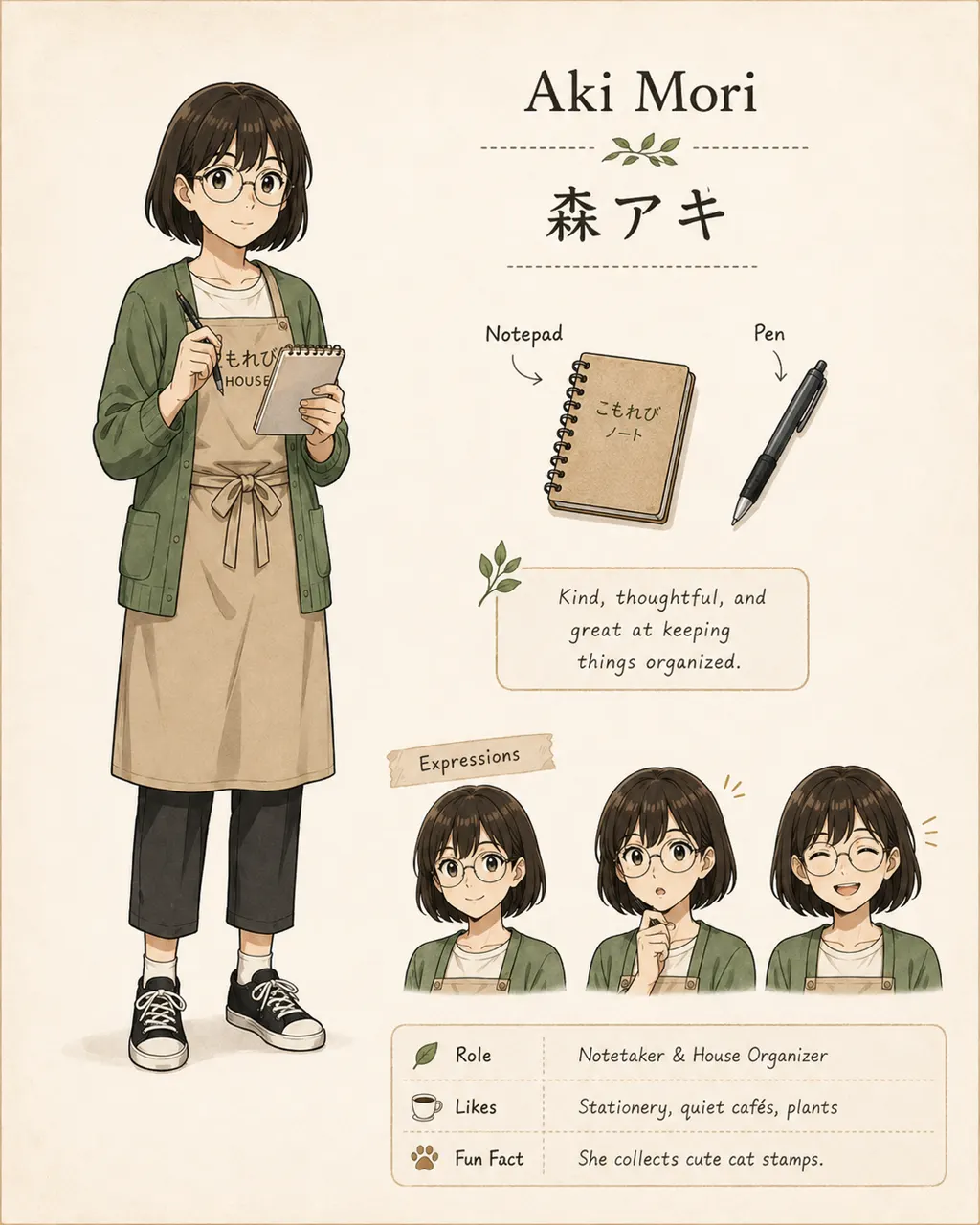
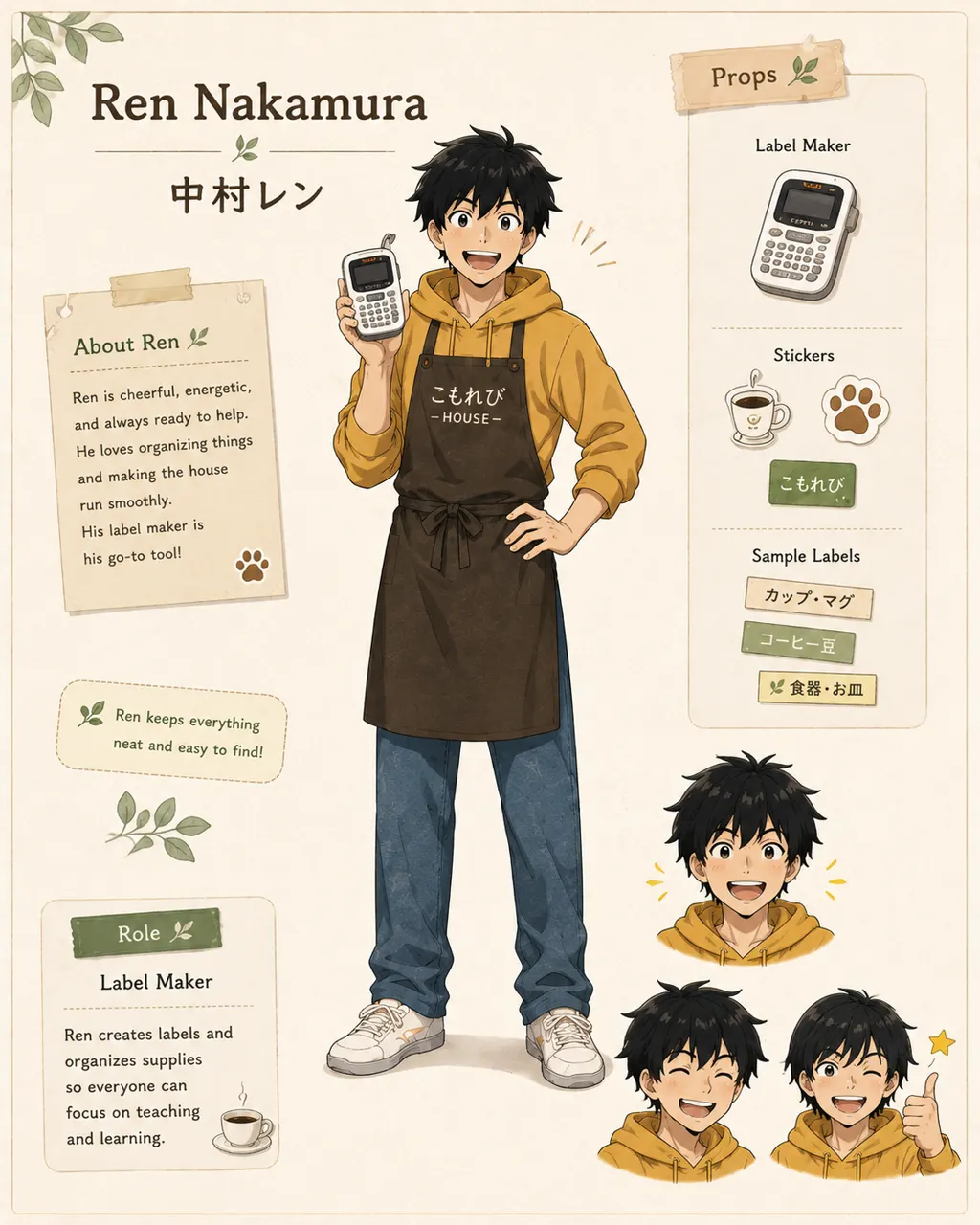
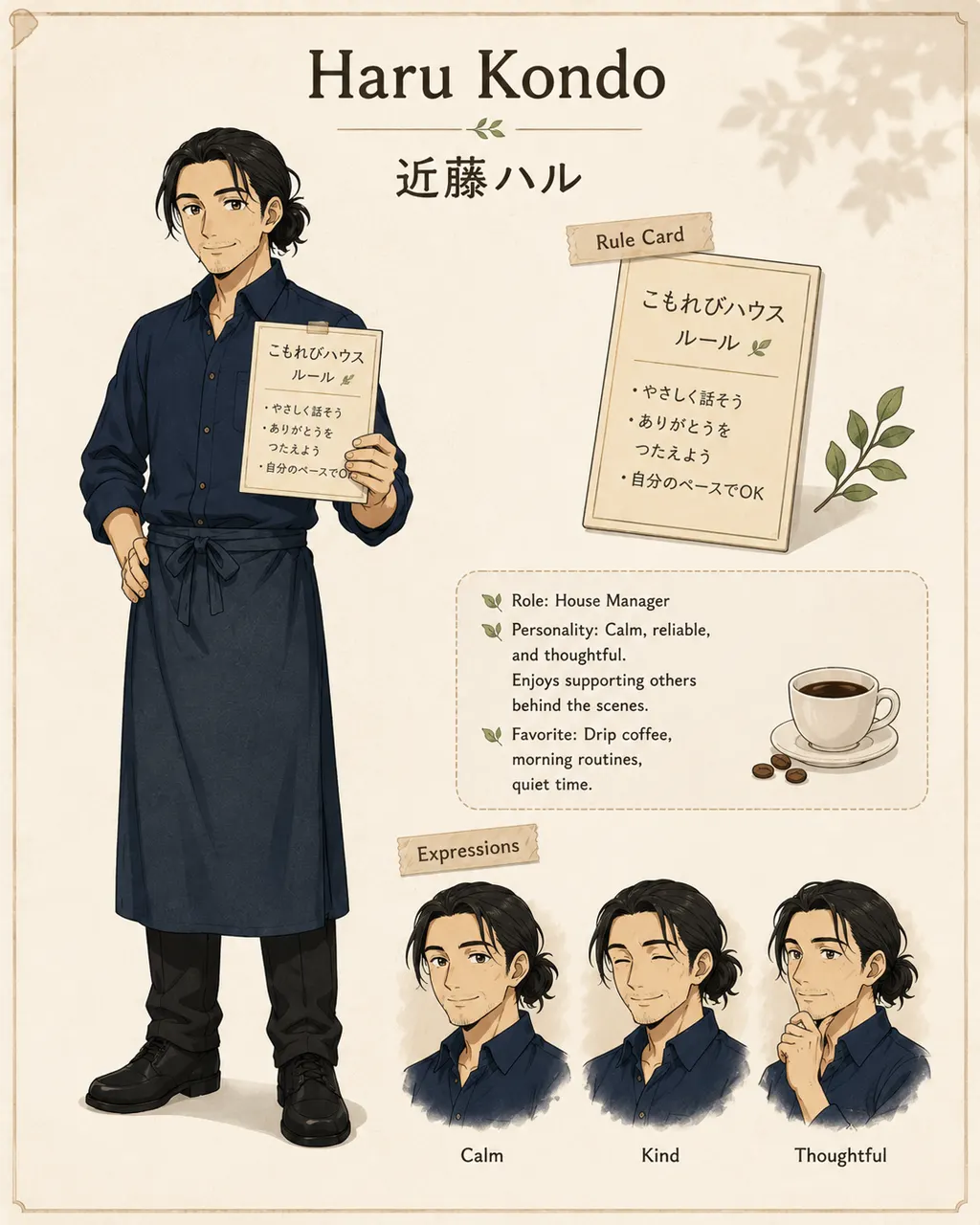
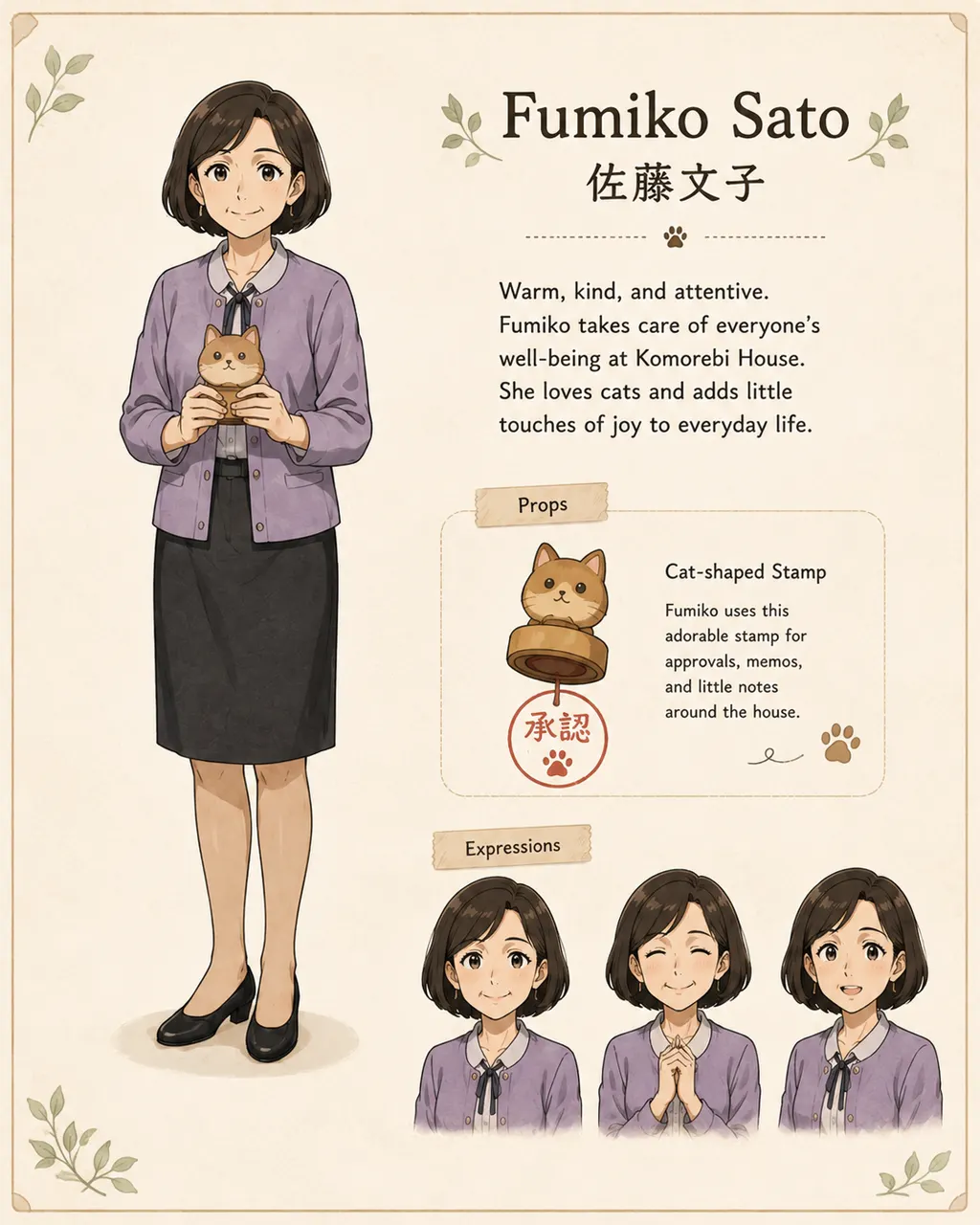
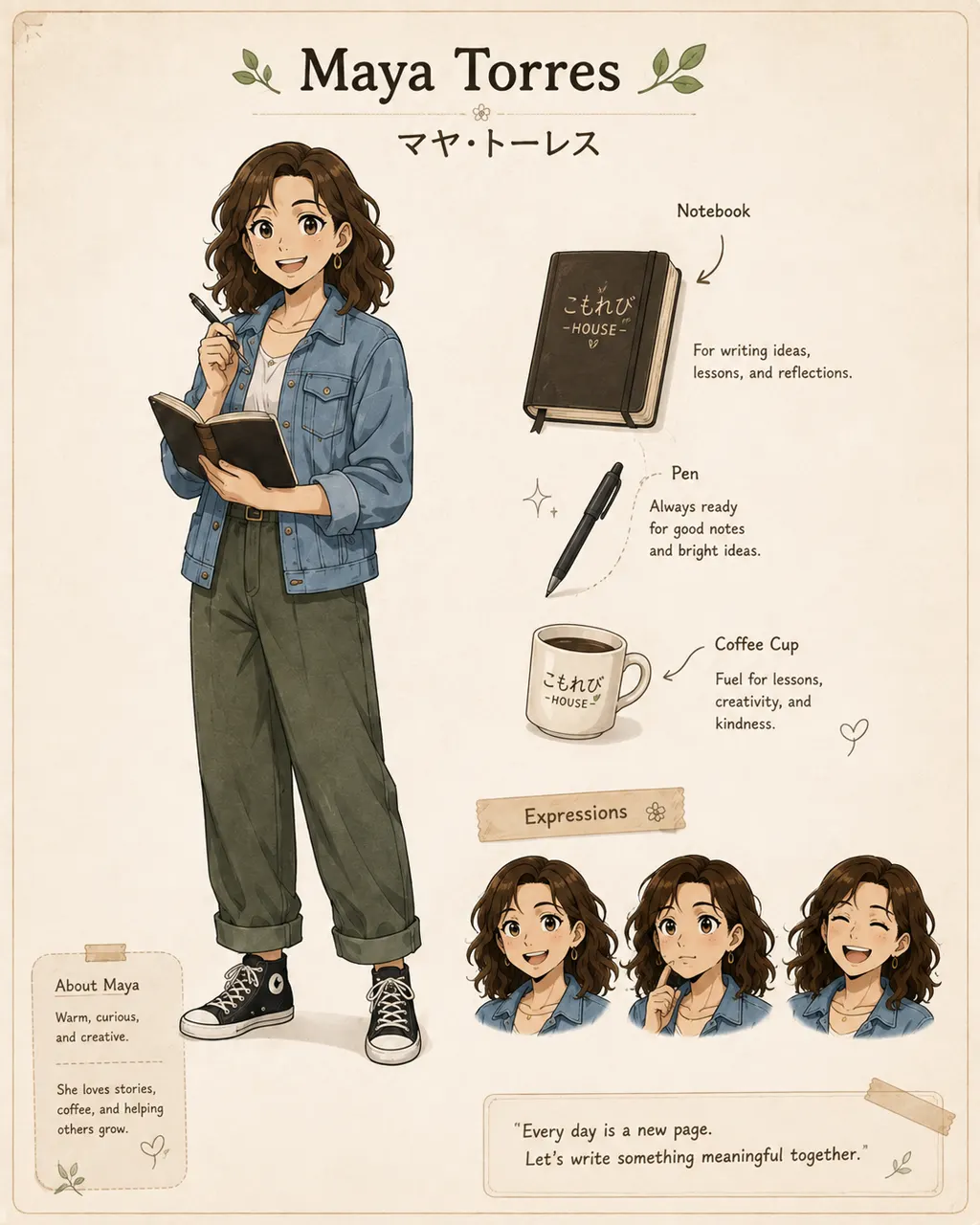
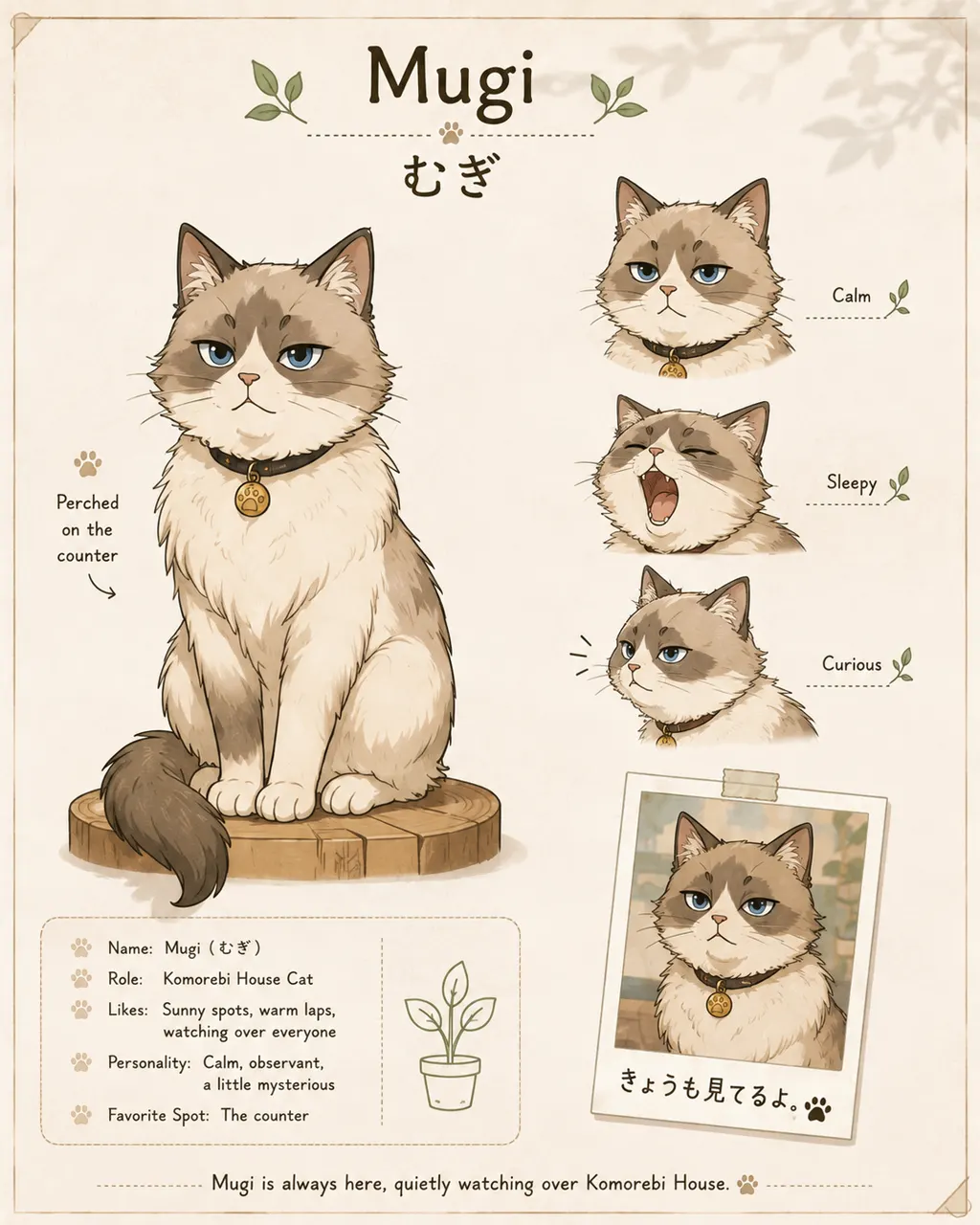
Questions
Do I need to know kana first?
Yes, and the Kana Sprints track gets you there in a few short sessions.
Can I take these alongside another track?
Yes. Units are a side path you dip into whenever the characters, rather than the grammar, are what slows you down.
Other tracks
Japanese Foundations
Your first Japanese, told as one story in a small café
Japanese N5
The whole JLPT N5 syllabus as an illustrated story arc
Japanese N4
The JLPT N4 arc: favours, conditions, plain form and polite distance
Kana Sprints
Short sprints that turn hiragana and katakana into reading
Grammar Labs
Second-pass labs for the patterns that need one
Also useful: JLPT N5 vocabulary and kanji, the hiragana chart and printable worksheets.