Illustrated Japanese
Japanese courses told as one drawn story
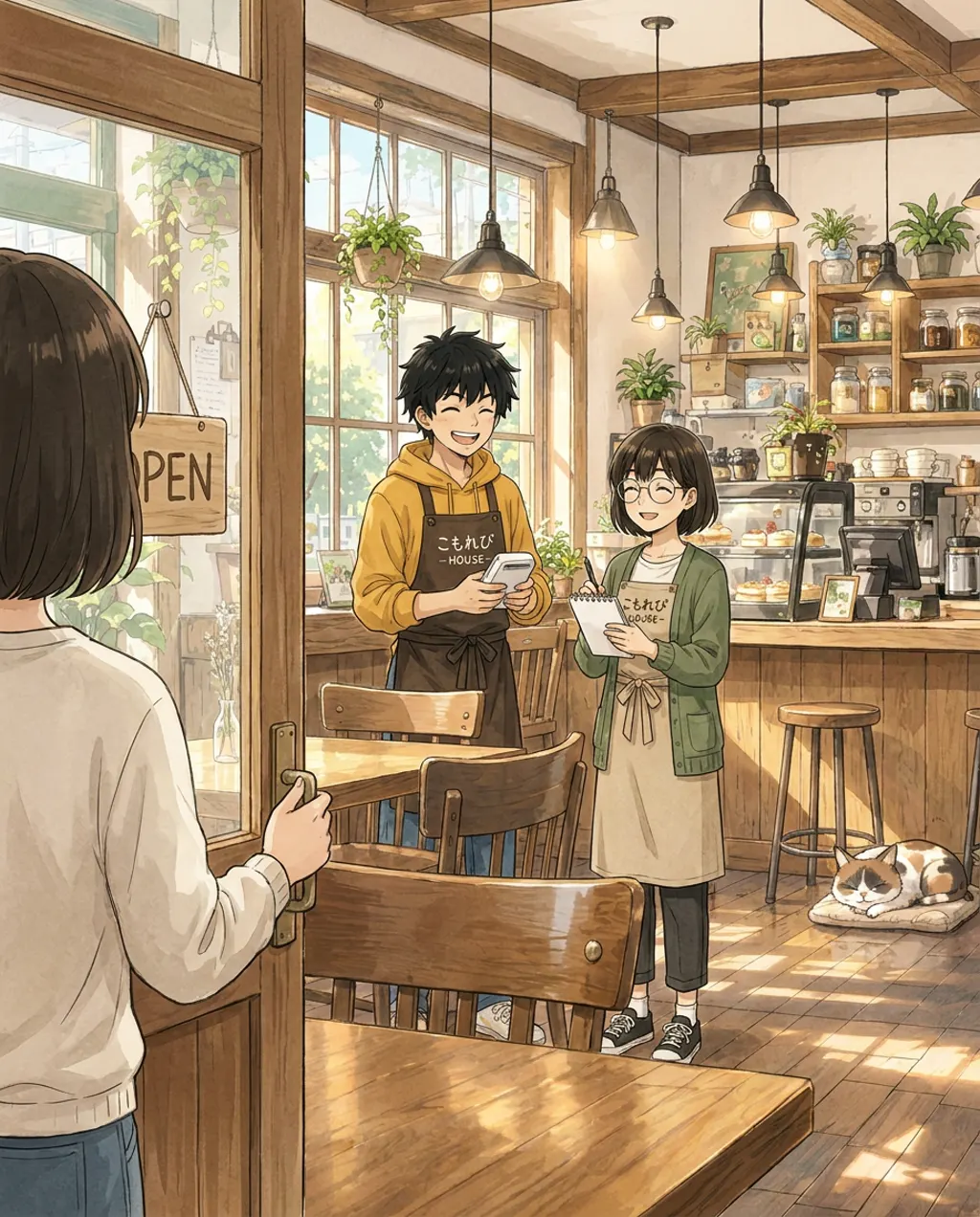
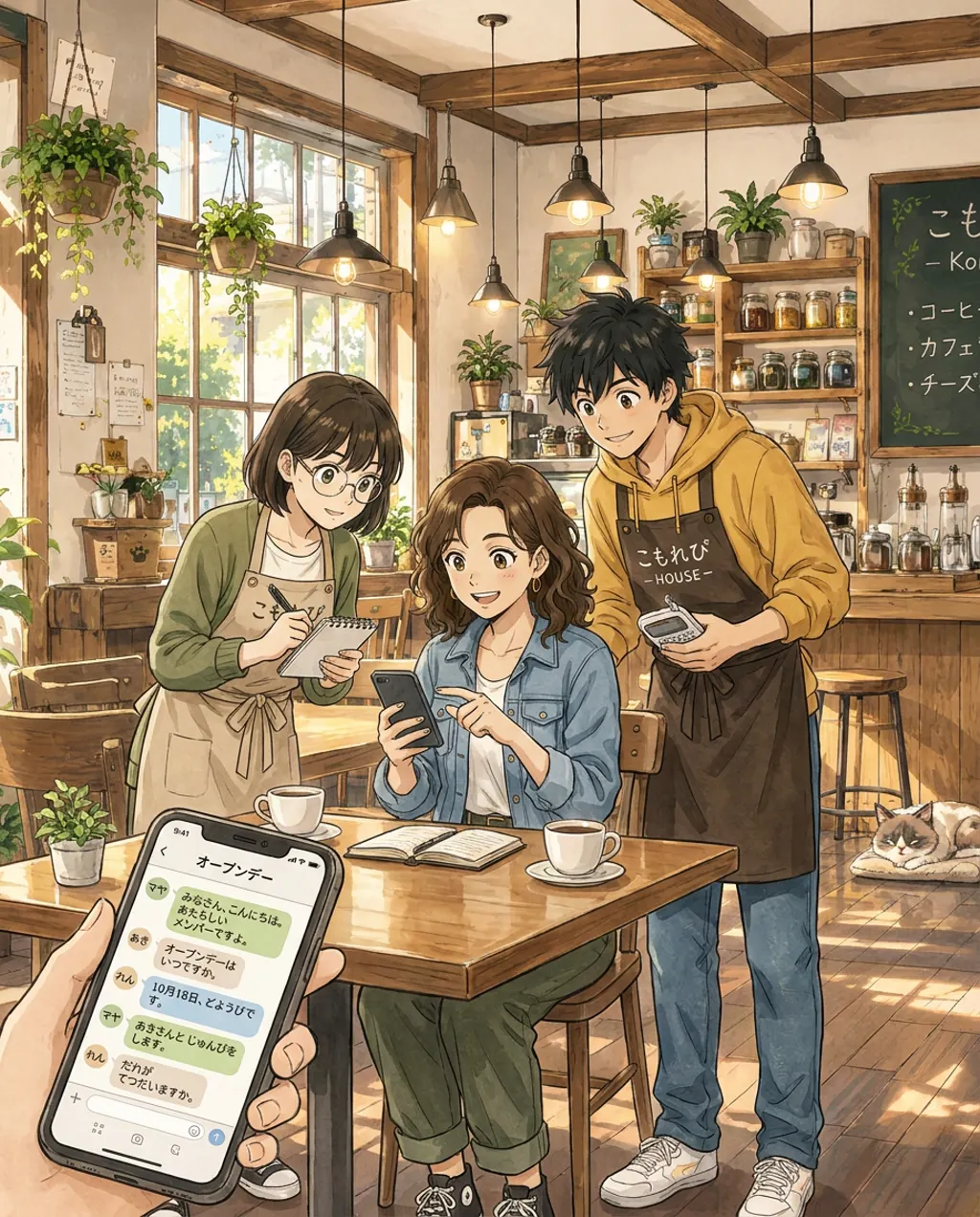
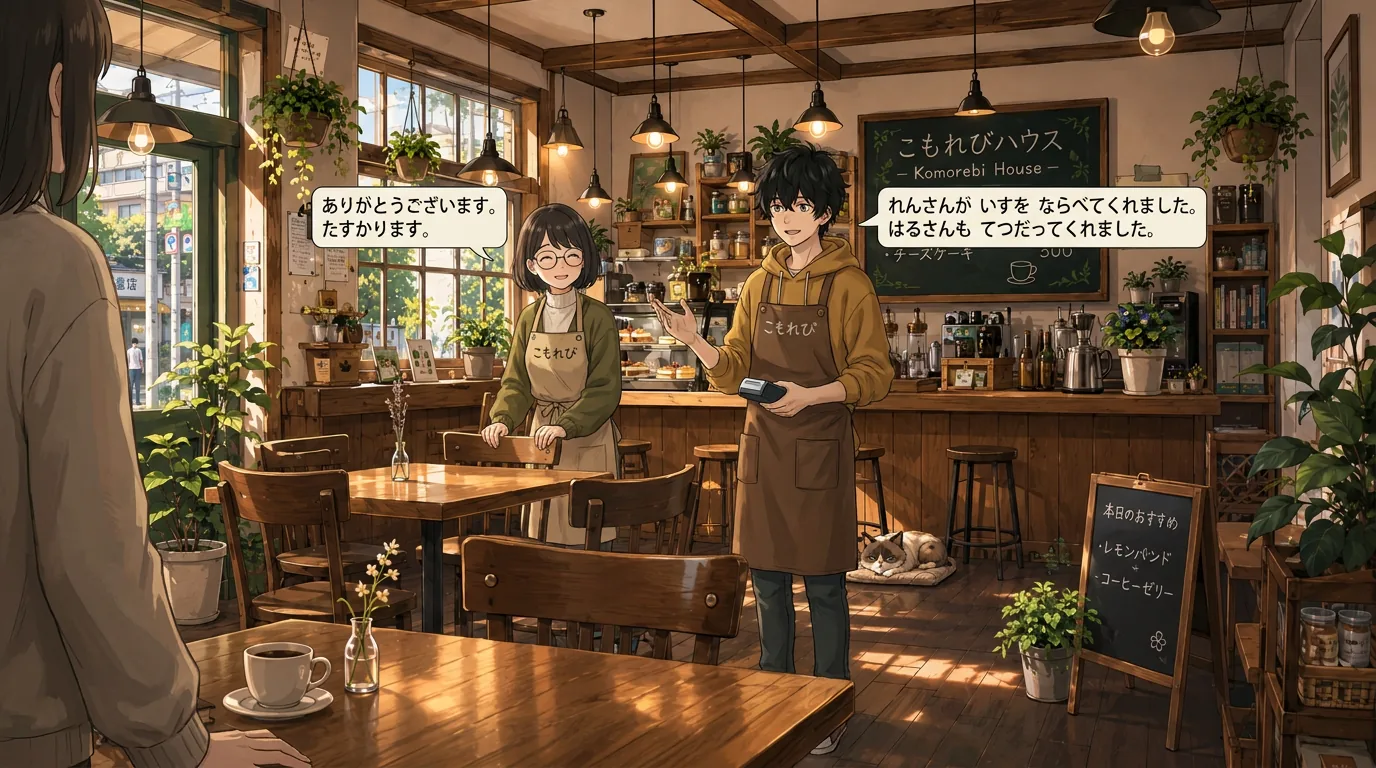
156 lessons and 218 hand-made scenes, set in one café with one cast. Grammar arrives because a character needs it, and the vocabulary comes back a scene later. The first lesson of every track is readable here without an account.
Side path
Kana Sprints
Short sprints that turn hiragana and katakana into reading
12 lessons
Side path
Grammar Labs
Second-pass labs for the patterns that need one
12 lessons
Side path
Kanji Units
The N5 kanji, taught through words you already say
28 lessons
Side path
Vocabulary Sprints
The N5 and N4 words, twenty at a time, grouped by where you use them
40 lessons
The order most beginners take
Kana whenever the script slows you down, Foundations for your first sentences, N5 for the exam arc, then N4 for favours, conditions and keigo — with Kanji Units alongside whenever the characters are what slow you down.
The cast you'll keep meeting
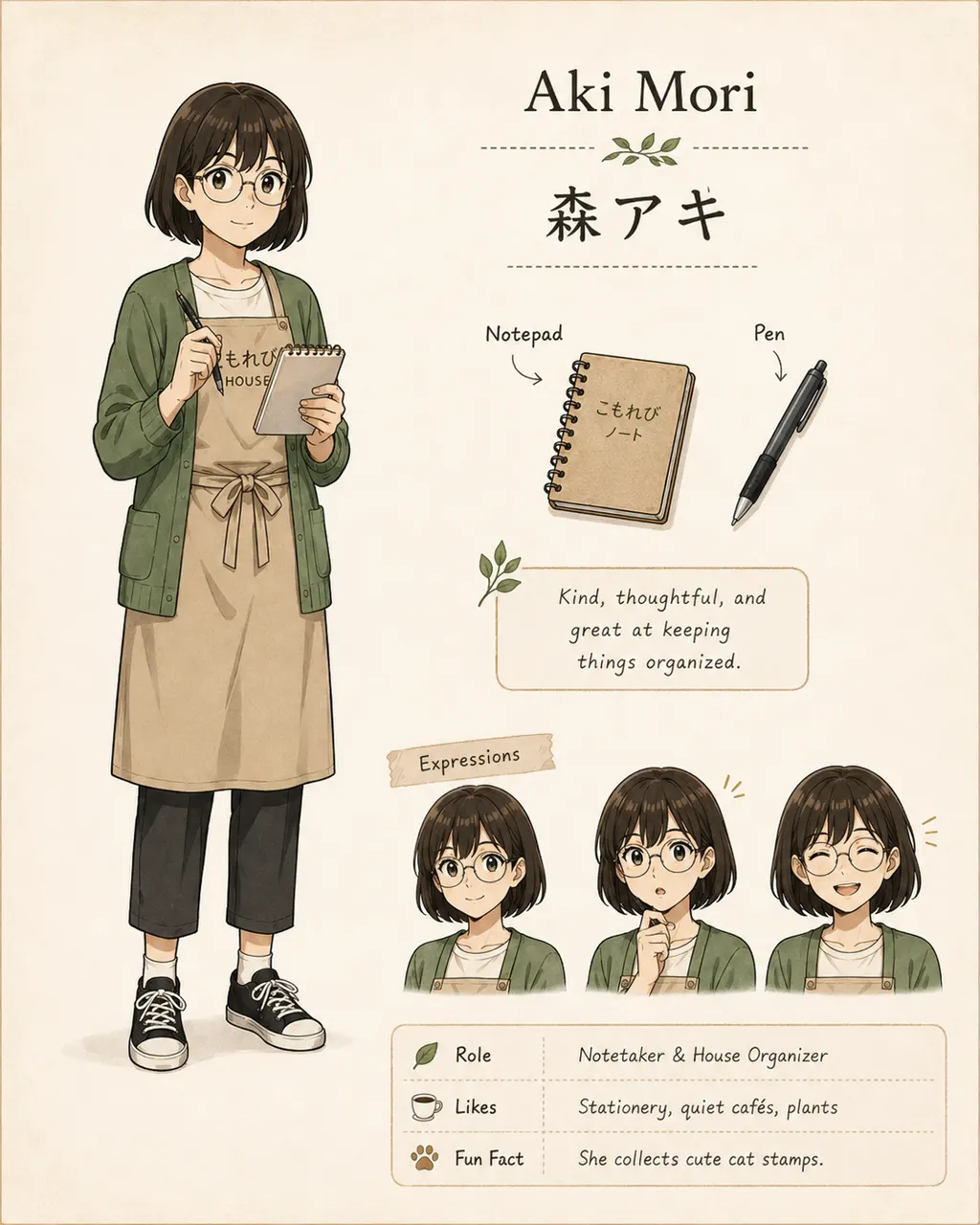
Runs Komorebi House. Writes everything down, twice.
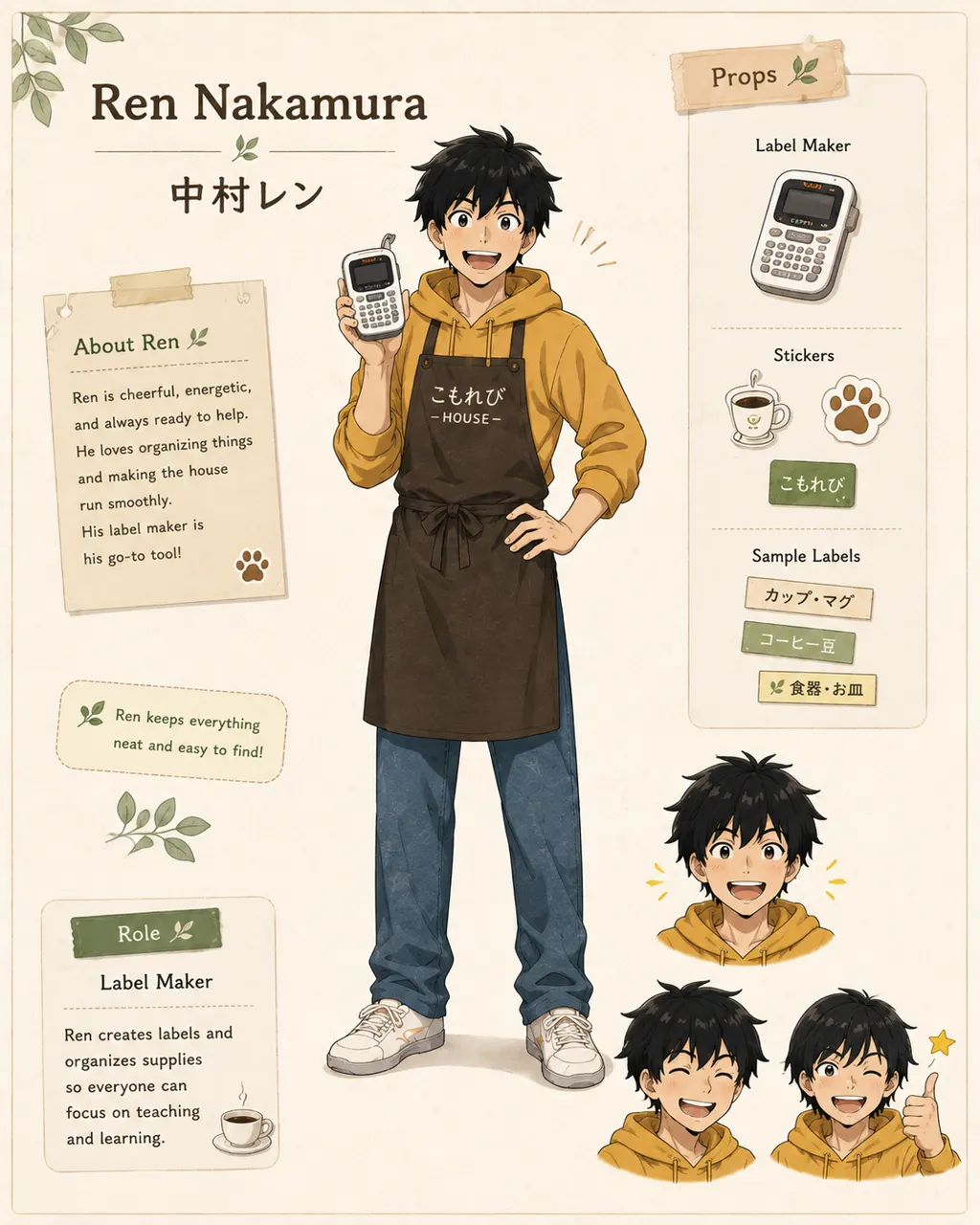
Behind the counter, and behind most of the mistakes.
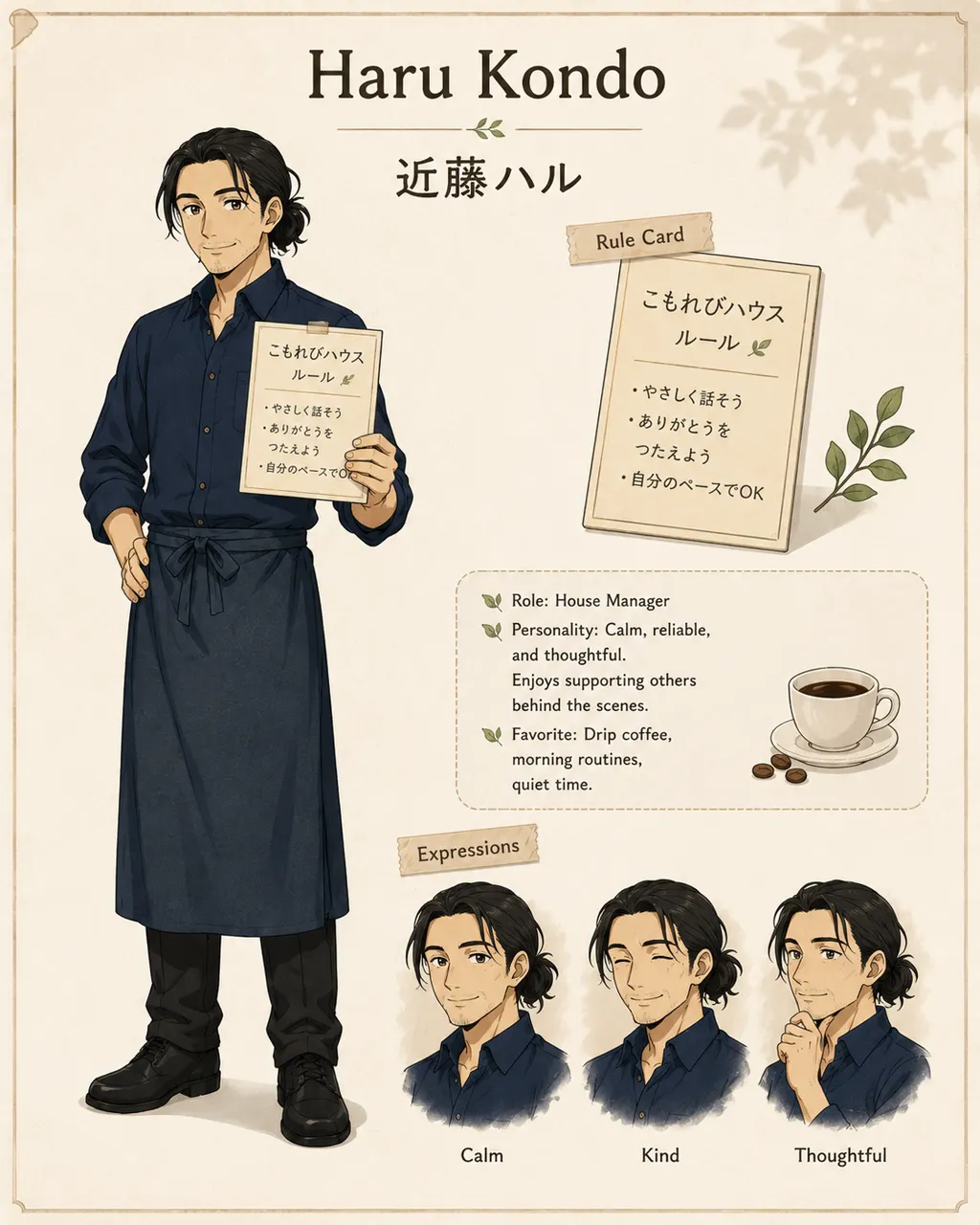
The quiet one who fixes what Ren labels.
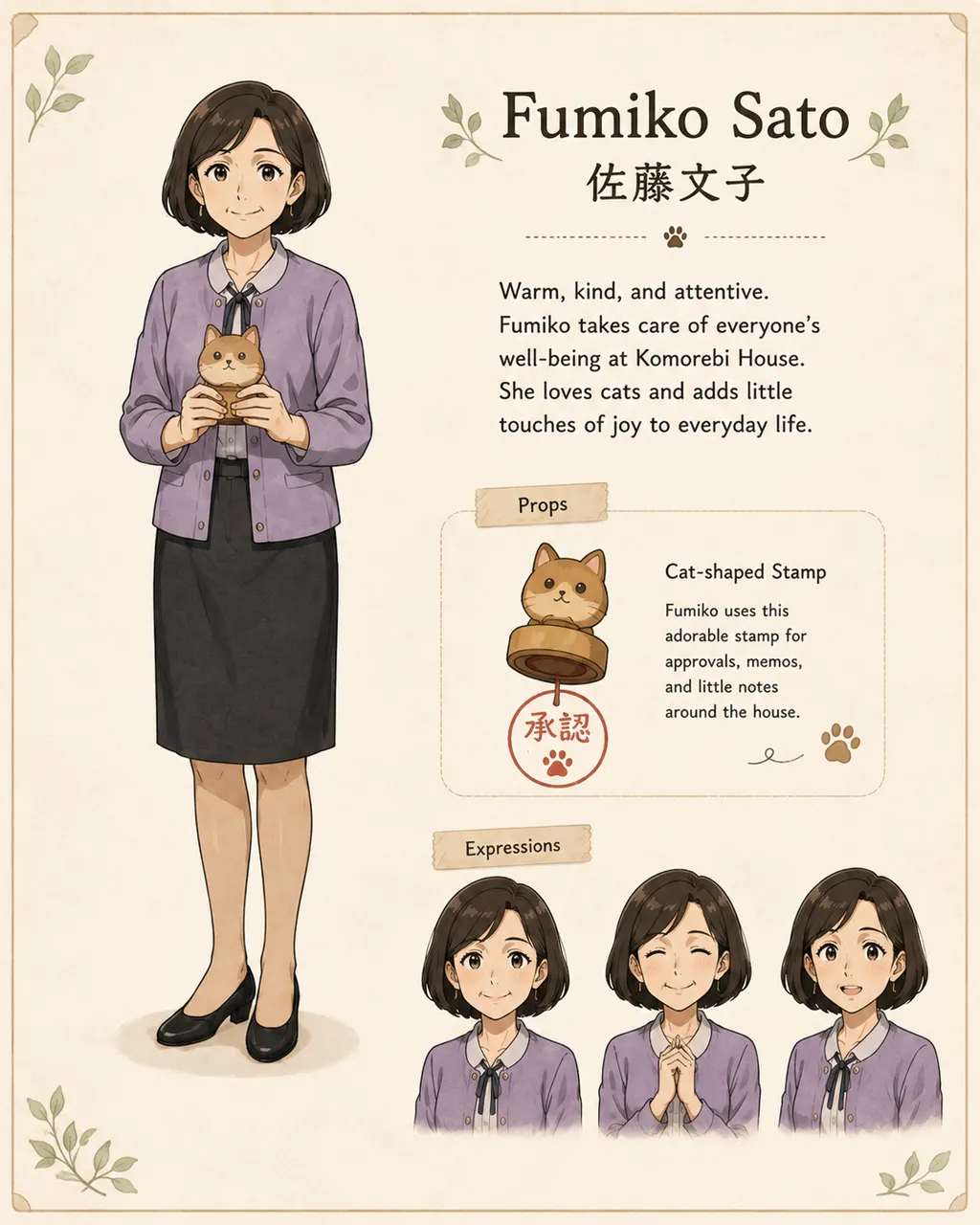
The regular from the office up the street.
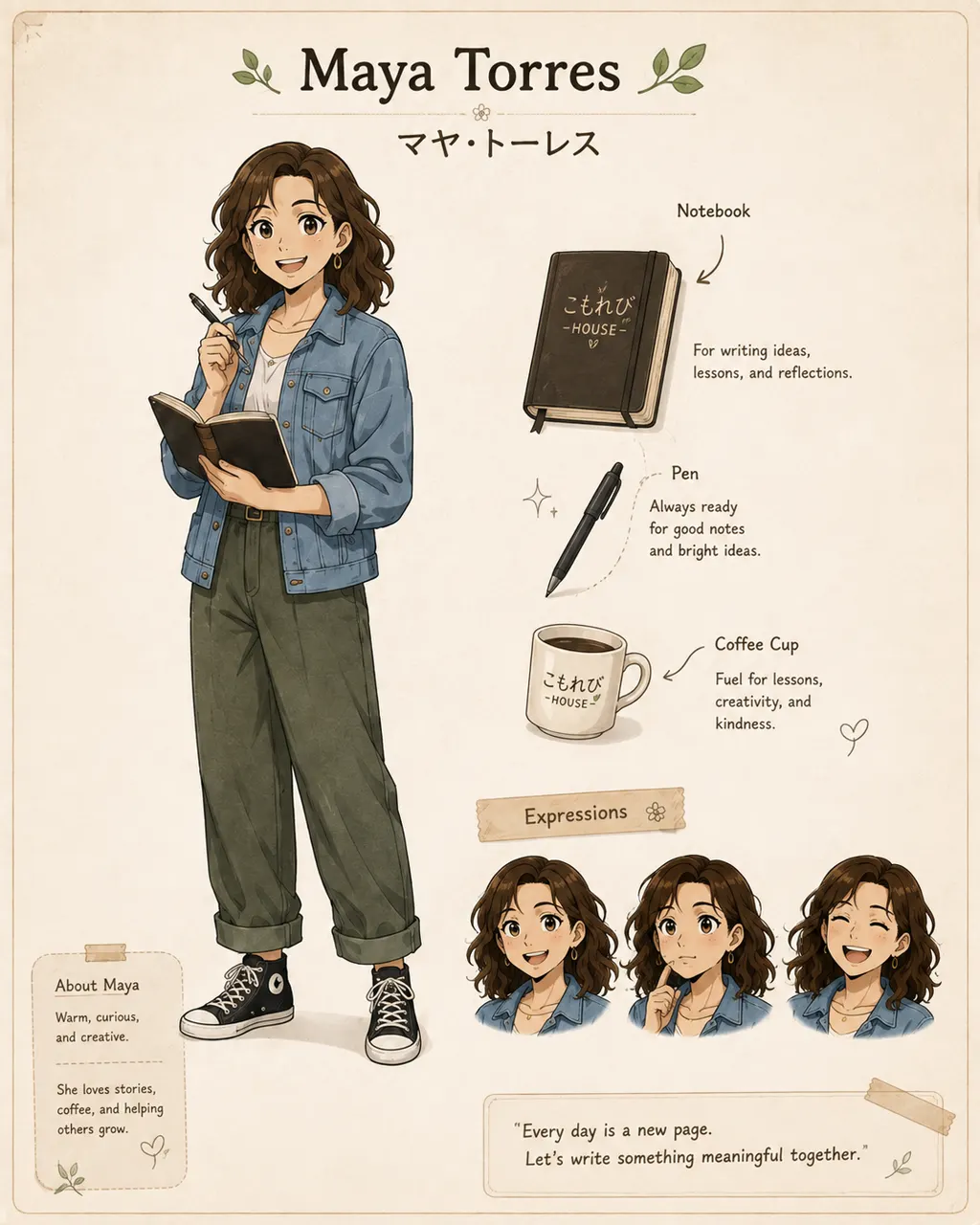
Student, part-timer, permanently one train late.
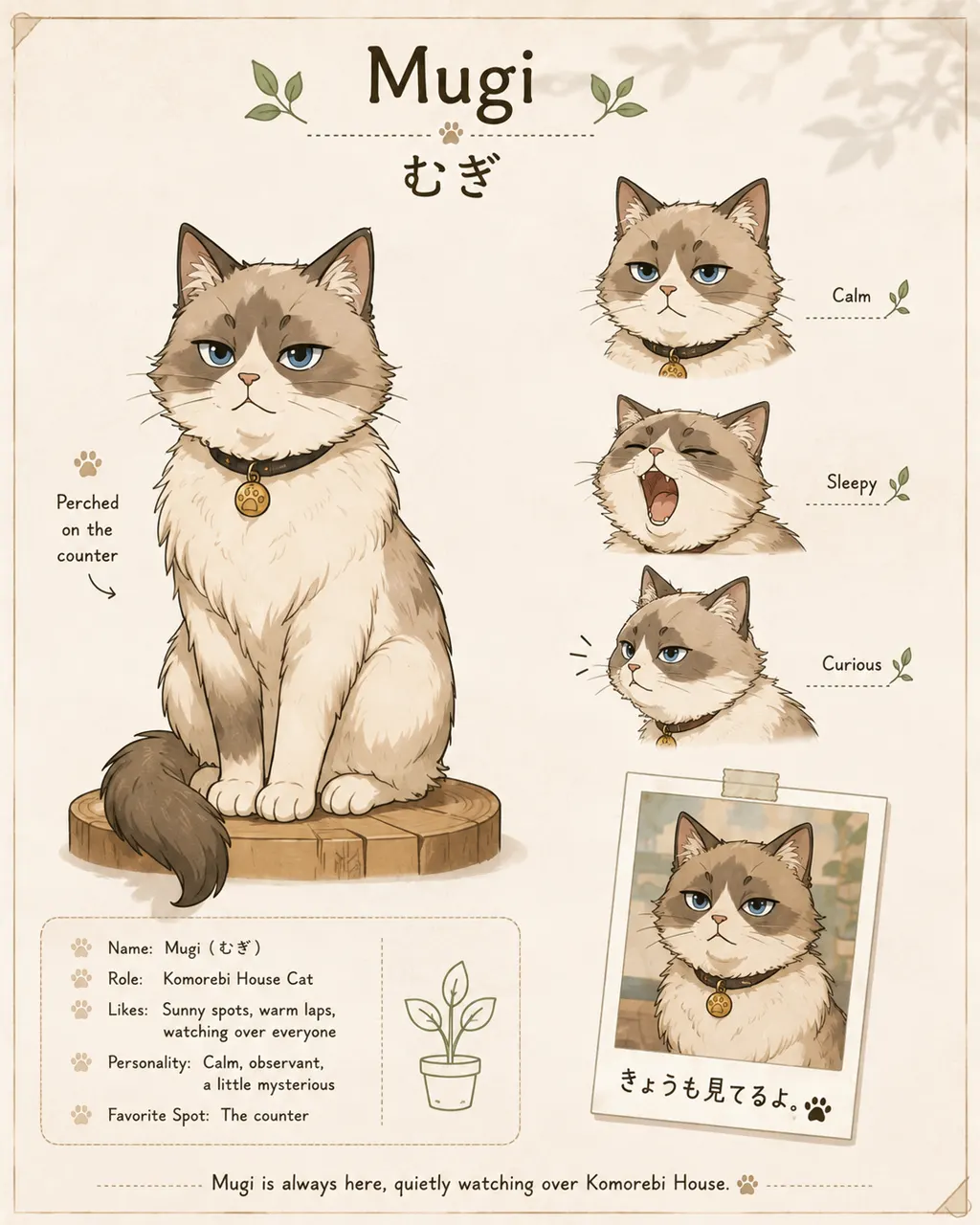
The café cat. Sits on whatever you need.
Every lesson
Japanese Foundations
- The Door with Two Signs
- A Name Tag for Everyone
- Is Mugi the Manager?
- This, That and the Mystery Umbrella
- One Cake, Surprisingly Expensive
- The Schedule Has Three Mondays
- What Happens at Komorebi?
- Where Is the Cat?
- Good Coffee, Bad Map
- The Umbrella Returns
- Where You Came From
- From Six to Nine
- What Didn't Happen
- Which Way From Here
- With Whom, By What
- The Order Things Go In
Japanese N5
- The Invitation in the Group Chat
- Who Does What?
- Only One Rule, So Far
- Team Profile Checkpoint
- Every Morning, Except Tuesday
- Do It Here, Go There
- Yesterday's Perfectly Normal Disaster
- A Day in Messages Checkpoint
- There Is a Cat on the Map
- Next to the Station, Behind the Impossible Sign
- How Many Posters?
- The Scavenger Hunt Checkpoint
- This Curry Is Red. Very Red.
- Better, Bigger, Spicier
- I Like It, but My Tongue Disagrees
- The Menu Test Checkpoint
- The Poster Is Missing
- Please Do Not Print 200 Yet
- Can We Put This Here?
- What Is Everyone Doing? Checkpoint
- What Do You Want to Do?
- Shall We? Can You?
- Because the Poster Says Sunday
- Komorebi Open Day
Japanese N4
- Someone Did It Already
- Showing Maya Where Things Are
- Getting It Checked
- Three Directions
- If The Rain Stops
- It Always Does That
- If You're Going Anyway
- Even If It Snows
- It Looks Like Rain
- I Heard From Sato
- Like Somewhere Else
- How Sure Are You?
- You Can Read It Now
- It Was Written About Us
- Letting And Making
- Made To Do It
- Try It And Leave It Ready
- Already Done, And Done For
- We Decided
- Just A Moment Ago
- Even Though
- And Also, And While
- In Order To
- The Session You Run
Kana Sprints
- Kana Sprint 1 — the five vowels
- Kana Sprint 2 — か and さ
- Kana Sprint 3 — た and な
- Kana Sprint 4 — は and ま
- Kana Sprint 5 — や, ら, わ and ん
- Kana Sprint 6 — two dots and a circle
- Kana Sprint 7 — the small ones
- Kana Sprint 8 — the second alphabet
- Kana Sprint 9 — holding the vowel
- Kana Sprint 10 — reading Komorebi
- Kana Sprint 11 — counting out loud
- Kana Sprint 12 — how much is it
Grammar Labs
- Verb Lab A — the form in the dictionary
- Verb Lab B — four cells, one verb
- Adjective Lab — eight boxes and two liars
- Te-form Lab — nine ways in, one ending
- Plain-form Lab — four more boxes, mostly free
- Particle Repair — は or が, に or で, へ or に, と or や
- Question Words — なに, だれ, どこ, いつ, いくら, どう
- Starter Particles — は, を and も
- Sequence Lab — three slots, and none of them your choice
- Intention Lab — the plan takes now, the advice takes yesterday
- Degree Lab — two patterns that want a stem, not a form
- Grammar Lab 12 — becoming, and making it so
Kanji Units
- Kanji Unit 1 — ten numbers you can already say
- Kanji Unit 2 — hundreds, thousands, and yen
- Kanji Unit 3 — the seven days are seven radicals
- Kanji Unit 4 — clocks, weeks and the sun inside them
- Kanji Unit 5 — the cast, written down
- Kanji Unit 6 — up, down, and which way to turn
- Kanji Unit 7 — mountains, rivers and weather
- Kanji Unit 8 — eye, ear, mouth, hand, foot
- Kanji Unit 9 — in, out, and the two that look alike
- Kanji Unit 10 — eat, drink, read, say
- Kanji Unit 11 — reading a street
- Kanji Unit 12 — big, small, and a person under a tree
- Kanji Unit 13 — the person standing beside
- Kanji Unit 14 — the heart underneath
- Kanji Unit 15 — three drops of water
- Kanji Unit 16 — the road, and getting along it
- Kanji Unit 17 — the sun inside six characters
- Kanji Unit 18 — the field, and the ground around it
- Kanji Unit 19 — the mouth that asks and the shell that pays
- Kanji Unit 20 — older, younger, and the thread between
- Kanji Unit 21 — the roof, and what is under it
- Kanji Unit 22 — force, effort, and what gives out
- Kanji Unit 23 — know, think, learn, answer
- Kanji Unit 24 — cut, stop, correct, not
- Kanji Unit 25 — four animals and four seasons
- Kanji Unit 26 — the four colours, and the sound of things
- Kanji Unit 27 — depart, arrive, and read 東京
- Kanji Unit 28 — the words this course started
Vocabulary Sprints
- Vocabulary Sprint 1 — days and dates
- Vocabulary Sprint v02 — the table, and why rice means dinner
- Vocabulary Sprint v03 — clothes, and why a hat is not worn
- Vocabulary Sprint v04 — the house, and three words for a room you need
- Vocabulary Sprint v05 — the town, read from its last character
- Vocabulary Sprint v06 — this way, that way, and which way
- Vocabulary Sprint v07 — your family and everybody else's
- Vocabulary Sprint v08 — the desk, and a stamp that is not a ticket
- Vocabulary Sprint v09 — this, that, and the word that means both yes and no
- Vocabulary Sprint v10 — size and speed, and two words for はやい
- Vocabulary Sprint v10b — how it feels, and two words for やさしい
- Vocabulary Sprint v11a — the day's verbs, and knowing as a state
- Vocabulary Sprint v11b — did somebody do it, or did it happen?
- Vocabulary Sprint v12 — a complete pair, and the を that is not an object
- Vocabulary Sprint v13 — understanding takes が, and two verbs that became nouns
- Vocabulary Sprint v14a — weather and creatures, and two words for かぜ
- Vocabulary Sprint v14b — being well, and one adjective that breaks the rule
- Vocabulary Sprint v14c — home and colour, and the end of the list
- Vocabulary Sprint w01 — whose action is it?
- Vocabulary Sprint w02 — what broke, and who broke it
- Vocabulary Sprint w03 — what happens, and what you do
- Vocabulary Sprint w04 — how it feels, and who is allowed to say so
- Vocabulary Sprint w05 — getting about, and four words to recognise but not use
- Vocabulary Sprint w06a — what you did, and how it came out
- Vocabulary Sprint w06b — hands, heat and two kinds of crying
- Vocabulary Sprint w07 — school words, mostly assembled from parts you have
- Vocabulary Sprint w08 — work words, ranks and three particles
- Vocabulary Sprint w09 — machines, rooms, and English you cannot hear
- Vocabulary Sprint w10 — three words for a gift, and five suffixes for a place
- Vocabulary Sprint w11a — the shop floor, and verbs wearing nouns' clothes
- Vocabulary Sprint w11b — how it fits, how it sits, how it comes out
- Vocabulary Sprint w11c — twelve short words, read by their parts
- Vocabulary Sprint w13 — when, on one line from 昔 to 将来
- Vocabulary Sprint w17 — verbs built from parts, and なくなる twice
- Vocabulary Sprint w12 — the people around you, and five words to recognise but not say
- Vocabulary Sprint w14 — adverbs that decide the end of the sentence
- Vocabulary Sprint w15 — な or い, and the word that means both a thing and its opposite
- Vocabulary Sprint w16a — public words, and する and な
- Vocabulary Sprint w16b — the body, the building, and かたい three ways
- Vocabulary Sprint w16c — a day off, and why アメリカ is a country
Read the first lesson, then keep going
Previews are free and need no account. A free account opens the interactive lessons, the review system and the rest of the tracks.
Create a free account