Japanese N5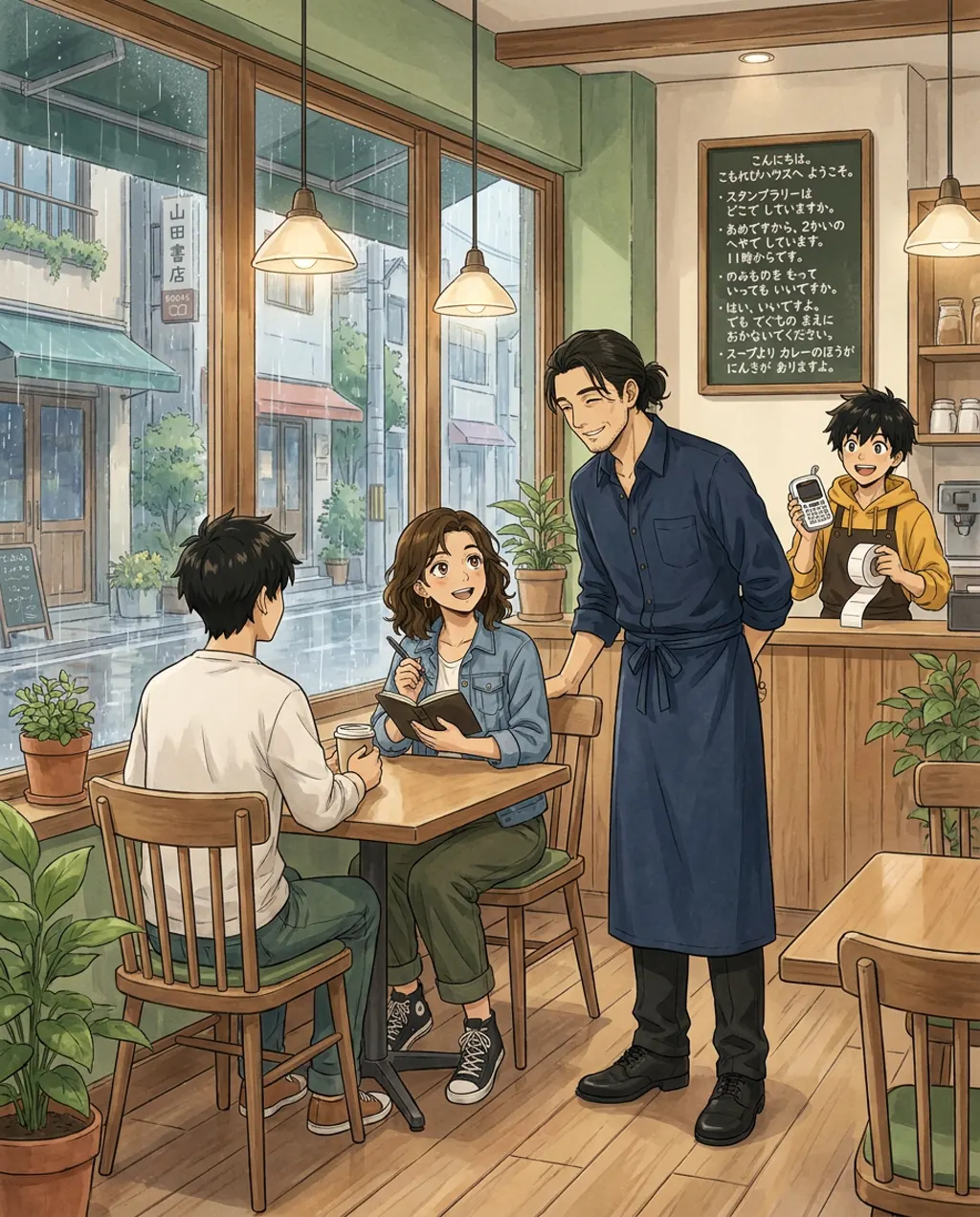
Lesson 24 of 24
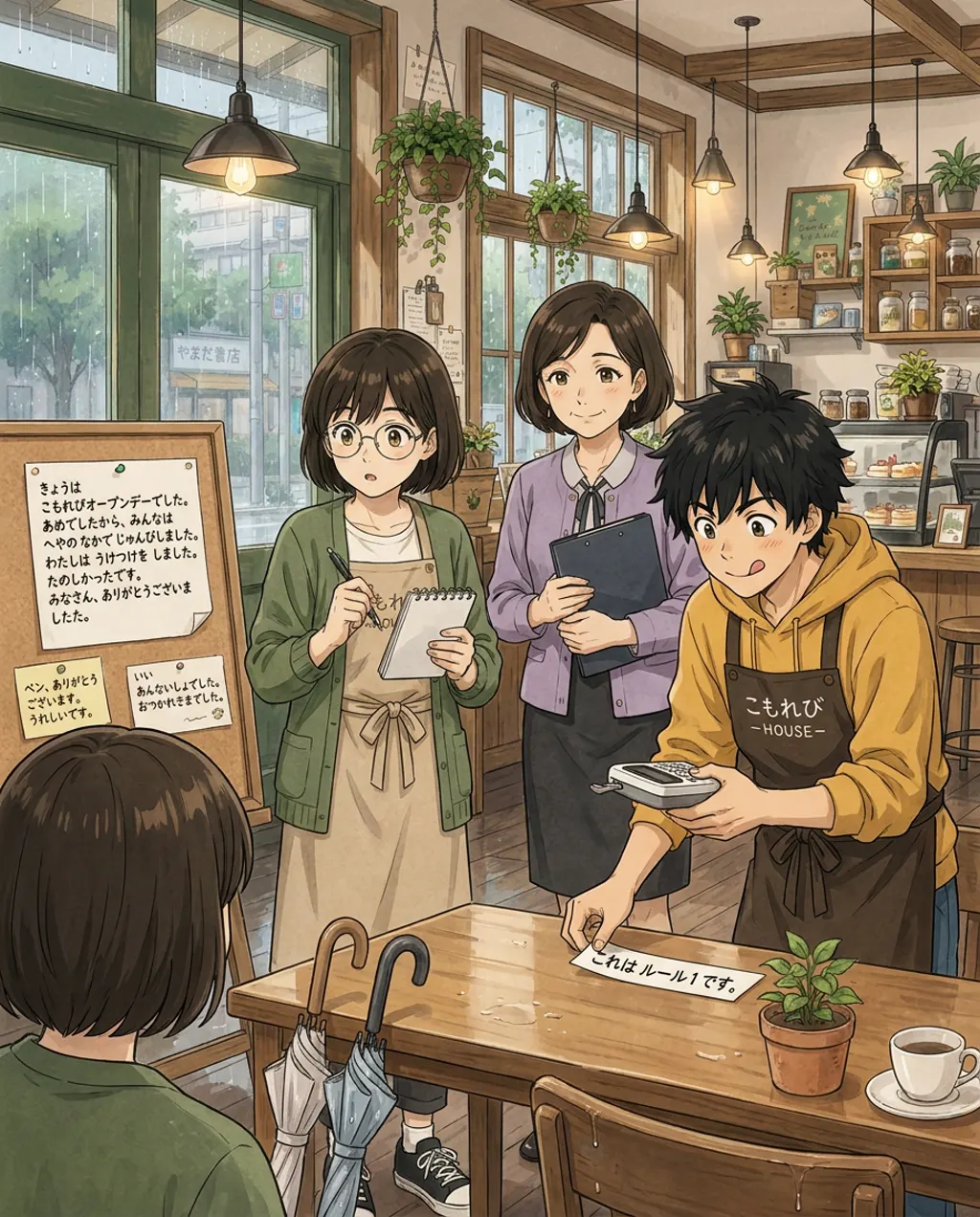
Komorebi Open Day
about 18 minutes
After this lesson you can
- Welcome a visitor, answer where and when something is, and say whether they may do something.
- Write a short message about how the day went.
Words this lesson teaches
- ようこそ
- welcome
- たのしみます
- enjoys
- さいご
- the last, final
- かい
- floor, storey
- あんないしょ
- a guide, an information sheet
What it explains
Vましょうか — shall I?
ましょう assumes we are both doing it; ましょうか offers to do it for someone: てつだいましょうか, shall I help? もういちど いいましょうか, shall I say that again? At a welcome desk this is the most useful thing in the lesson, because it lets you offer help without waiting to be asked.
Ending well matters as much as starting
ありがとうございました, past tense, closes something that has finished — a visit, a shift, a day. きょうは ありがとうございました is the standard sign-off after an event. Leaving without it reads as abrupt in a way that no grammatical error does.
The scene itself is in the app.
Lesson one of this track is free to read in full. From lesson two on, the story, the audio and the review are part of a free account.