The N5 track covers the grammar and vocabulary the exam expects, in the order a story needs them. Every point — は and が, the te-form, ~てください, comparisons, past tense — arrives because a character has to say something, and comes back in later scenes so it sticks. The recurring cast means new words land against people you already know.
Who it's for
- —You are sitting JLPT N5 and want the grammar in sentences, not in a table
- —You finished a beginner app and cannot yet read a paragraph
- —You want vocabulary that repeats across scenes instead of resetting each lesson
Free preview — lesson 1
The Invitation in the Group Chat

After this lesson you can
- Read a short group invitation and introduce yourself to the group.
Your phone buzzes. Maya has added you to a group chat called こもれびオープンデー. There are six members. One of them is a cat.
Maya
みなさん、こんにちは。あたらしい メンバーですよ。
Hi everyone. We have a new member.
Aki
オープンデーは いつですか。
When is Open Day?
Ren
10月18日、どようびです。
October 18th, a Saturday.
Maya
あきさんと じゅんびを します。
I'll do the preparation with Aki.
Aki
だれが てつだいますか。
Who's helping?
An account called MUGI_MANAGER joins the chat. It posts one photograph, badly out of focus, of what is unmistakably a paw. It then leaves the chat.
You
はじめまして。オープンデーを てつだいます。よろしくおねがいします。
Nice to meet you all. I'll be helping with Open Day. I look forward to it.
Maya replies with a thumbs up and a photo of a notebook page. The notebook is titled Things I Pretended to Understand. Your introduction is not on it, which she seems to think is worth noting.
Words this lesson teaches
- オープンデー
- Open Day
- チーム
- team
- メンバー
- member
- てつだいます
- helps, lends a hand
- じゅんび
- preparation
- メッセージ
- message
- きょう
- today
- あした
- tomorrow
- いっしょに
- together
- あたらしい
- new
What it explains
だれ, なに, どこ, いつ
Question words sit where the answer would go, rather than moving to the front as they do in English: オープンデーは いつですか keeps いつ in the answer's slot. Once you notice that, the word order of Japanese questions stops needing any thought.
と for "with"
あきさんと じゅんびを します — I'll do the prep with Aki. The same と also joins nouns into a list, which you meet properly in N5.2. Which job it is doing is clear from whether a verb of doing-together follows.
ね and よ — recognise, do not rush to use
ね invites agreement about something you both know; よ offers something the listener does not yet know. あたらしい メンバーですよ tells the group news. Getting these subtly wrong is very audible, so the target here is understanding them, not producing them.
All 24 lessons
1. The Invitation in the Group Chat
13 minRead a short group invitation and introduce yourself to the group.
2. Who Does What?
13 minSay who is responsible for an activity, and read a simple team list.
3. Only One Rule, So Far
13 minRead a short list, say that it is complete or only examples, and say that there is only one of something.
4. Team Profile Checkpoint
15 minRead short team profiles, identify each person's role, and send a confirmation message.
5. Every Morning, Except Tuesday
13 minSay how often something happens and when in the day it happens.
6. Do It Here, Go There
13 minSay where an action happens, where someone is going, and how they are getting there.
7. Yesterday's Perfectly Normal Disaster
14 minSay what happened and what did not happen yesterday.
8. A Day in Messages Checkpoint
15 minFollow a day across a schedule and a set of messages, and say what happened where.
9. There Is a Cat on the Map
13 minSay what is in a place, and ask what or who is there.
10. Next to the Station, Behind the Impossible Sign
13 minFollow a two-step direction and give one yourself.
11. How Many Posters?
14 minAsk how many of something is needed and answer with the right counter.
12. The Scavenger Hunt Checkpoint
15 minUse a map, a sign and an order list to collect supplies and report back.
13. This Curry Is Red. Very Red.
14 minDescribe something now or in the past, and say what it was not like.
14. Better, Bigger, Spicier
14 minCompare two options and say which of three is the best.
15. I Like It, but My Tongue Disagrees
14 minSay what you like, dislike and are good at, and add a contrast.
16. The Menu Test Checkpoint
15 minRead a menu, compare two items, order one, and say why you chose it.
17. The Poster Is Missing
15 minJoin two actions together and say what happened in what order.
18. Please Do Not Print 200 Yet
14 minAsk someone to do something, and ask them not to.
19. Can We Put This Here?
14 minAsk whether something is allowed, and understand a sign that says it is not.
20. What Is Everyone Doing? Checkpoint
15 minSay what someone is doing right now, and tell that apart from what they usually do.
21. What Do You Want to Do?
14 minSay what you want to do, what you want, and why you are going somewhere.
22. Shall We? Can You?
15 minInvite someone to do something, and say what you can do and what you have done before.
23. Because the Poster Says Sunday
15 minGive a reason for something, and ask which of two conflicting facts is right.
24. Komorebi Open Day
18 minWelcome a visitor, answer where and when something is, and say whether they may do something.
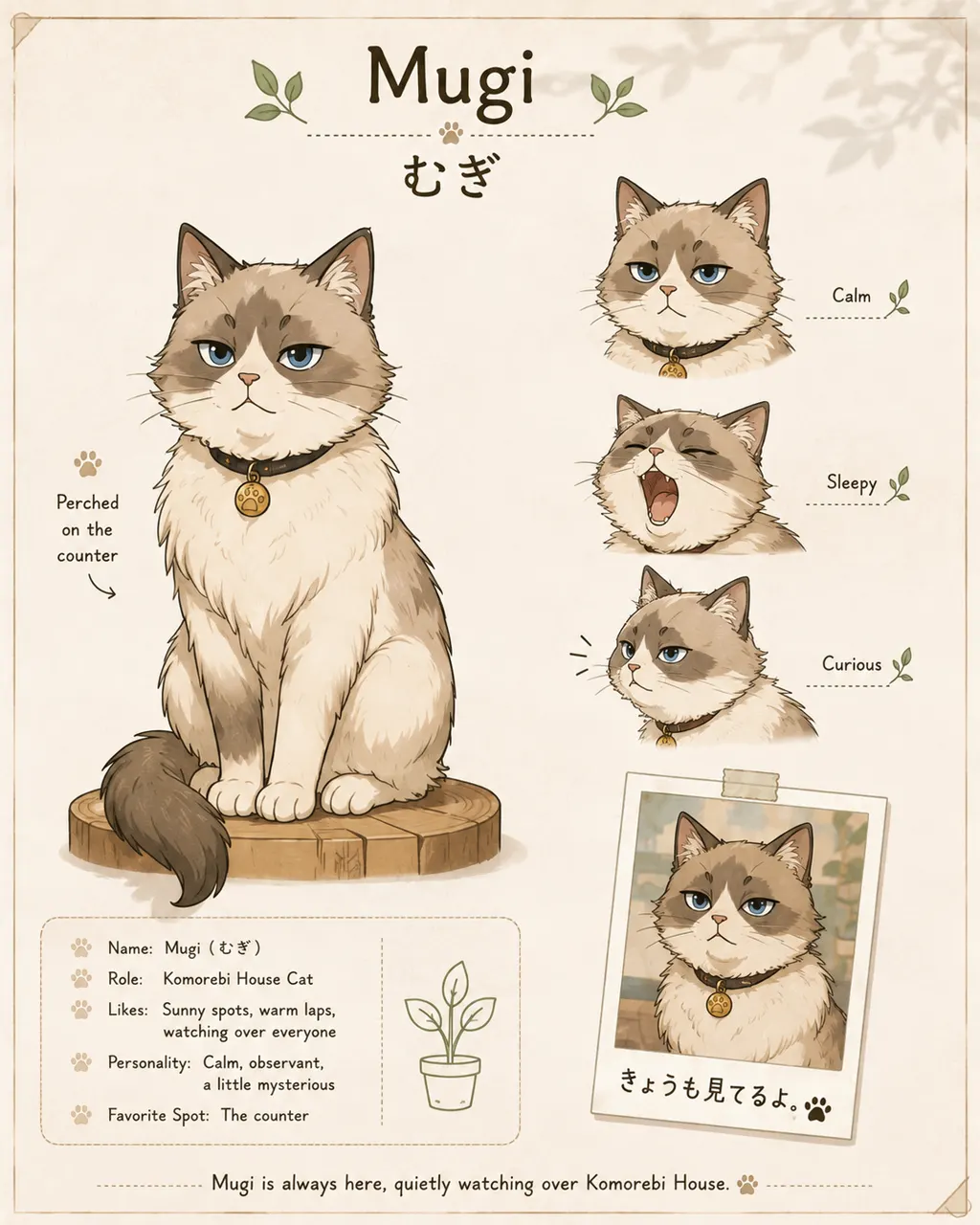
The recurring cast
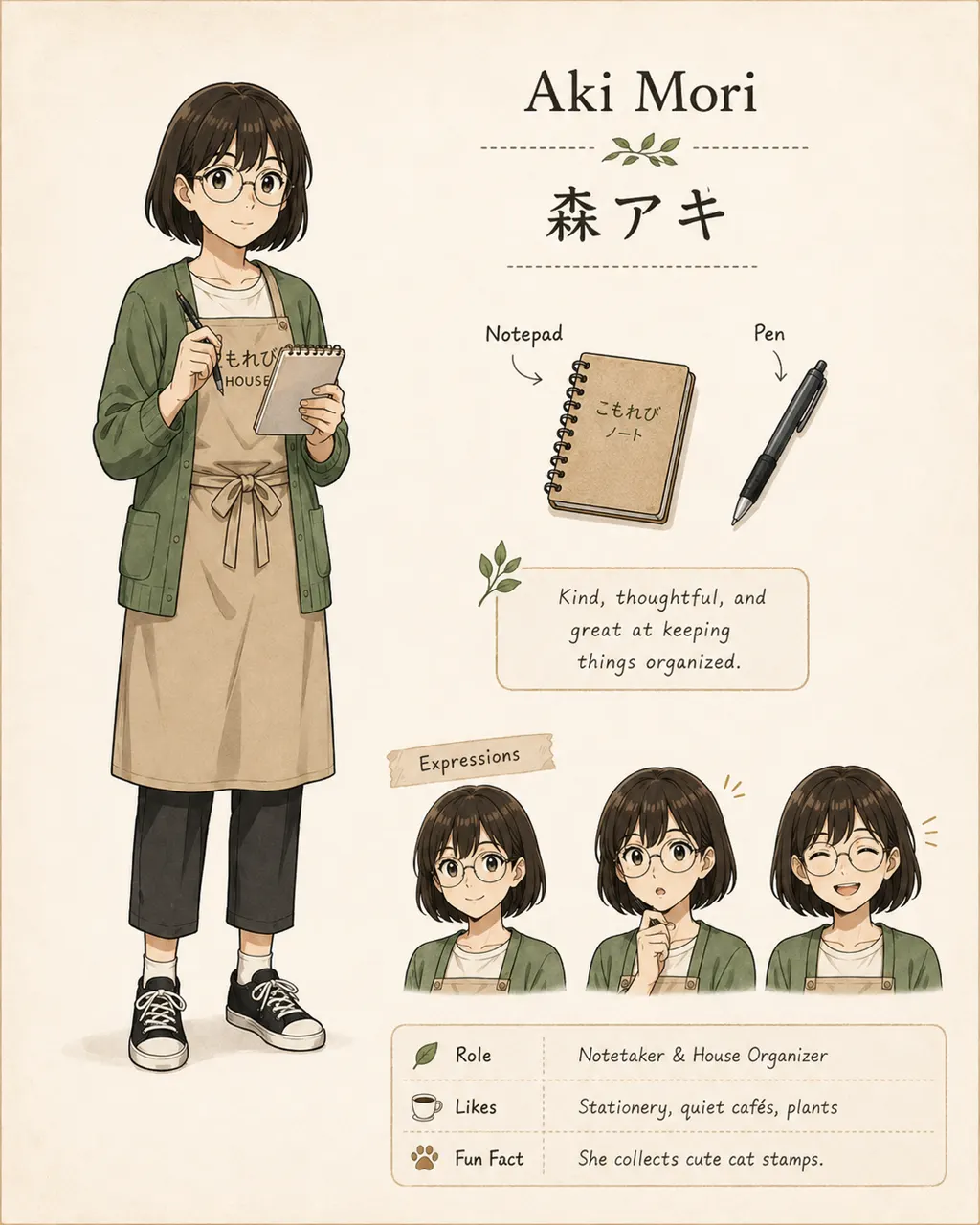
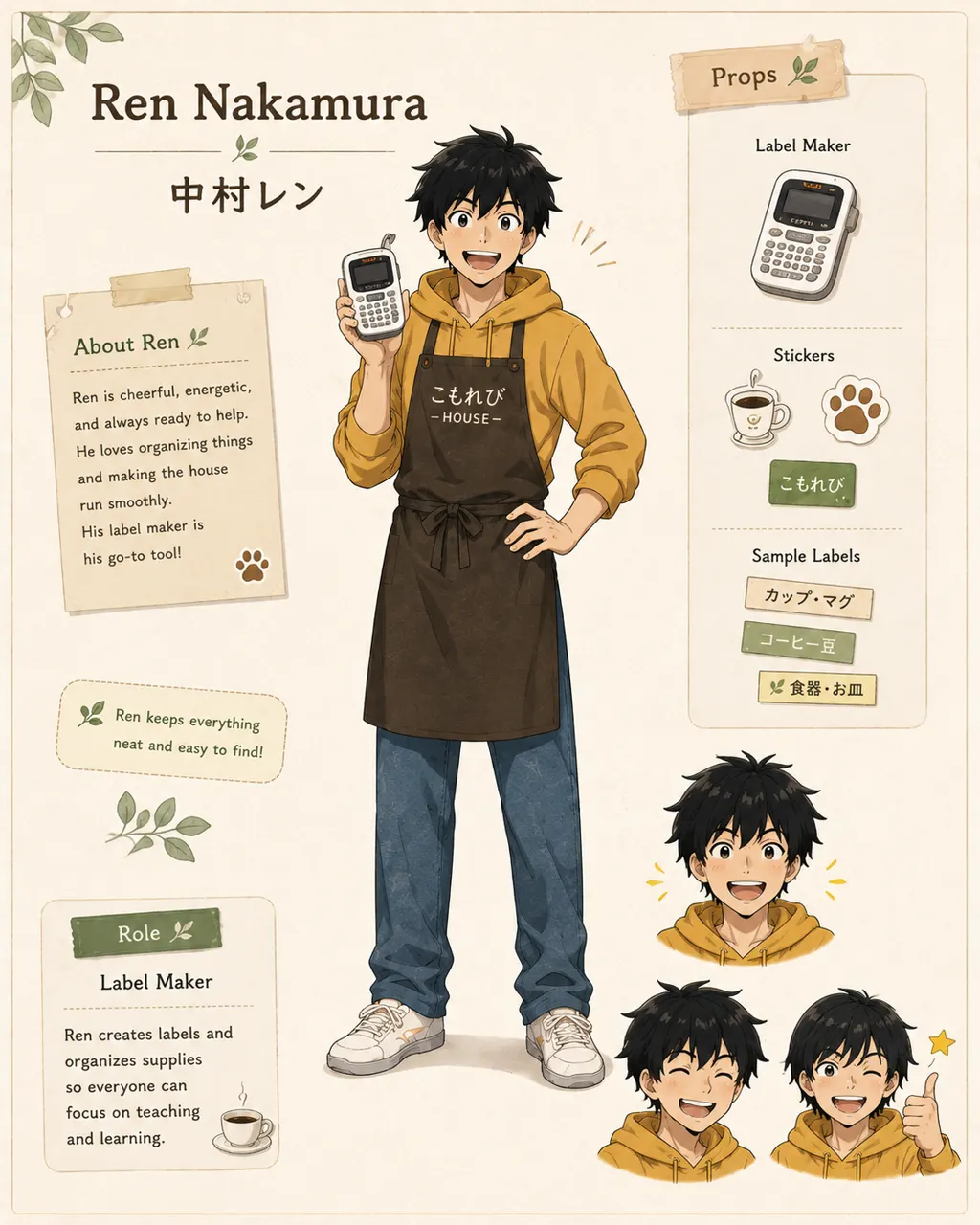
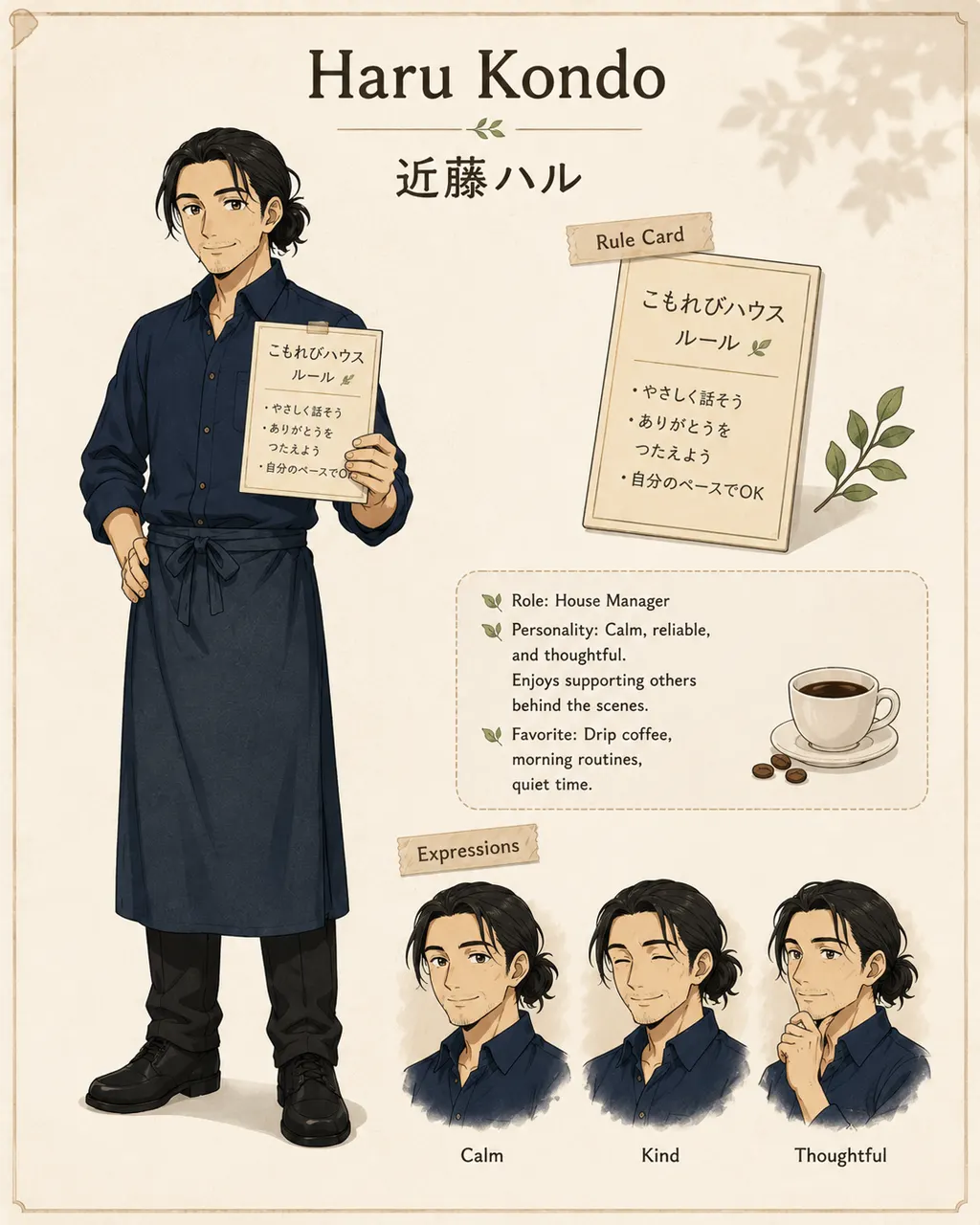
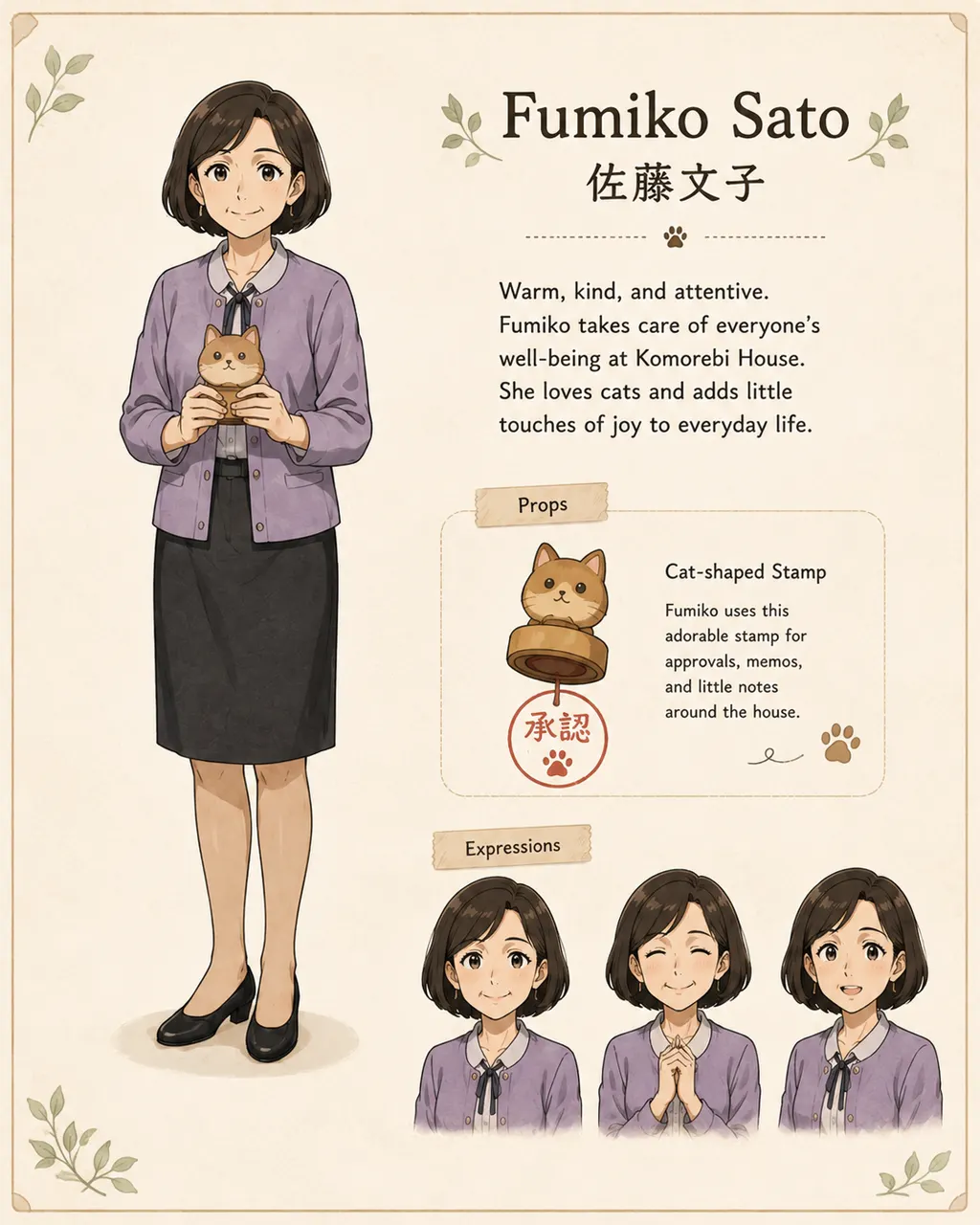

Questions
Does this cover everything on JLPT N5?
It covers the N5 grammar and core vocabulary arc across its lessons, and pairs with InputDojo's N5 vocabulary lists, kanji lists and practice drills for exam-shaped review.
Should I do Foundations first?
If you are starting from zero, yes — Foundations gets you to the point where N5 lesson one reads comfortably. If you already know kana and basic greetings, start here.
Is there anything after N5?
N4 material is on the way; in the meantime the N4 vocabulary, kanji and grammar tools on InputDojo continue from where the N5 track leaves you.
Other tracks
Japanese Foundations
Your first Japanese, told as one story in a small café
Kana Sprints
Short sprints that turn hiragana and katakana into reading
Grammar Labs
Second-pass labs for the patterns that need one
Also useful: JLPT N5 vocabulary and kanji, the hiragana chart and printable worksheets.