Lesson 19 of 24
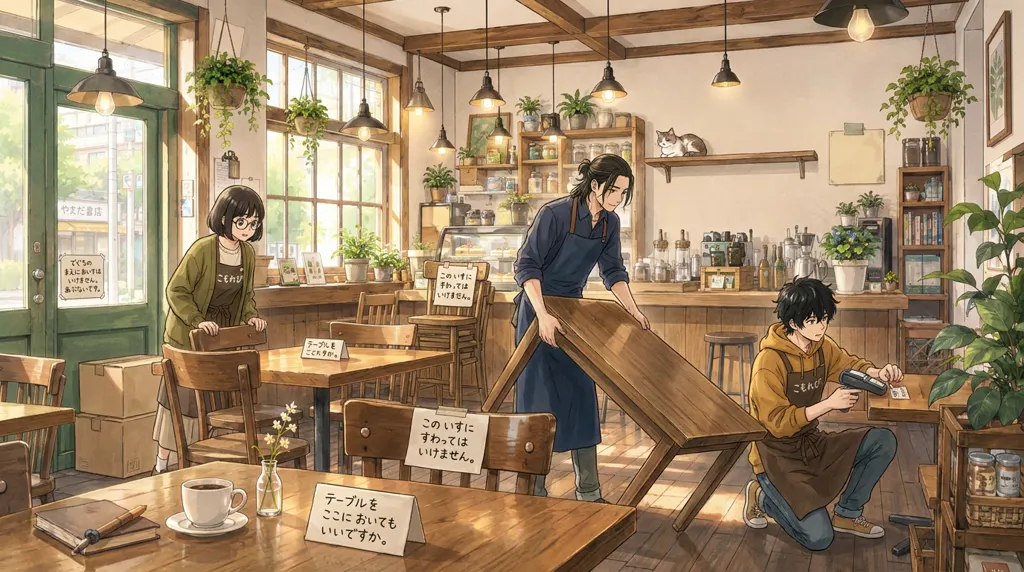
Can We Put This Here?
about 14 minutes
After this lesson you can
- Ask whether something is allowed, and understand a sign that says it is not.
Words this lesson teaches
- すわります
- sits
- あぶない
- dangerous
- でぐち
- exit
- しゃしん
- photograph
- とります
- takes (a photo)
- だいじょうぶ
- fine, all right
- きんえん
- no smoking
- きけん
- danger
What it explains
Vてもいいですか — may I?
Te-form plus もいいですか: おいても いいですか, may I put it here. Literally it is closer to is it fine even if I do this, which is why も is in there. Drop the か and it becomes permission granted: おいても いいです, you may.
Vてはいけません — you must not
Te-form plus はいけません. This is strong and carries authority, so it is what you read on signs and hear from someone responsible for a place, rather than what you say to a colleague. To ask a peer not to do something, ないでください from last lesson is the one you want.
Signs are blunter than people
きけん on a fuse box is one word: danger. The same instruction from a person becomes さわらないでください. Written notices drop the politeness that speech carries, and that is a difference of medium rather than of manners — reading a curt sign as rudeness is a mistake worth not making.
The scene itself is in the app.
Lesson one of this track is free to read in full. From lesson two on, the story, the audio and the review are part of a free account.