は vs が: The Explanation That Finally Sticks
Why は and が are not interchangeable, explained through sentences rather than rules — plus the three situations where only one of them works.

は marks what the sentence is about. が marks which one. Nearly every confusing case follows from those two jobs, and almost no textbook says it that plainly.
Topic versus identification
私は学生です — "as for me, student." You are setting the topic and then saying something about it.
私が学生です — "I am the student." Someone asked which person it is, and you answered.
Same words, different question being answered. が selects out of a set; は sets the frame.
Three places where only one works
- New information takes が. The first time something enters the conversation — 猫がいます, "there's a cat" — it gets が. Once it exists in the conversation, it becomes the topic: 猫は白いです.
- Question words take が, never は. 誰が来ましたか. You cannot make an unknown the topic, because the topic is the thing you both already have in view.
- Contrast takes は. コーヒーは好きですが、お茶は… — the two は's are doing the contrasting.
Why "が is the subject marker" misleads you
Because は often sits where an English subject sits, learners read は as "the subject particle with a hat on". It is not a subject marker at all — it can replace を just as happily: その本は読みました, "that book, I read it." Once you stop mapping these onto English grammar terms, the pattern gets much simpler.
How to actually learn it
Not by rule count. Read forty sentences where the choice matters and, for each one, ask: is this telling me what we are talking about, or which one it is? After a few dozen, the choice starts feeling wrong before you can explain why — which is the point at which you have learnt it.
Frequently asked questions
Is は ever wrong in a sentence with a question word?
As the marker on the question word itself, yes — 誰は is not Japanese. は can still appear elsewhere in the same sentence.
Why do sentences sometimes have both?
They do different jobs: 象は鼻が長い sets the topic (the elephant) and then identifies what is long (its nose).
Now go and read some Japanese
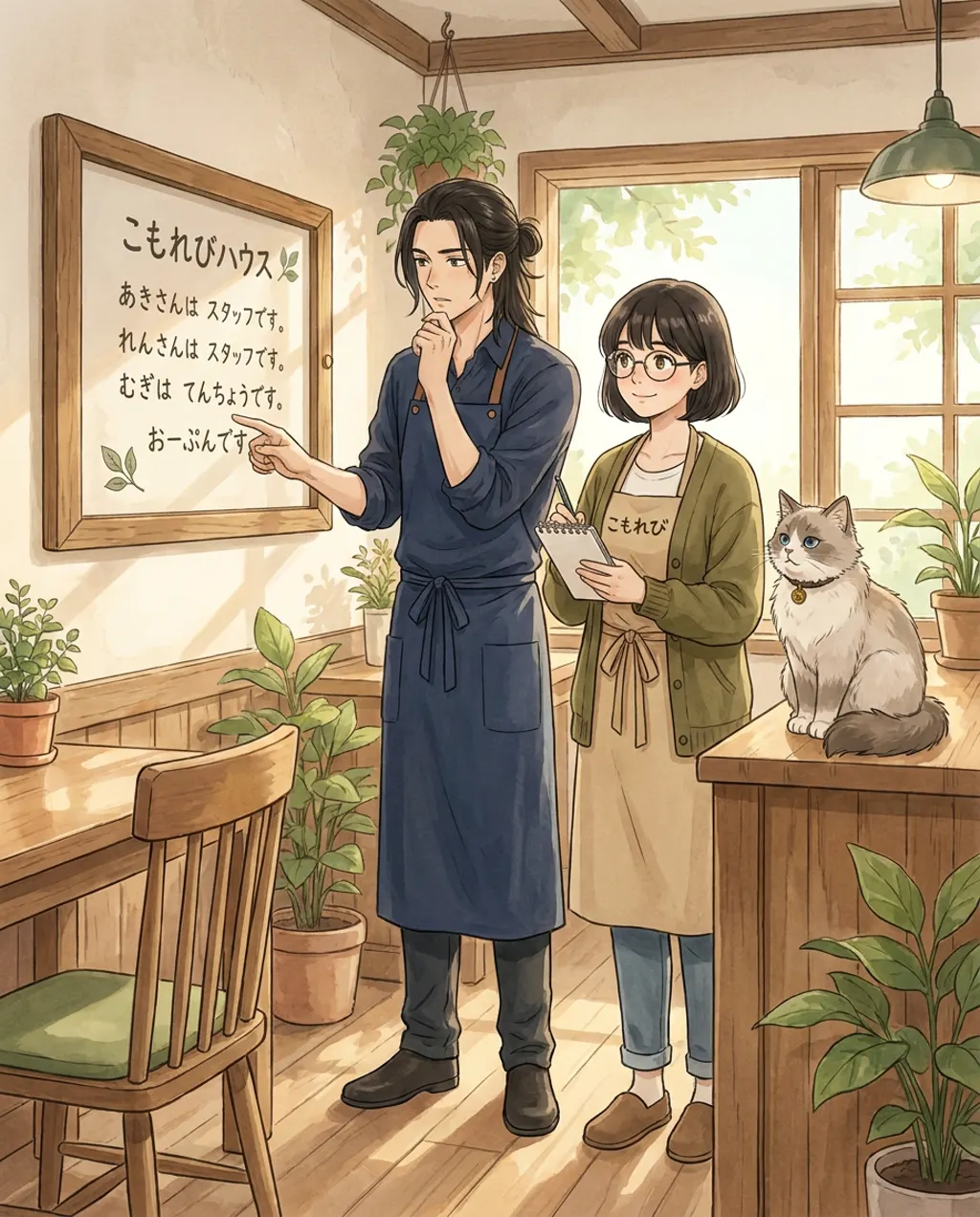
The illustrated tracks turn this advice into ten-minute lessons — a drawn scene, the words it used, and a short explanation. Lesson one is free.
More Japanese guides

How to Start Learning Japanese (A Realistic First Month)
A week-by-week plan for your first month of Japanese: what to learn first, what to skip, and how much time it actually takes.

Learn Hiragana and Katakana Without the Flashcard Grind
A faster route through both kana scripts: read real signs, menus and prices from day one instead of memorising a 46-cell chart.

JLPT N5: What's Actually on the Exam and How to Prepare
The real N5 requirements — vocabulary, kanji, grammar and listening — with a study plan sized to the time you have before the test.