Catalog
Every course, every lesson
The complete index of the illustrated Japanese tracks — what each lesson teaches and the scene it is drawn around. Lesson one of every track is readable in full, free.
Japanese Foundations
Your first Japanese, told as one story in a small café
Foundations is one continuous story. You walk into Komorebi House, a café where the staff board is mislabelled and the cat has opinions, and every lesson gives you the exact Japanese that scene needs — greetings, then names, then places, then your first verbs. Each lesson is drawn, so the words attach to a picture and a person rather than a list.
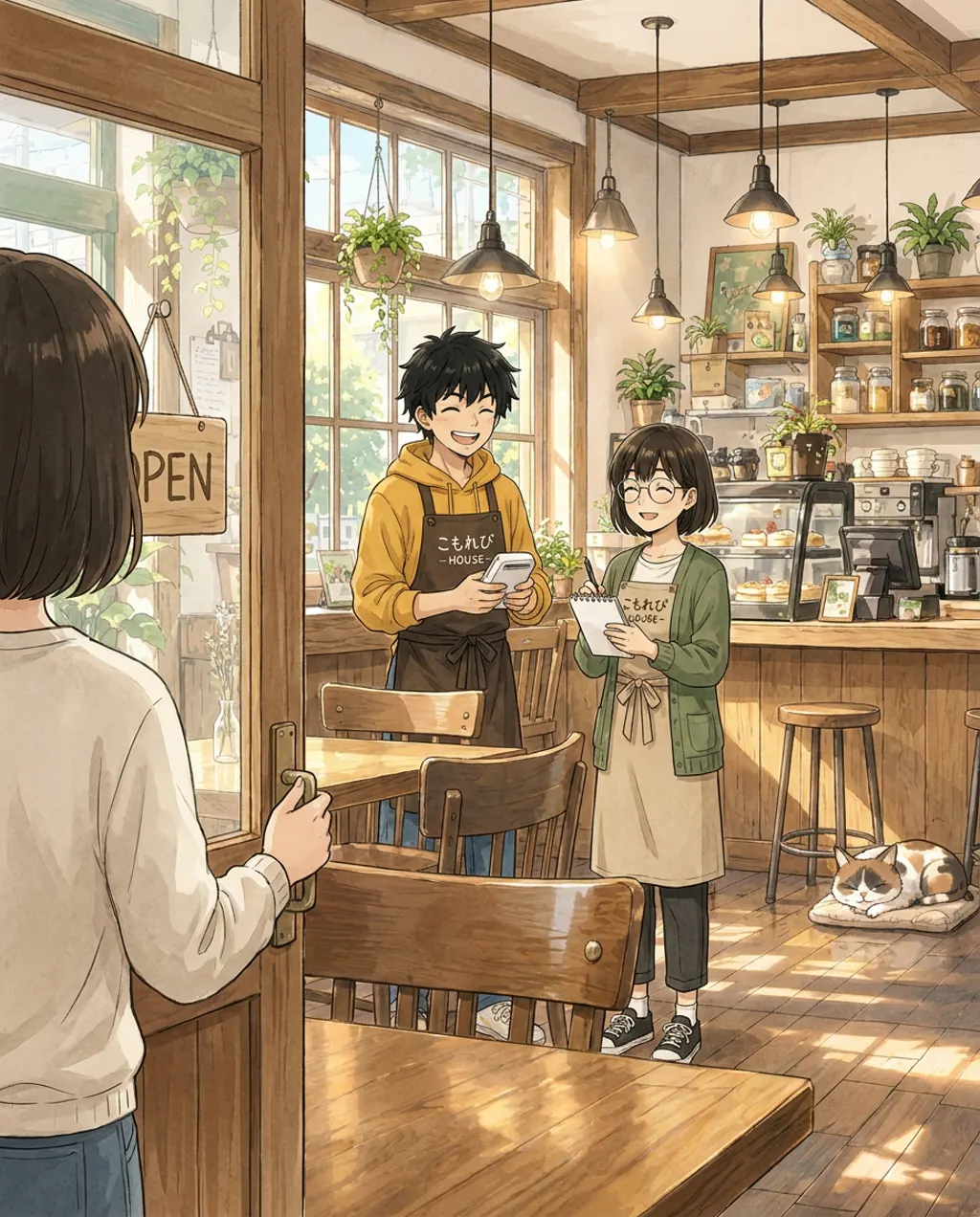
Lesson 1 · free preview · ~8 min
The Door with Two Signs
Greet someone, thank them, get their attention, and answer a yes-or-no question.
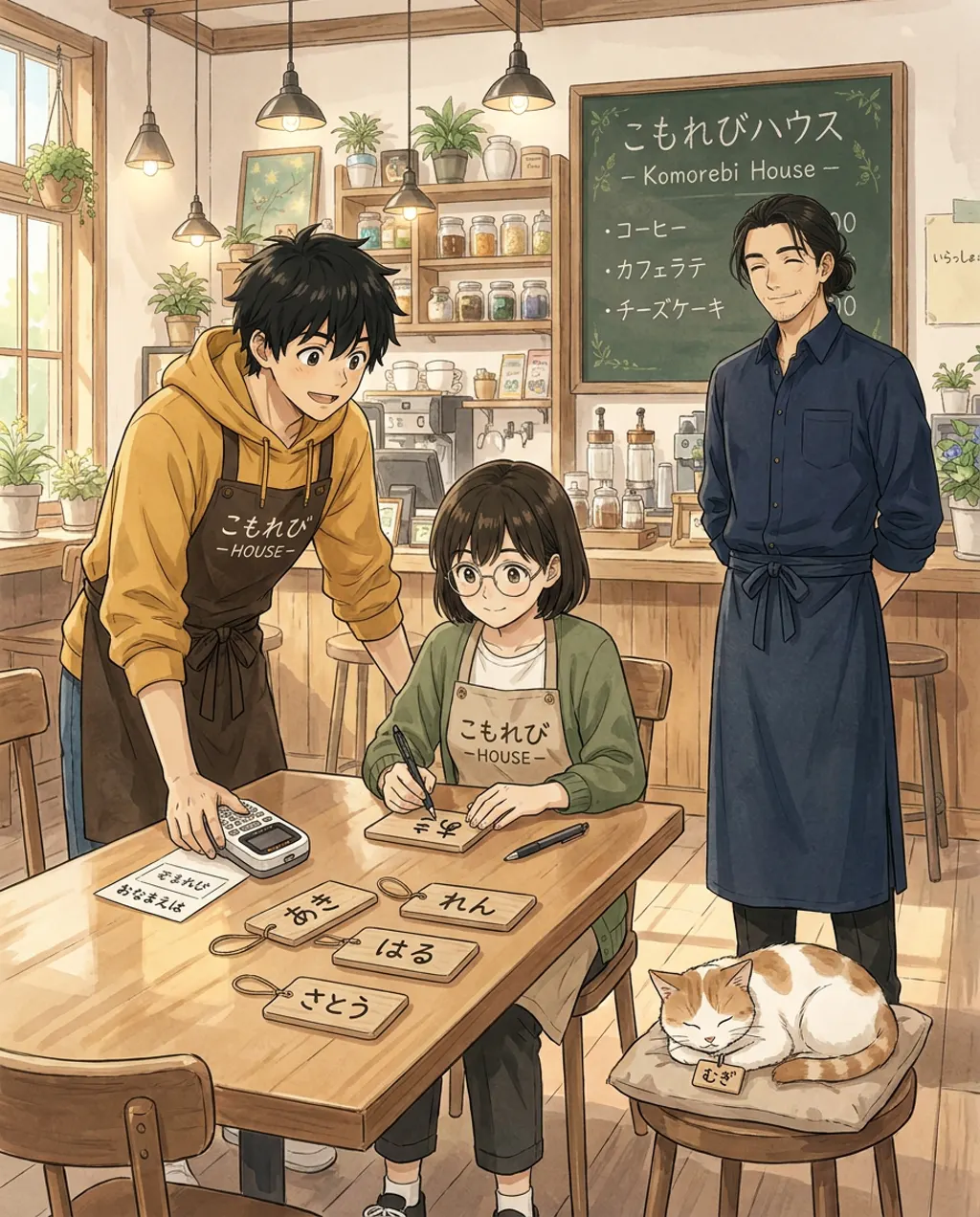
Lesson 2 · ~10 min
A Name Tag for Everyone
Say your own name, and say who someone else is.
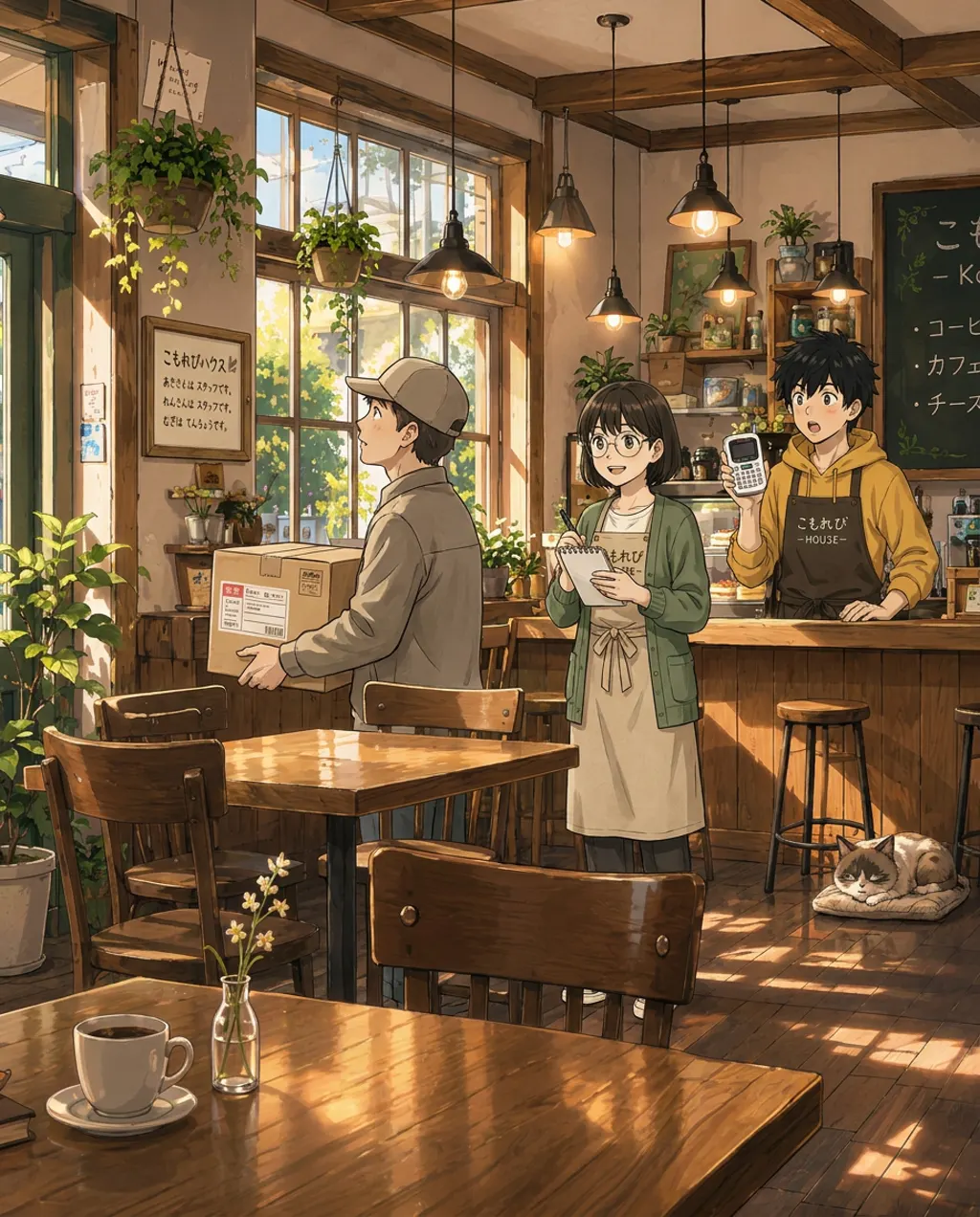
Lesson 3 · ~9 min
Is Mugi the Manager?
Ask a yes-or-no question, answer one, and say that something applies to someone else too.
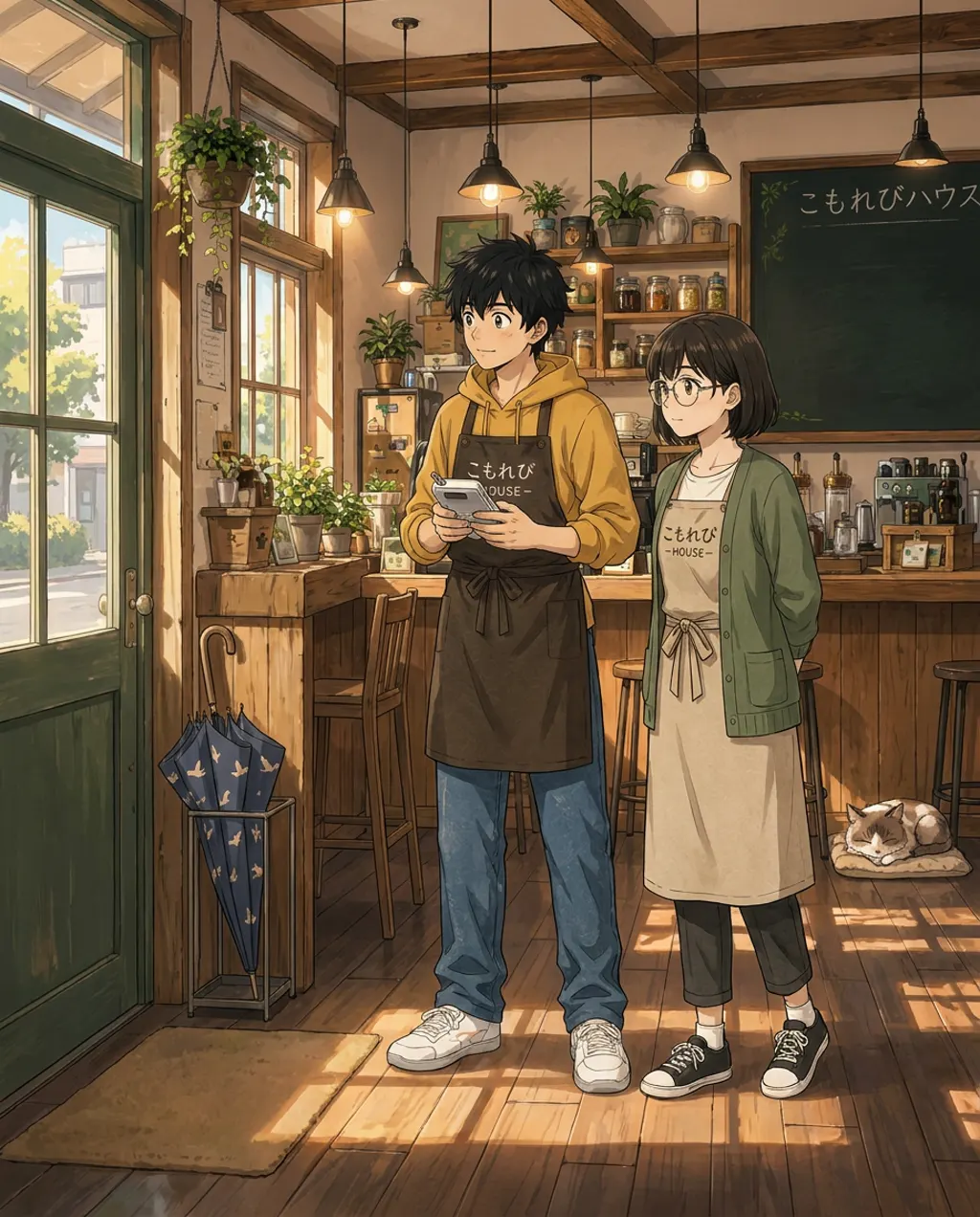
Lesson 4 · ~11 min
This, That and the Mystery Umbrella
Point out an object near you or near someone else, and say whose it is or is not.
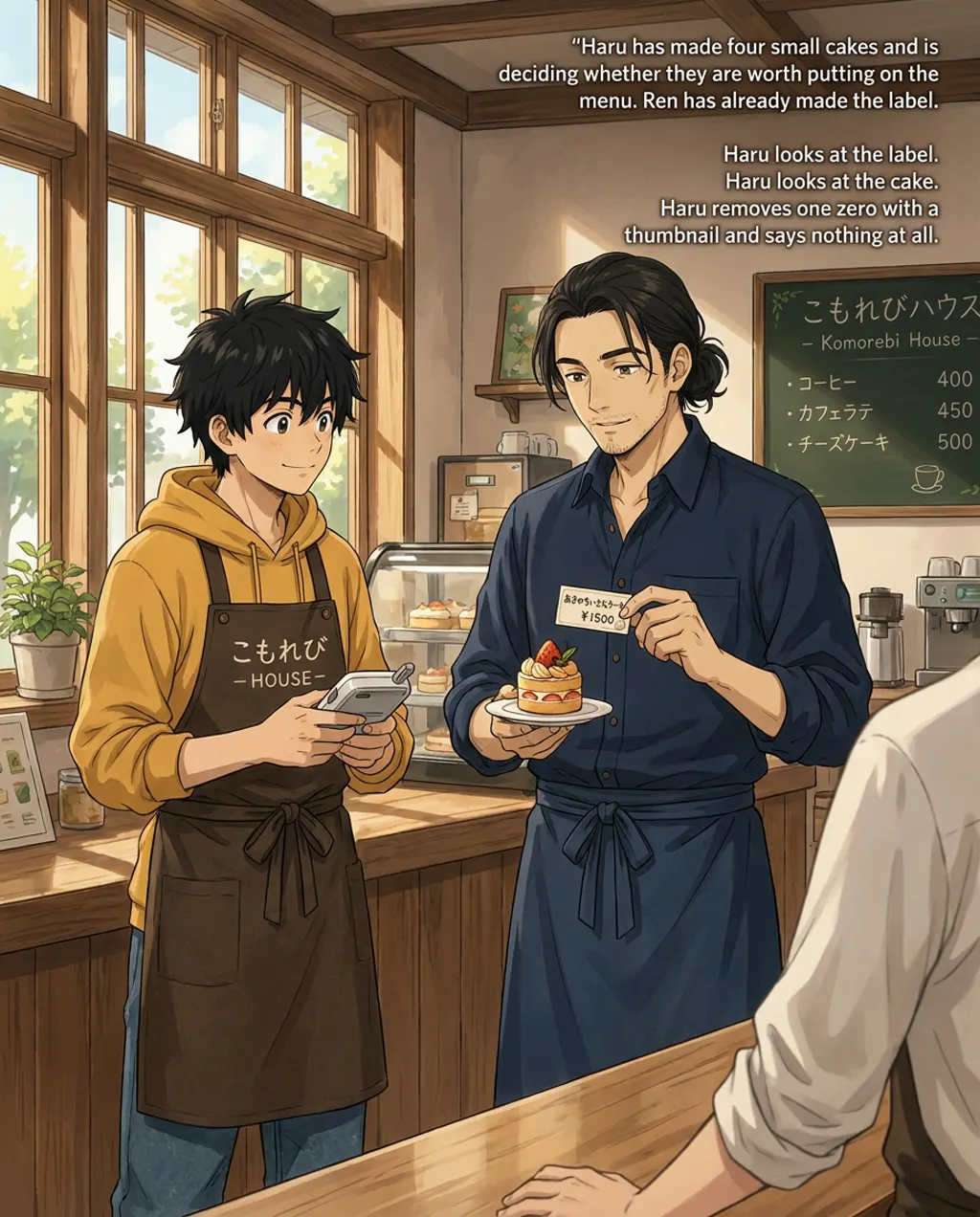
Lesson 5 · ~11 min
One Cake, Surprisingly Expensive
Ask what something costs, understand the answer, and order one of it.
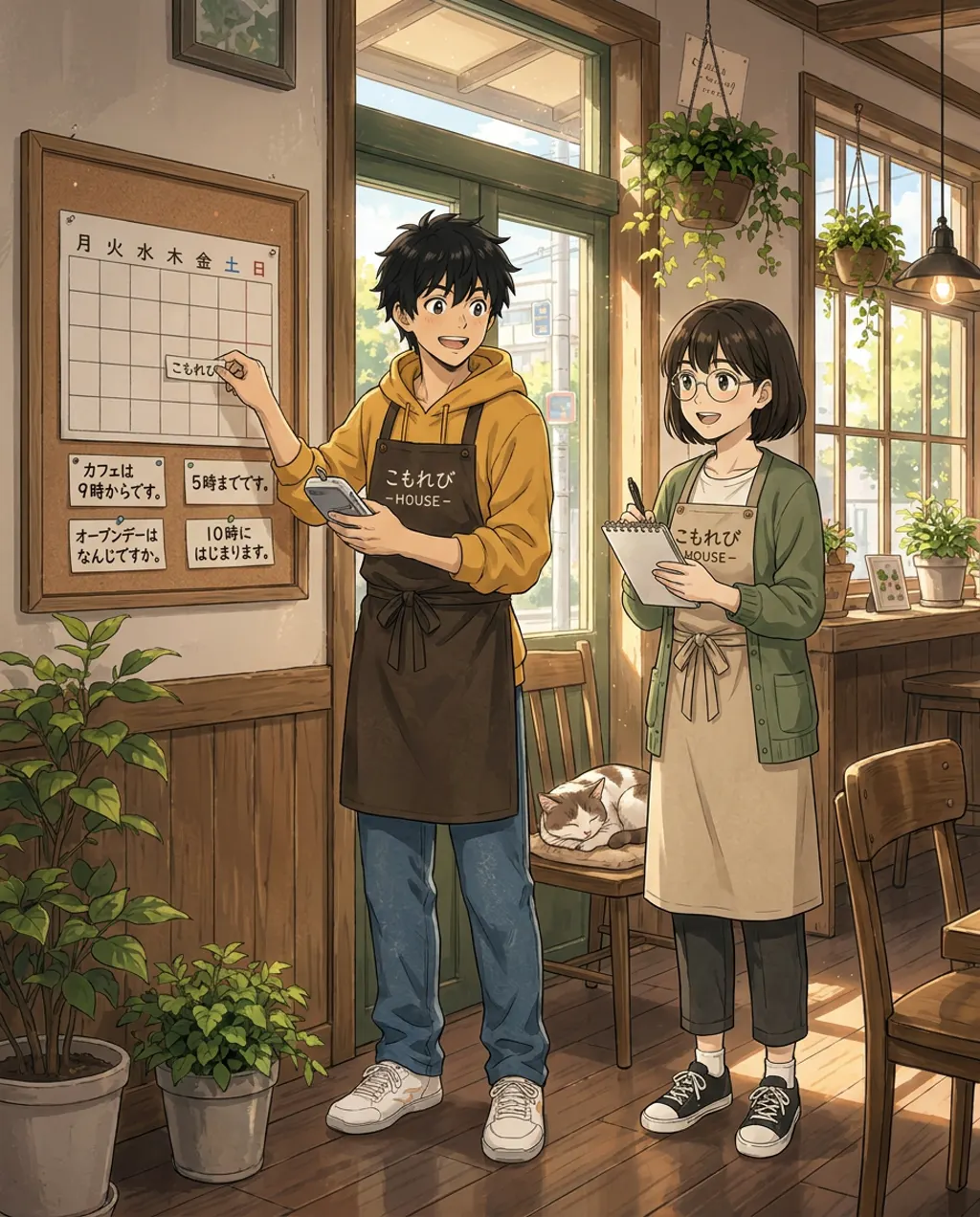
Lesson 6 · ~11 min
The Schedule Has Three Mondays
Ask what time something starts, and say when something happens or how long it runs.
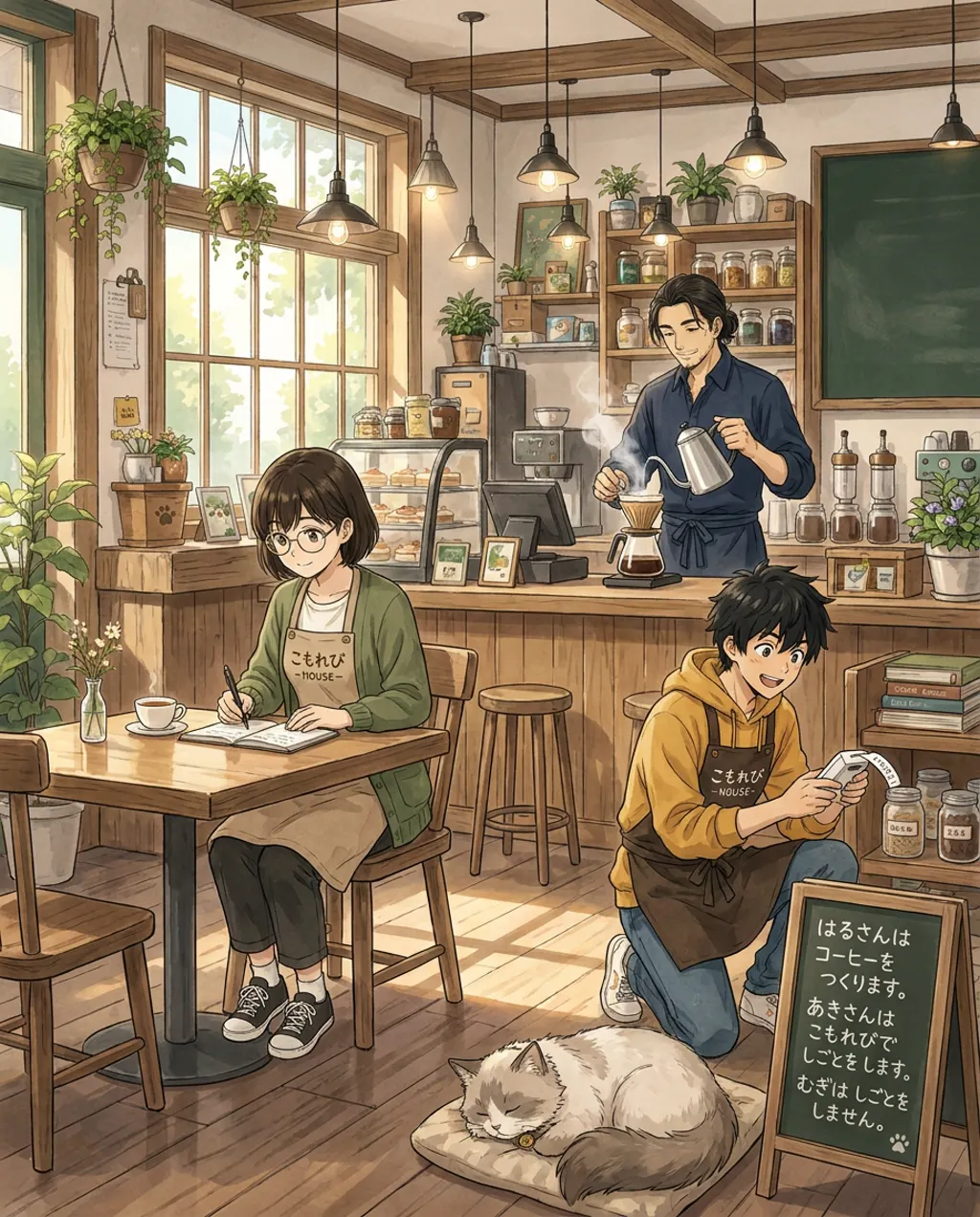
Lesson 7 · ~12 min
What Happens at Komorebi?
Say what someone regularly does, what they do it to, and where.
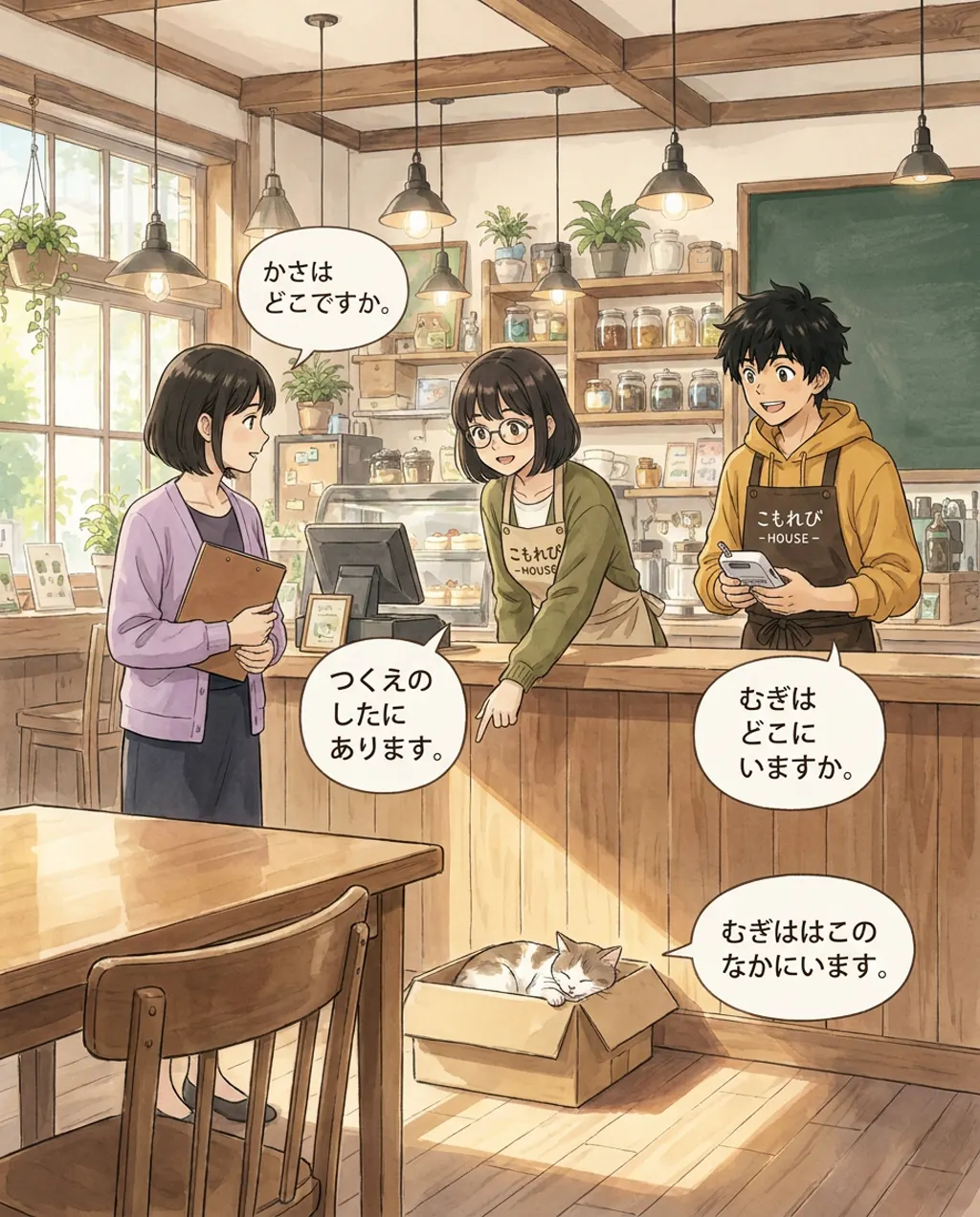
Lesson 8 · ~12 min
Where Is the Cat?
Ask where something or someone is, and describe where it is in relation to something else.
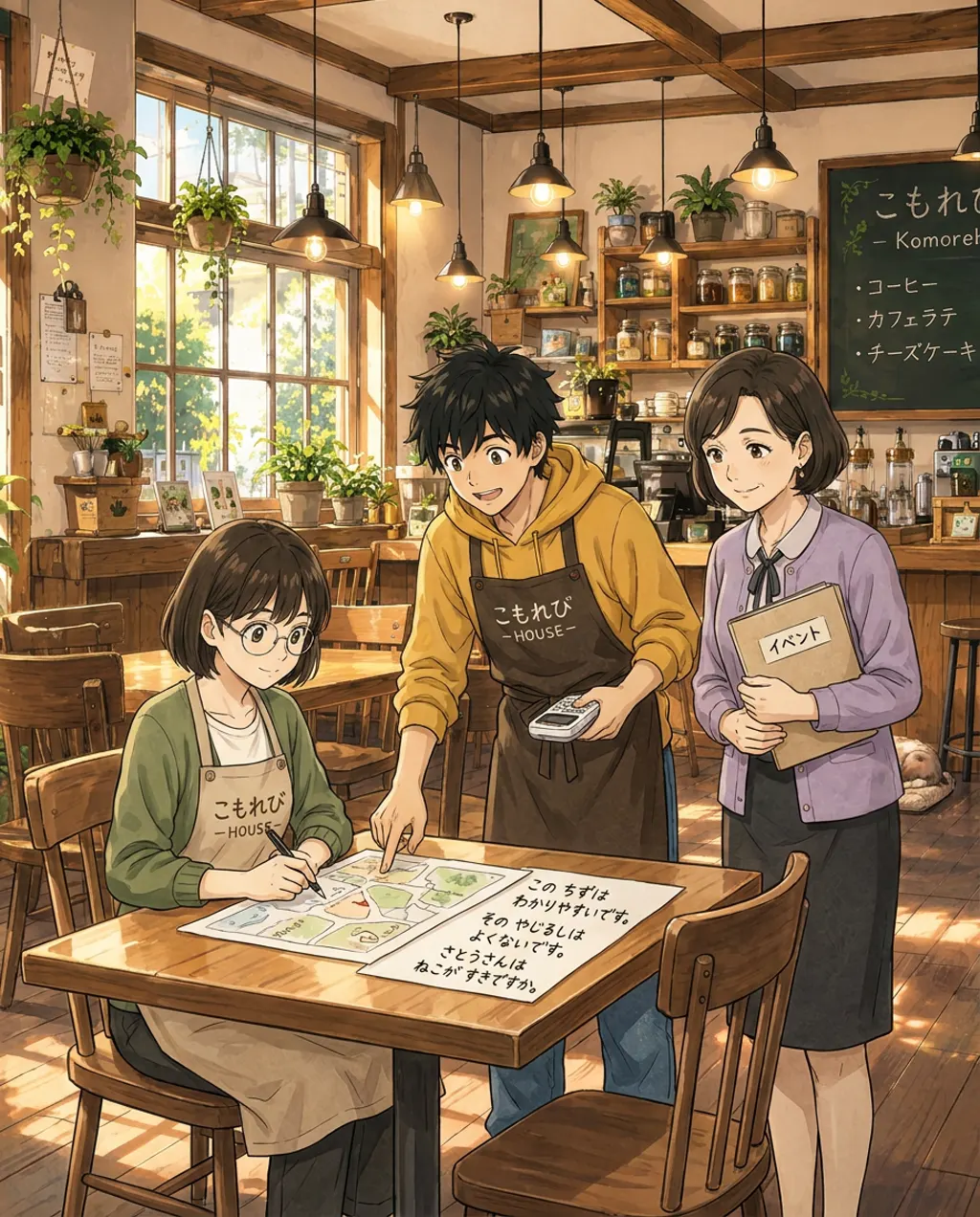
Lesson 9 · ~12 min
Good Coffee, Bad Map
Describe something as good, bad, big or small, and say what you like.
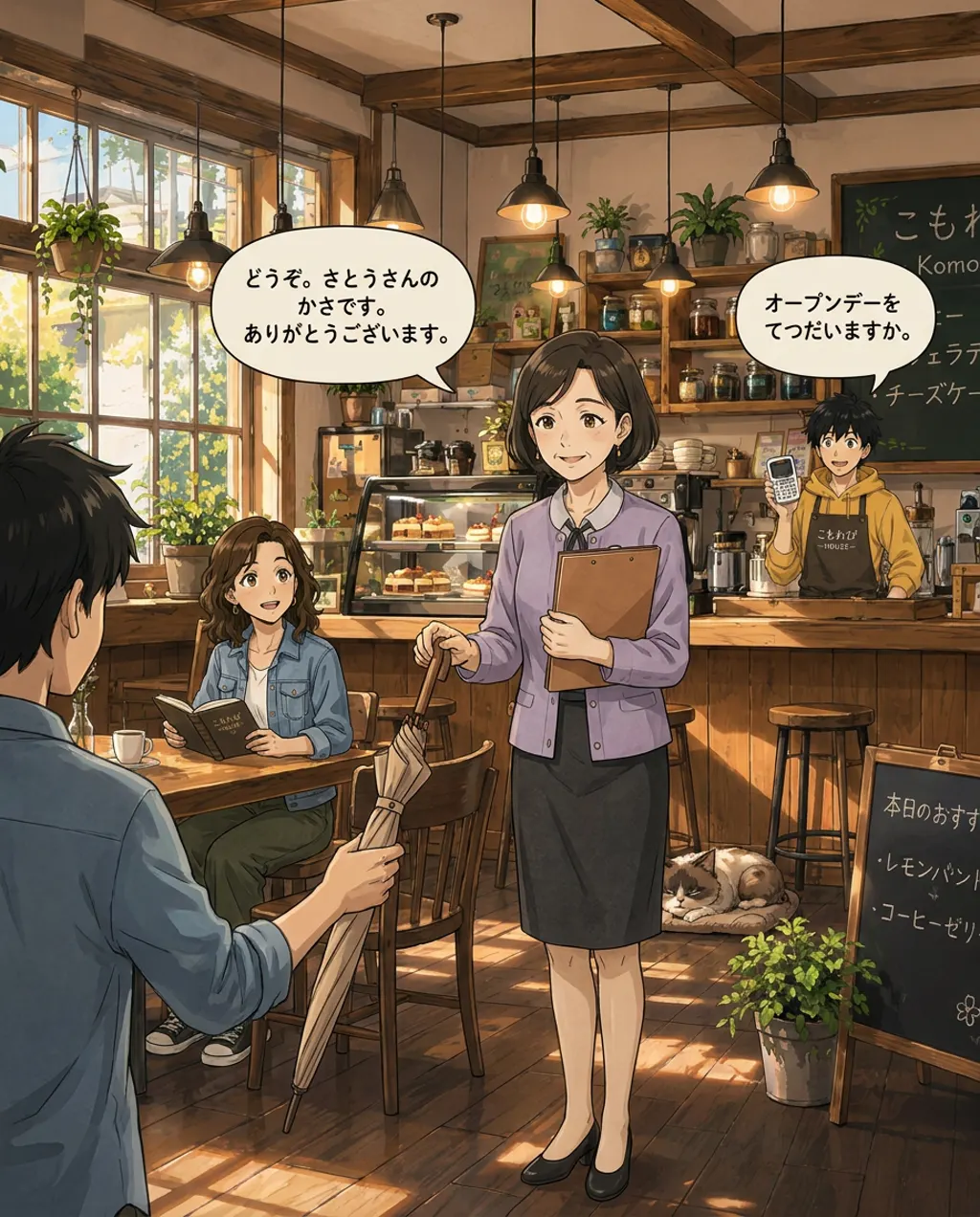
Lesson 10 · ~14 min
The Umbrella Returns
Hand something over, thank someone, ask them to repeat, and accept an invitation.
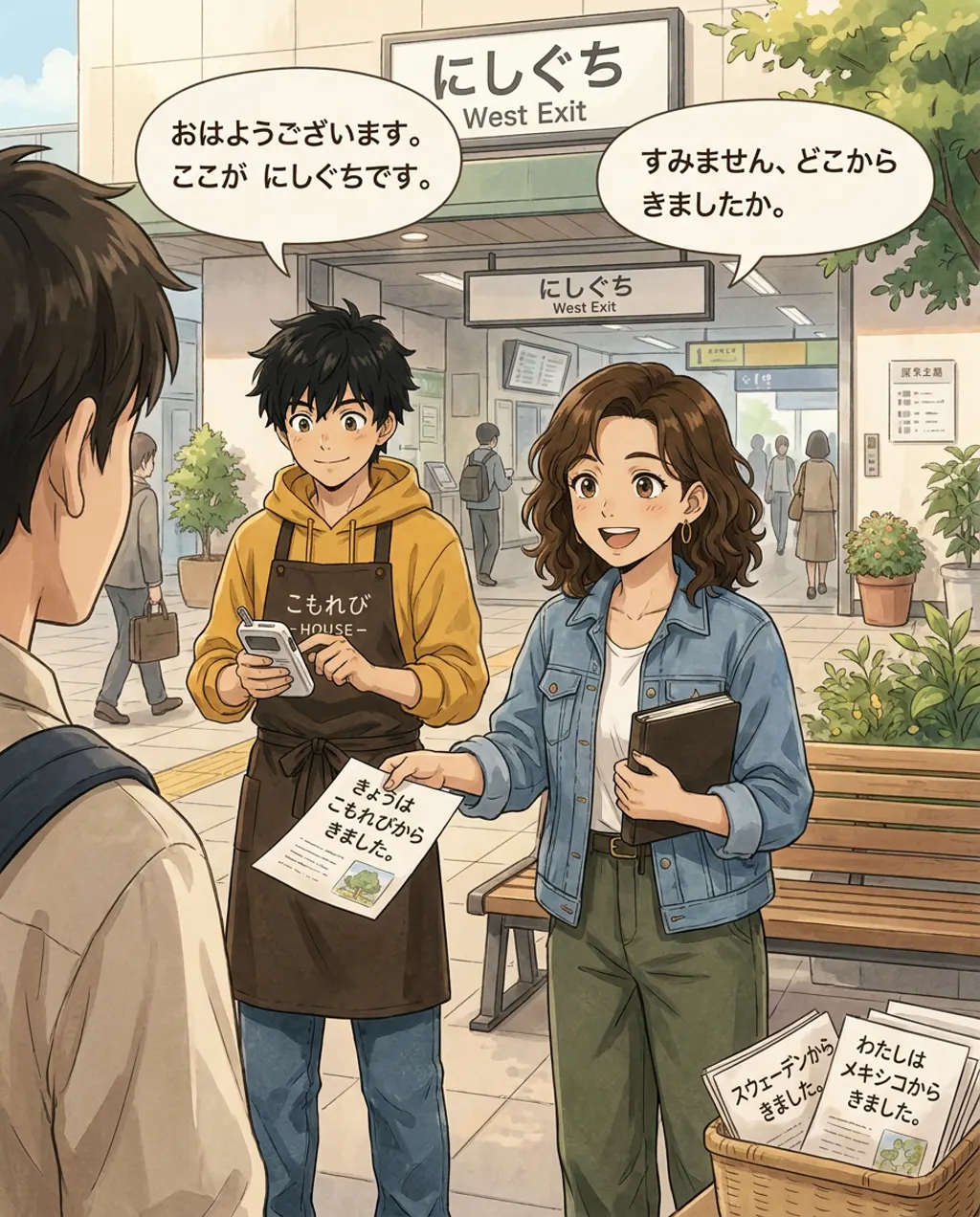
Lesson 11 · ~12 min
Where You Came From
Say which country or town you came from, and ask someone the same.
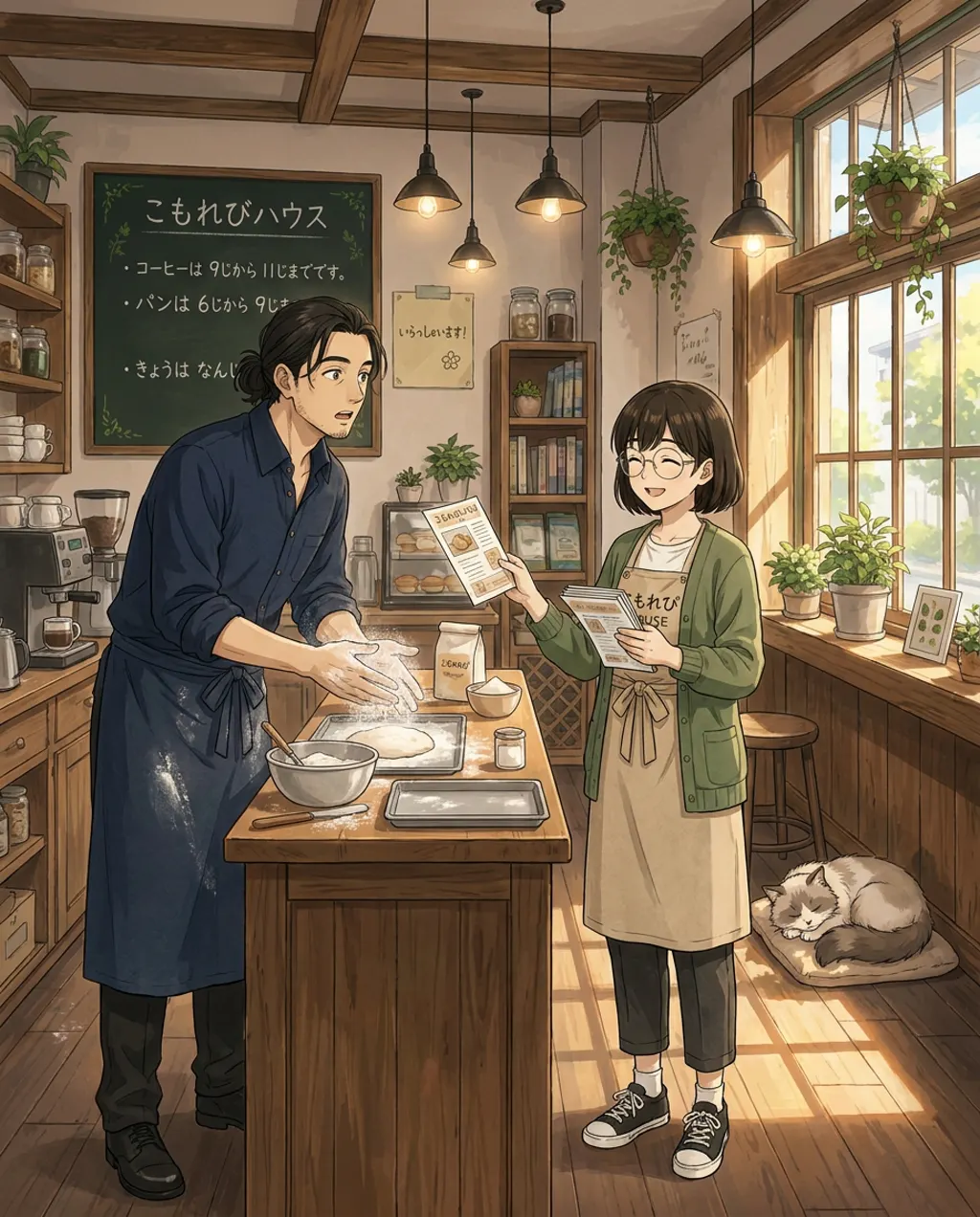
Lesson 12 · ~12 min
From Six to Nine
Say when something runs from and until, using clock times.
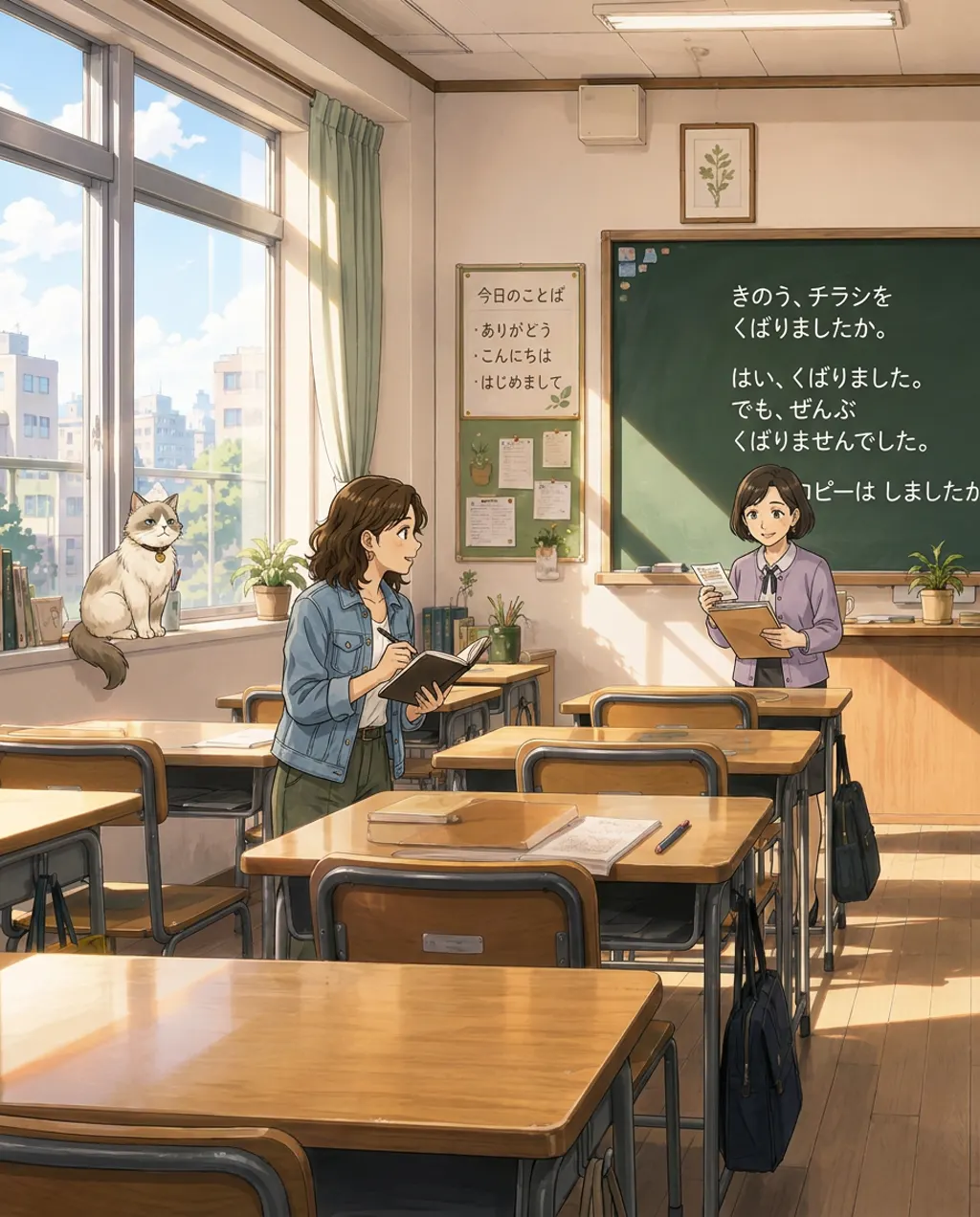
Lesson 13 · ~12 min
What Didn't Happen
Say what you did and did not do yesterday.
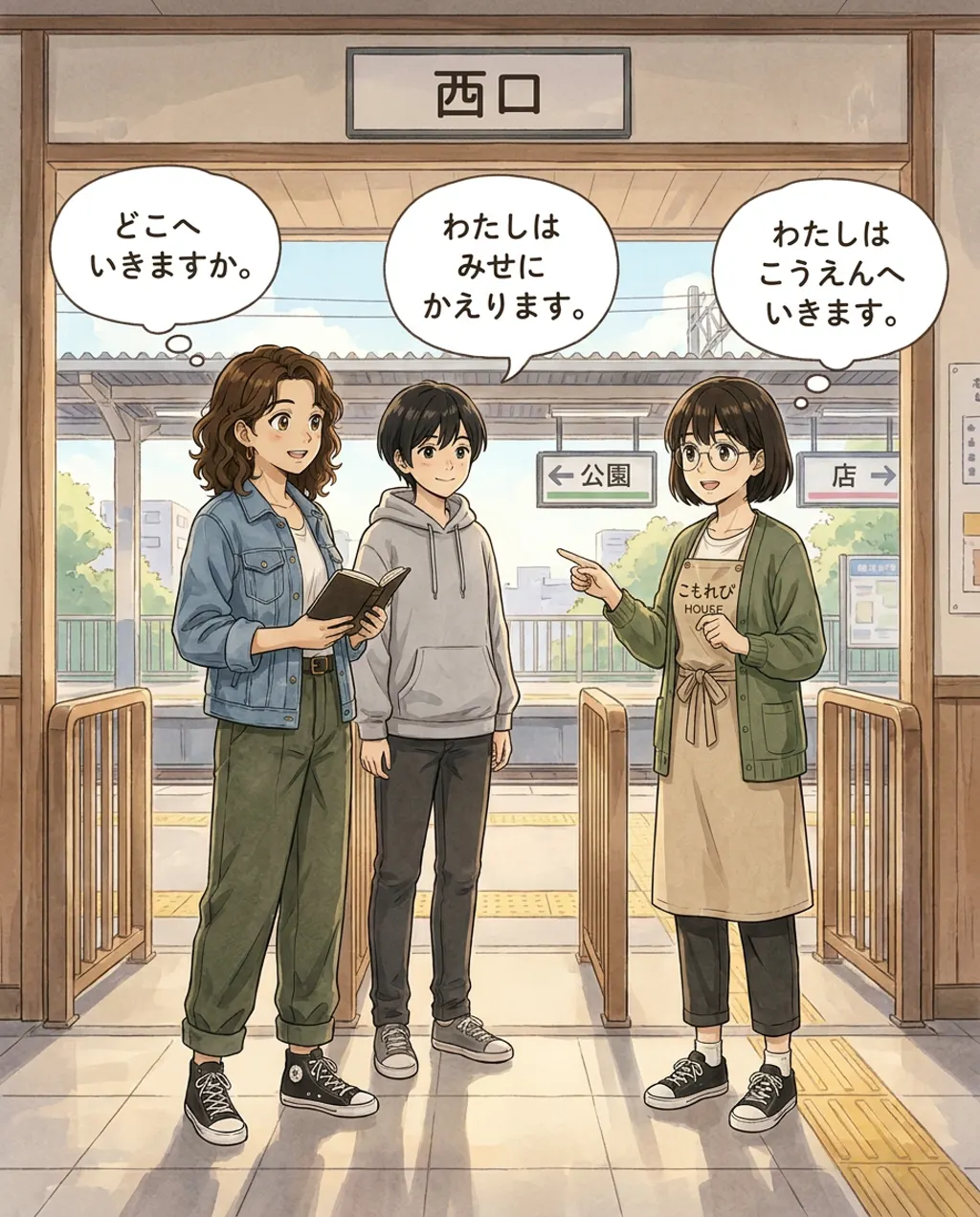
Lesson 14 · ~12 min
Which Way From Here
Say where you are going, coming from or heading back to.
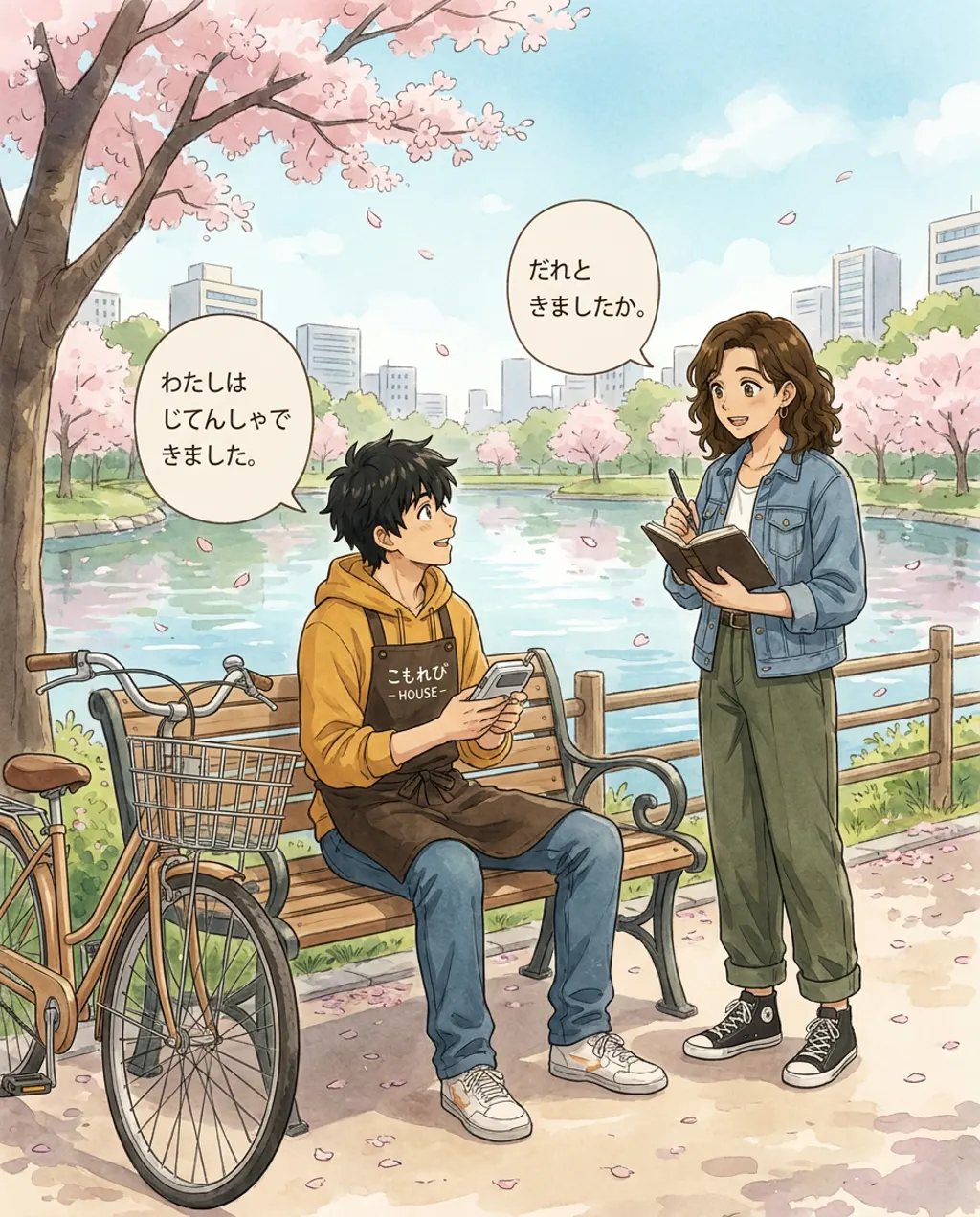
Lesson 15 · ~12 min
With Whom, By What
Say who you did something with.
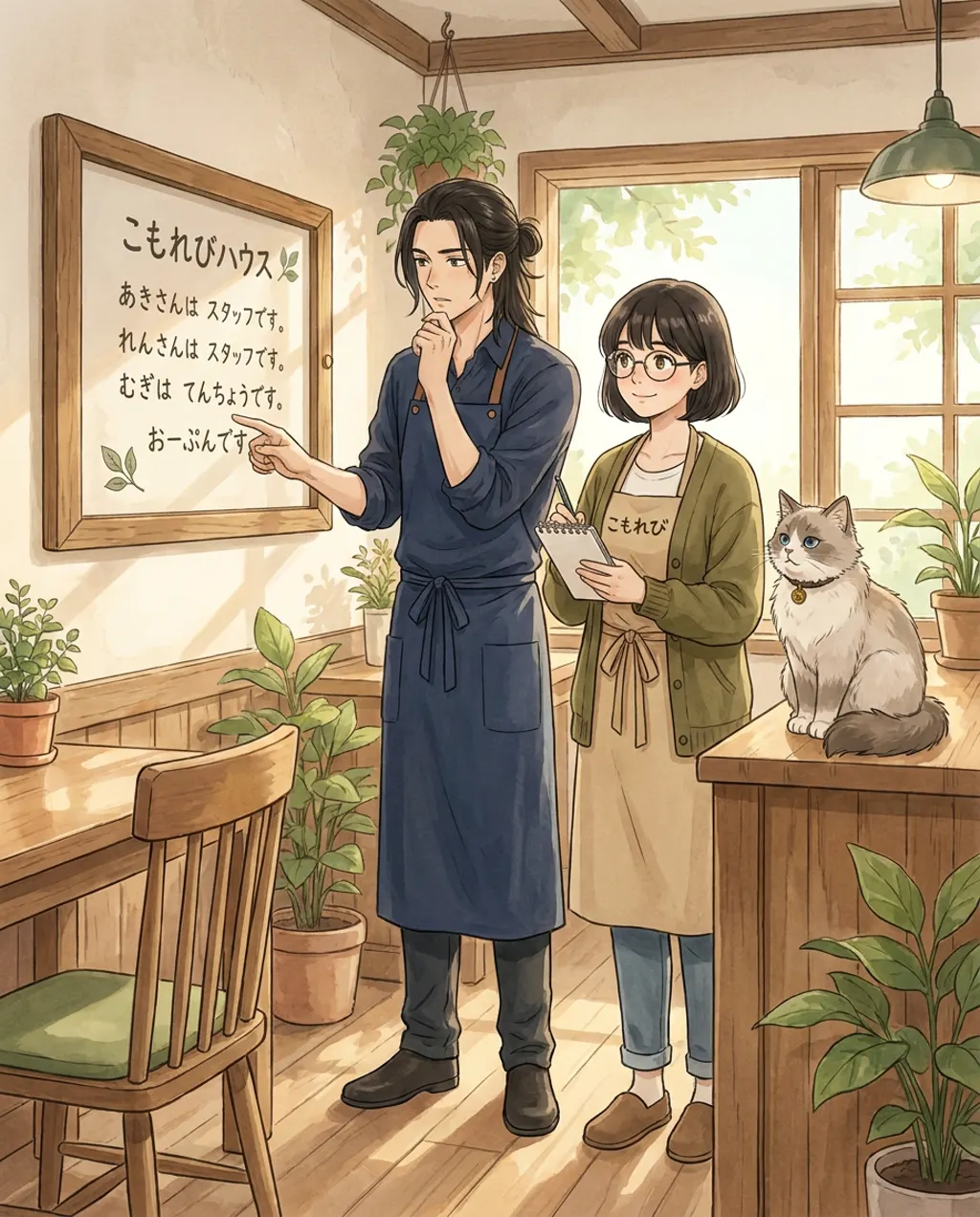
Lesson 16 · ~12 min
The Order Things Go In
Build a sentence with a time, a place, a thing and a verb in the usual order.
Japanese N5
The whole JLPT N5 syllabus as an illustrated story arc
The N5 track covers the grammar and vocabulary the exam expects, in the order a story needs them. Every point — は and が, the te-form, ~てください, comparisons, past tense — arrives because a character has to say something, and comes back in later scenes so it sticks. The recurring cast means new words land against people you already know.
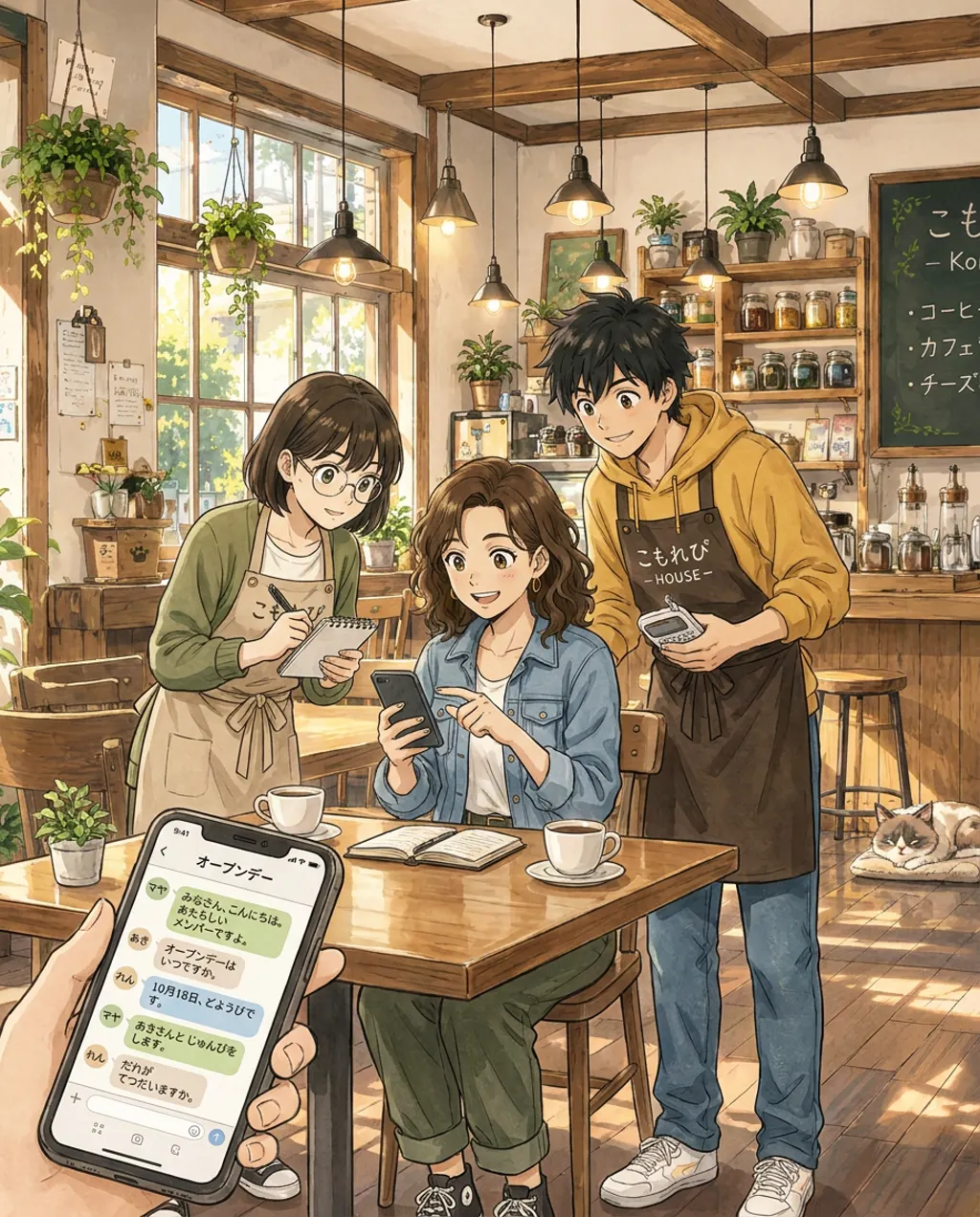
Lesson 1 · free preview · ~13 min
The Invitation in the Group Chat
Read a short group invitation and introduce yourself to the group.
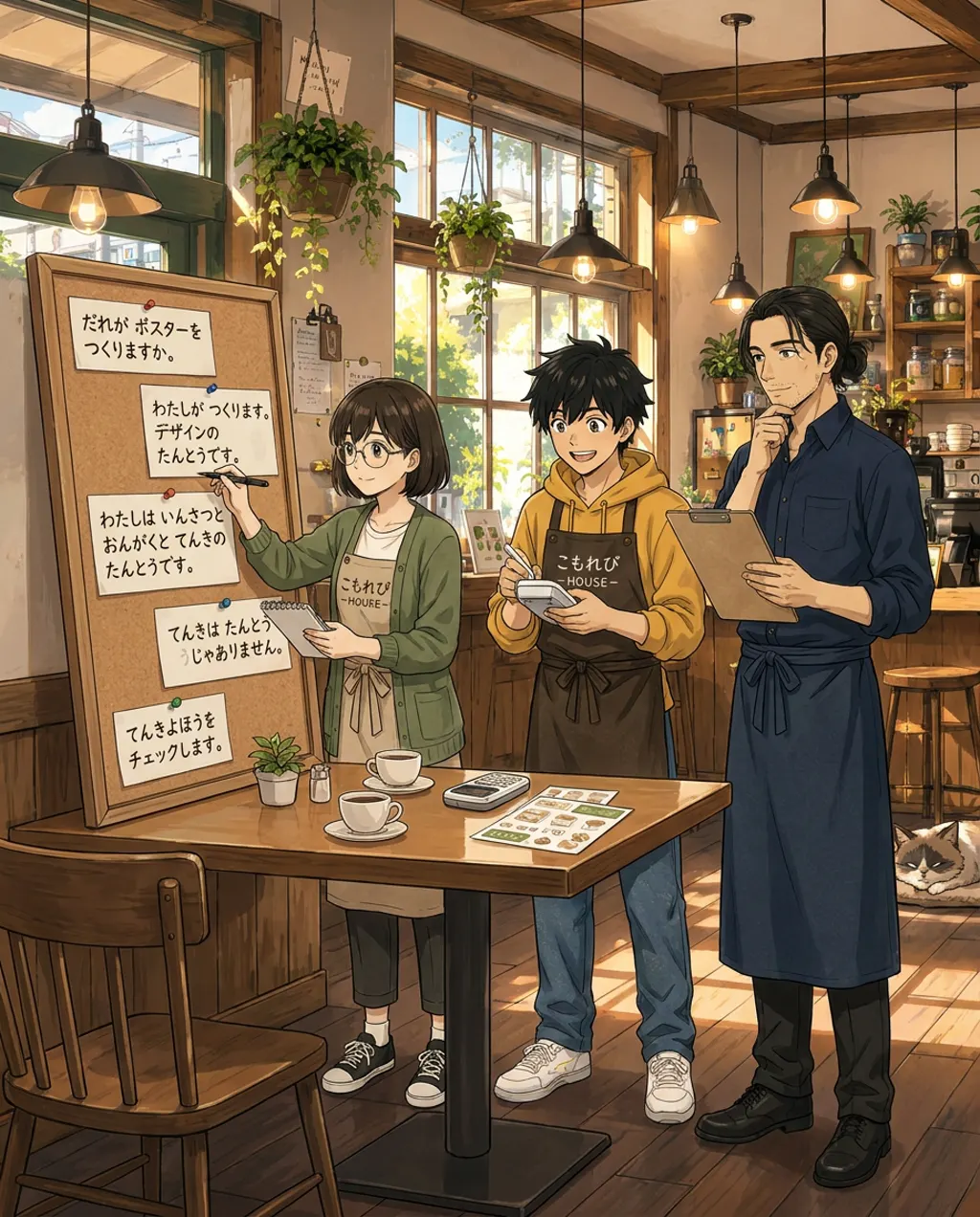
Lesson 2 · ~13 min
Who Does What?
Say who is responsible for an activity, and read a simple team list.
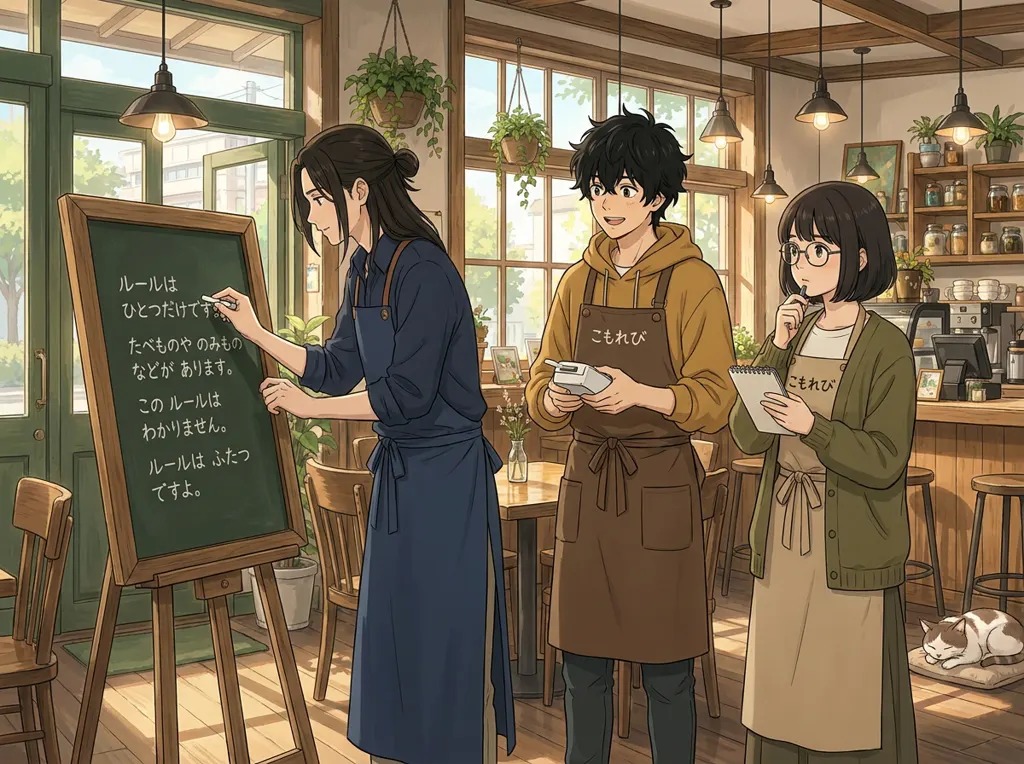
Lesson 3 · ~13 min
Only One Rule, So Far
Read a short list, say that it is complete or only examples, and say that there is only one of something.
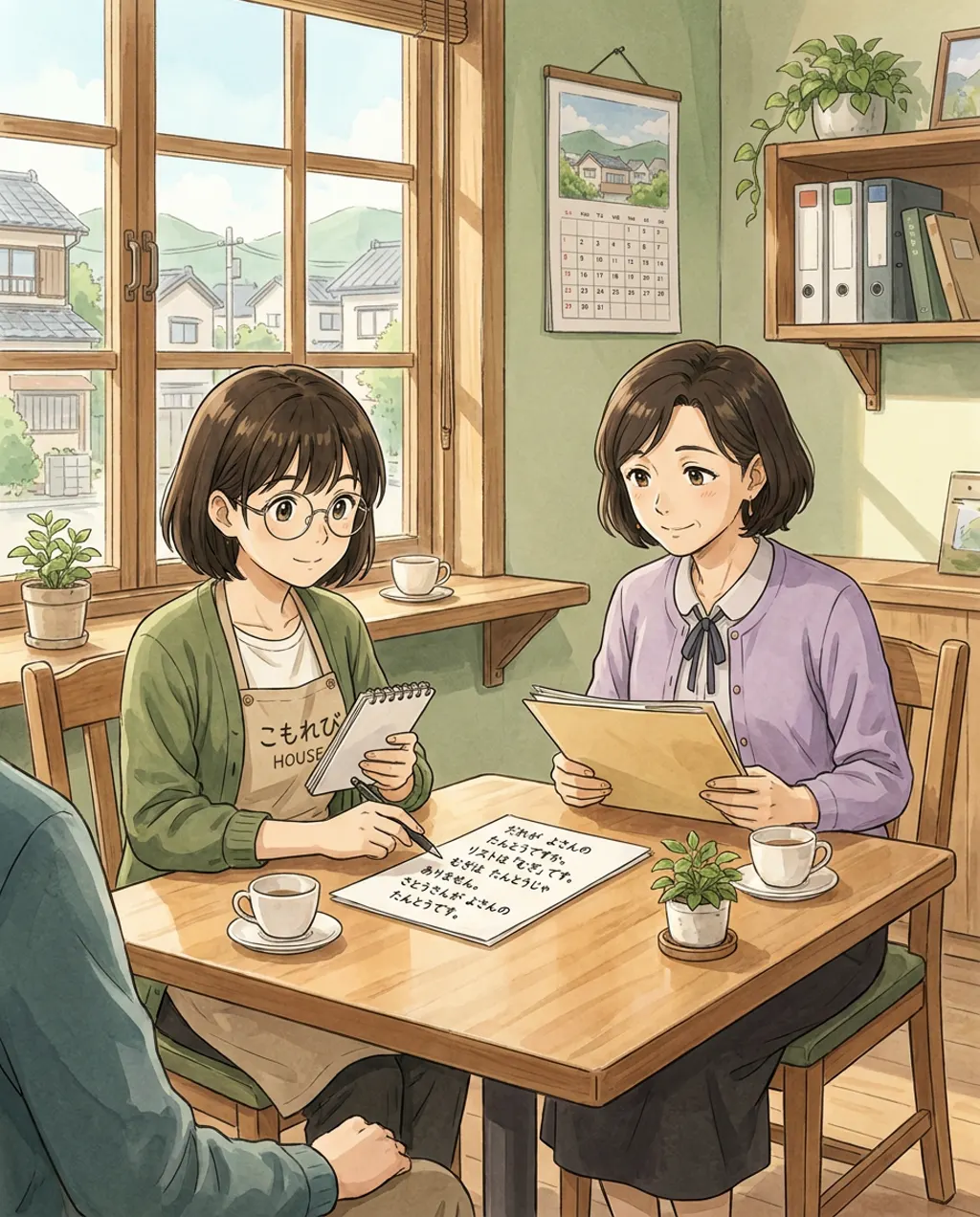
Lesson 4 · ~15 min
Team Profile Checkpoint
Read short team profiles, identify each person's role, and send a confirmation message.
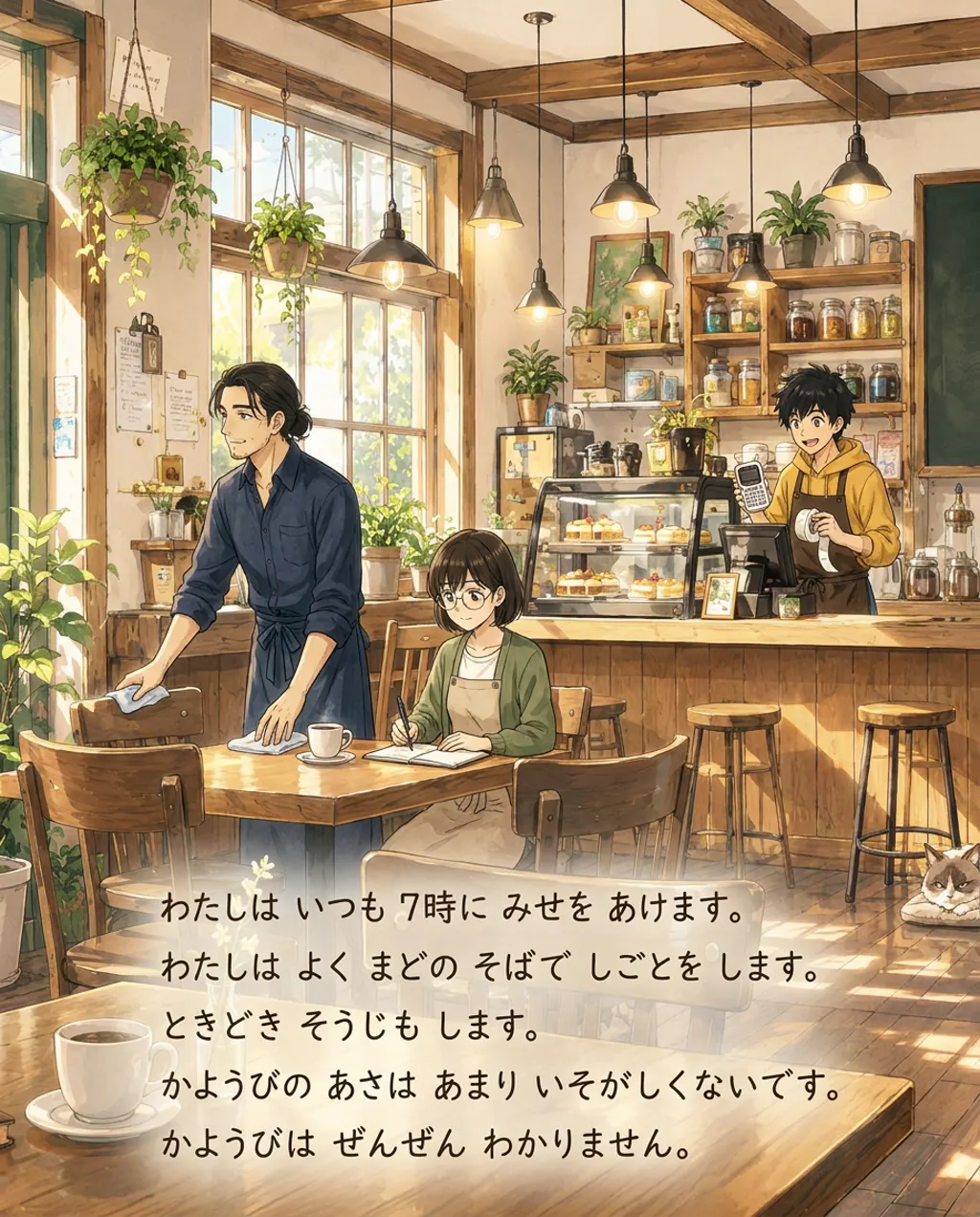
Lesson 5 · ~13 min
Every Morning, Except Tuesday
Say how often something happens and when in the day it happens.
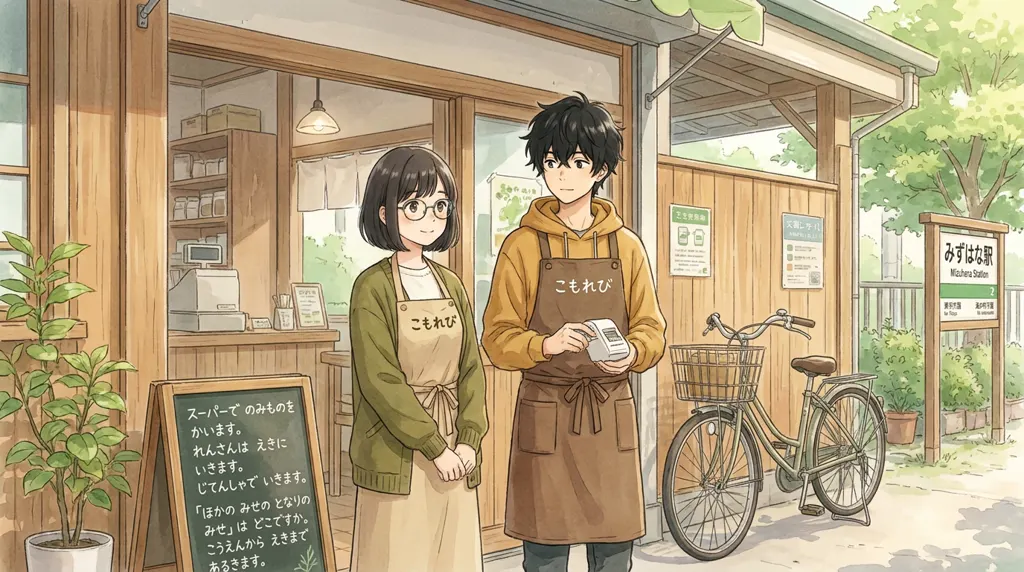
Lesson 6 · ~13 min
Do It Here, Go There
Say where an action happens, where someone is going, and how they are getting there.
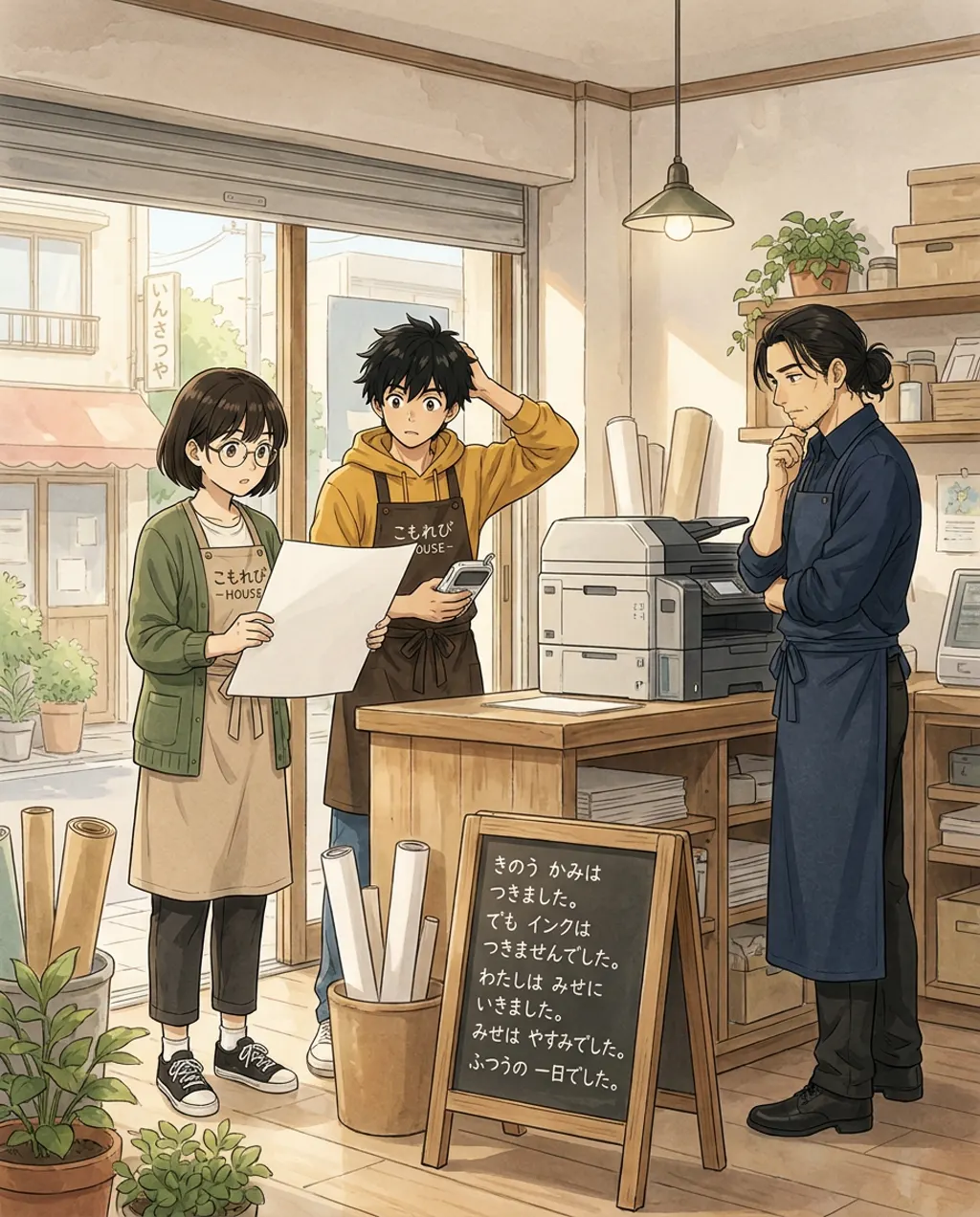
Lesson 7 · ~14 min
Yesterday's Perfectly Normal Disaster
Say what happened and what did not happen yesterday.
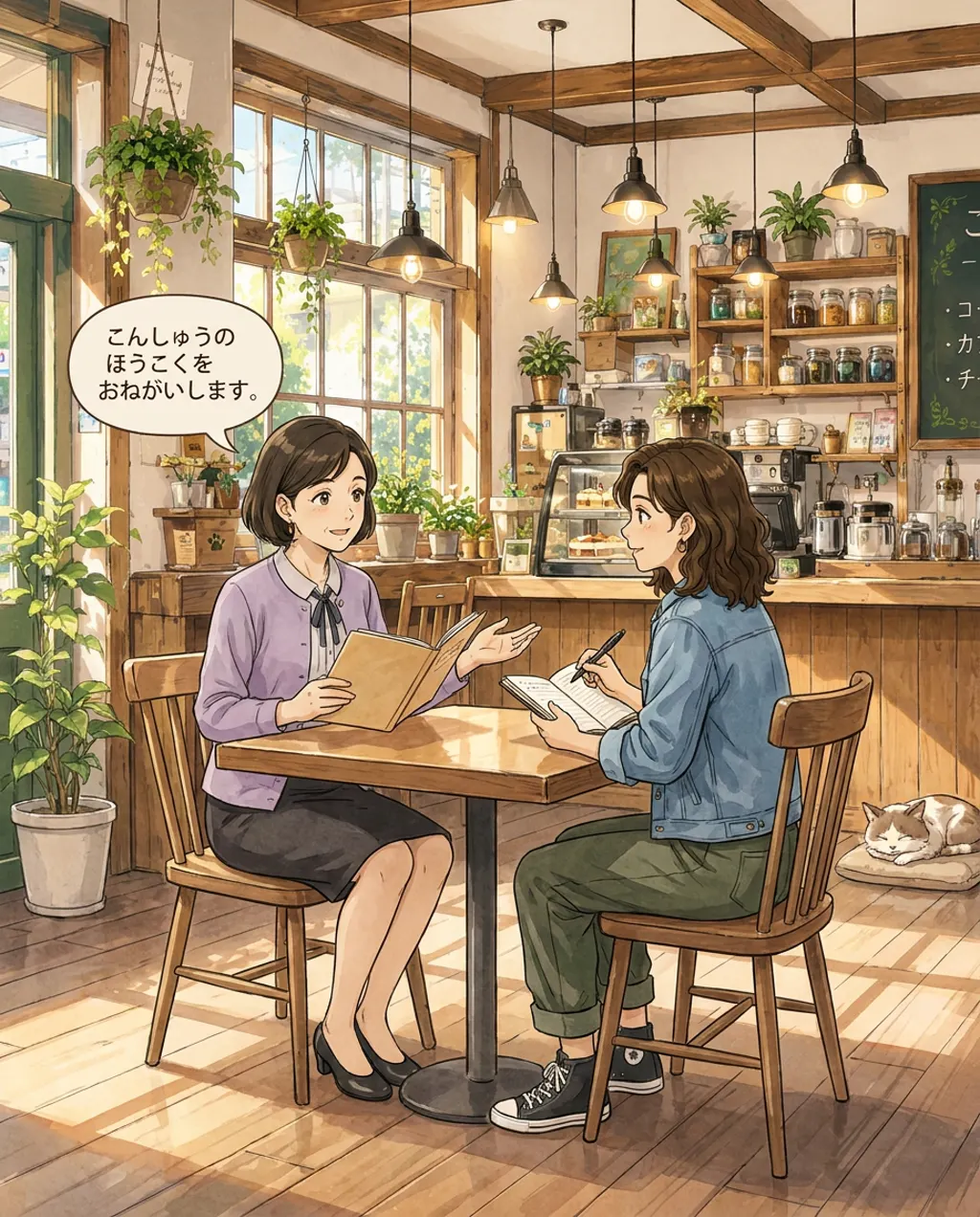
Lesson 8 · ~15 min
A Day in Messages Checkpoint
Follow a day across a schedule and a set of messages, and say what happened where.
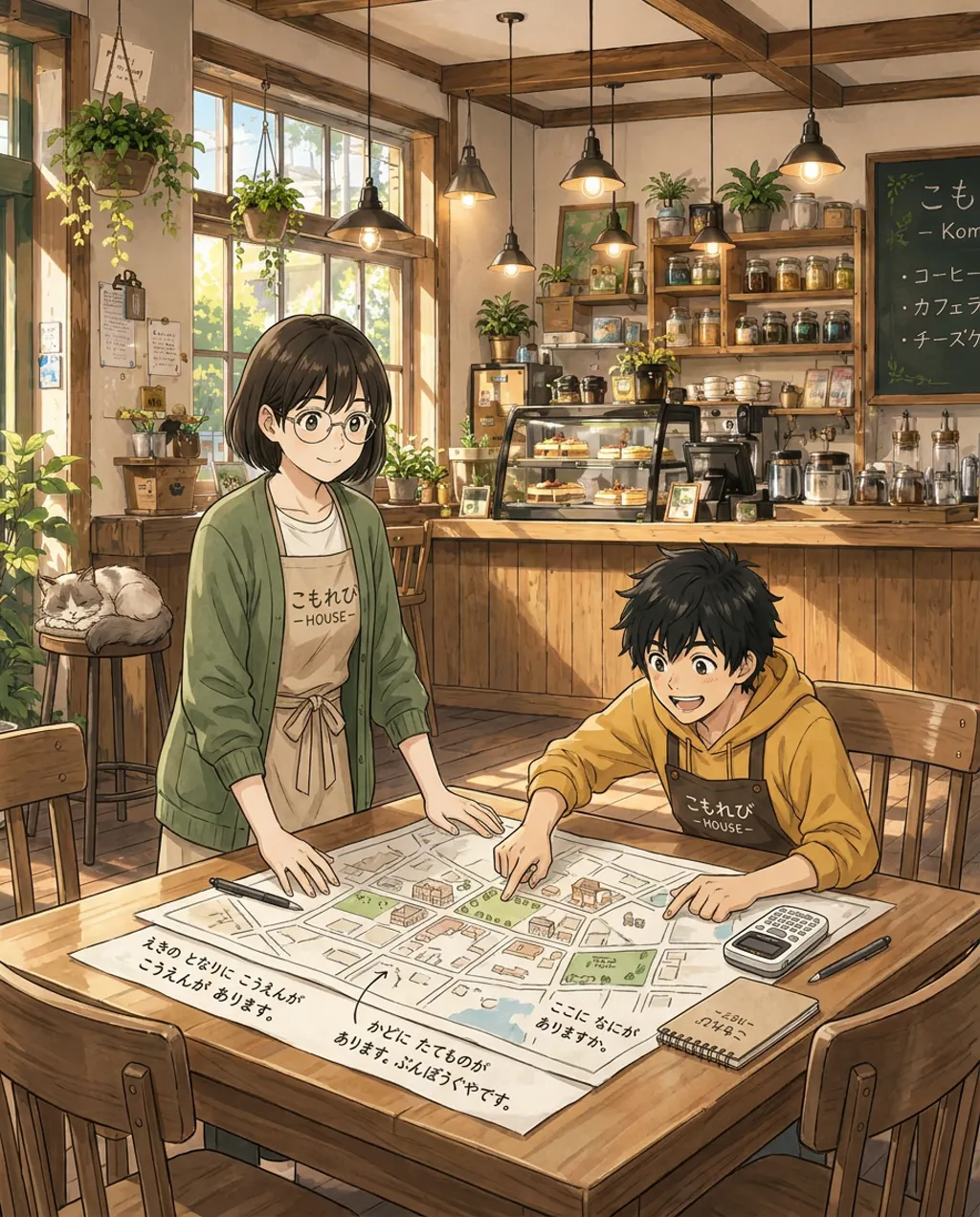
Lesson 9 · ~13 min
There Is a Cat on the Map
Say what is in a place, and ask what or who is there.
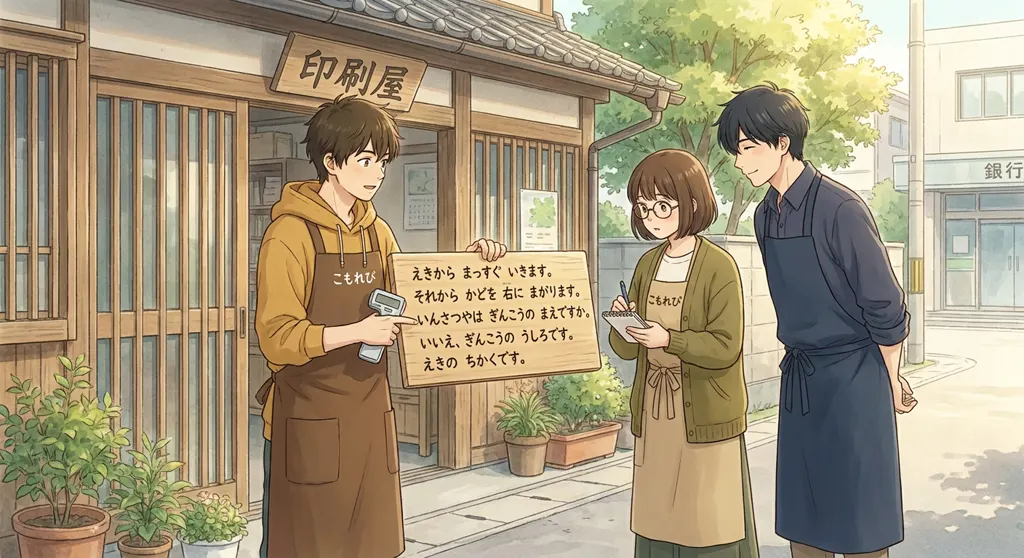
Lesson 10 · ~13 min
Next to the Station, Behind the Impossible Sign
Follow a two-step direction and give one yourself.
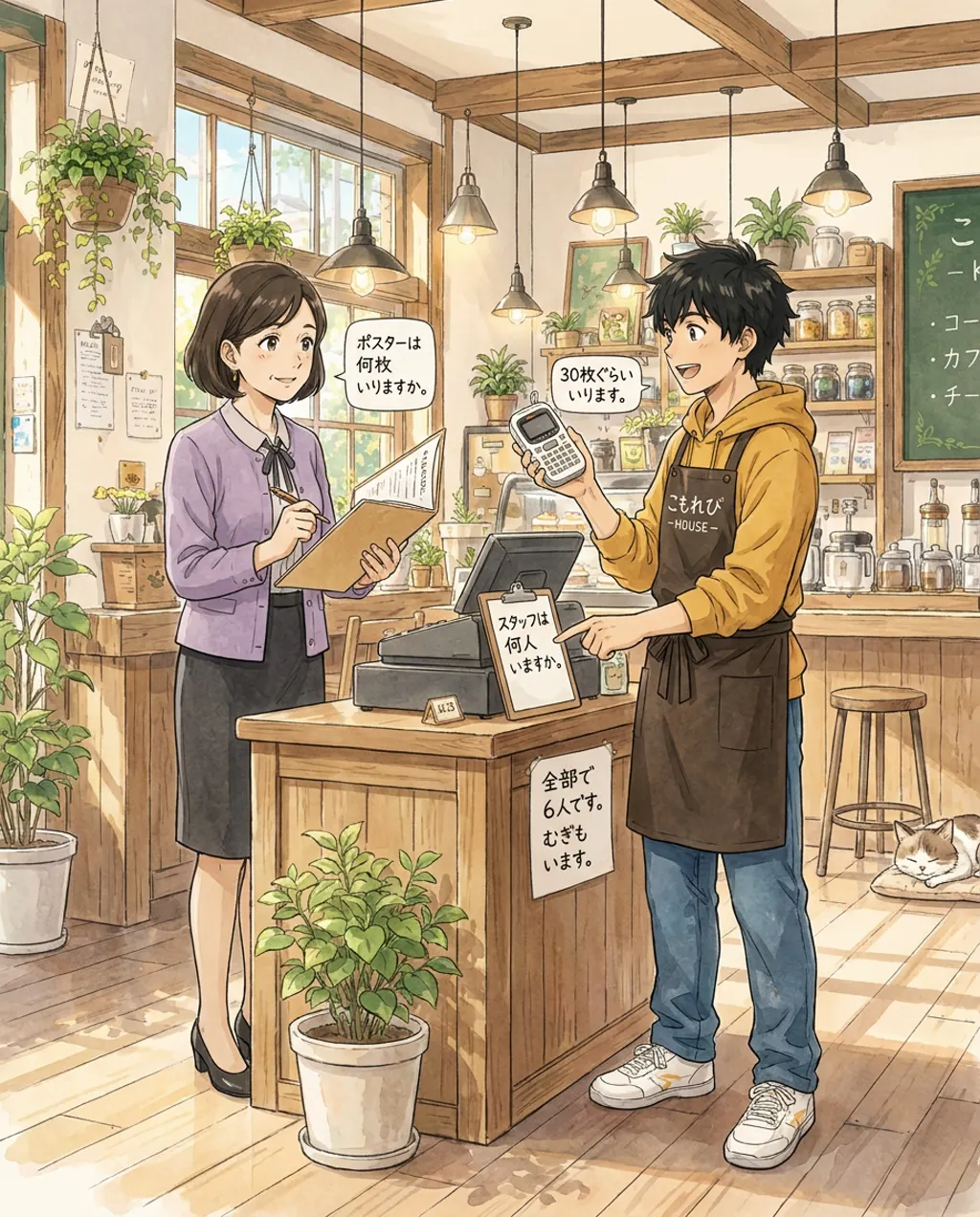
Lesson 11 · ~14 min
How Many Posters?
Ask how many of something is needed and answer with the right counter.
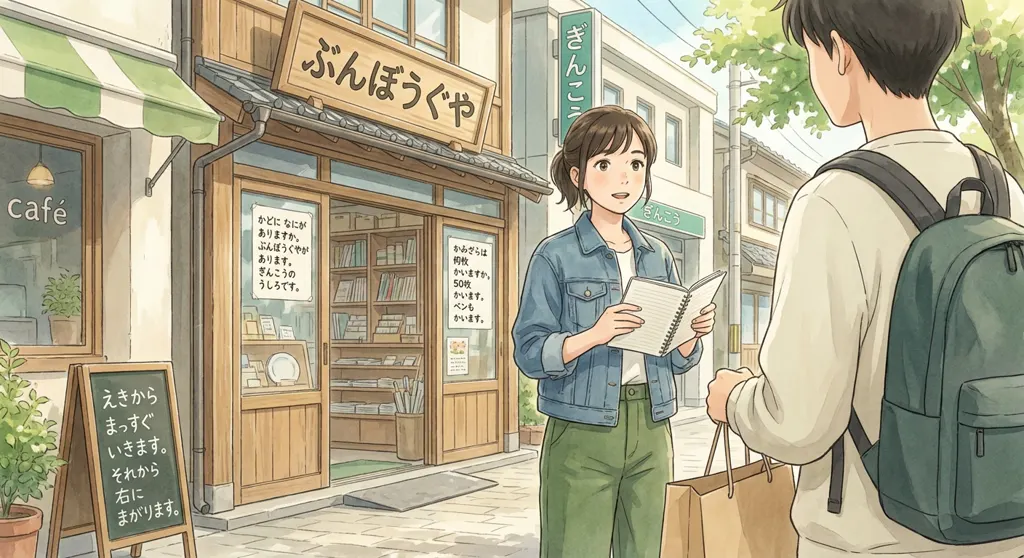
Lesson 12 · ~15 min
The Scavenger Hunt Checkpoint
Use a map, a sign and an order list to collect supplies and report back.
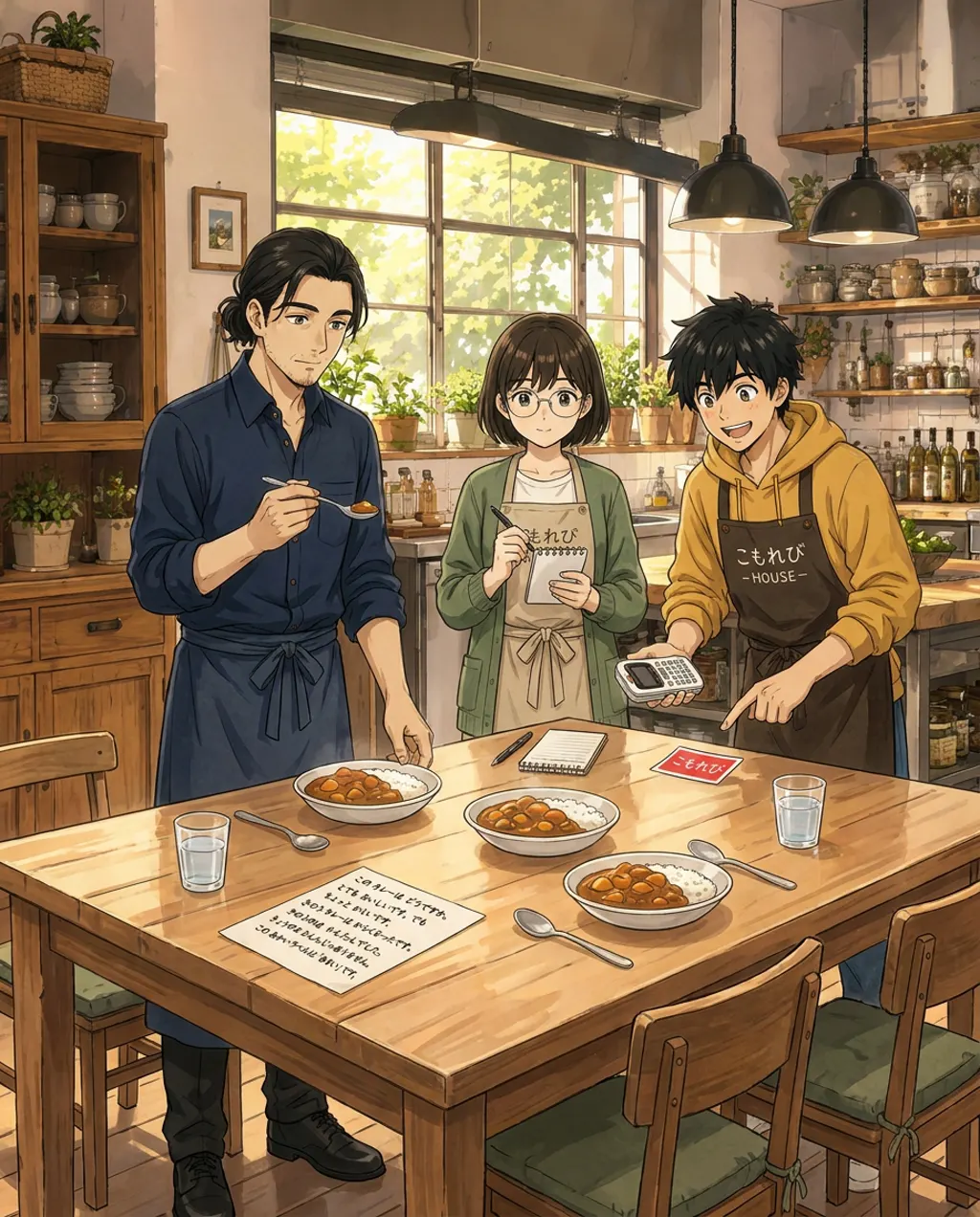
Lesson 13 · ~14 min
This Curry Is Red. Very Red.
Describe something now or in the past, and say what it was not like.
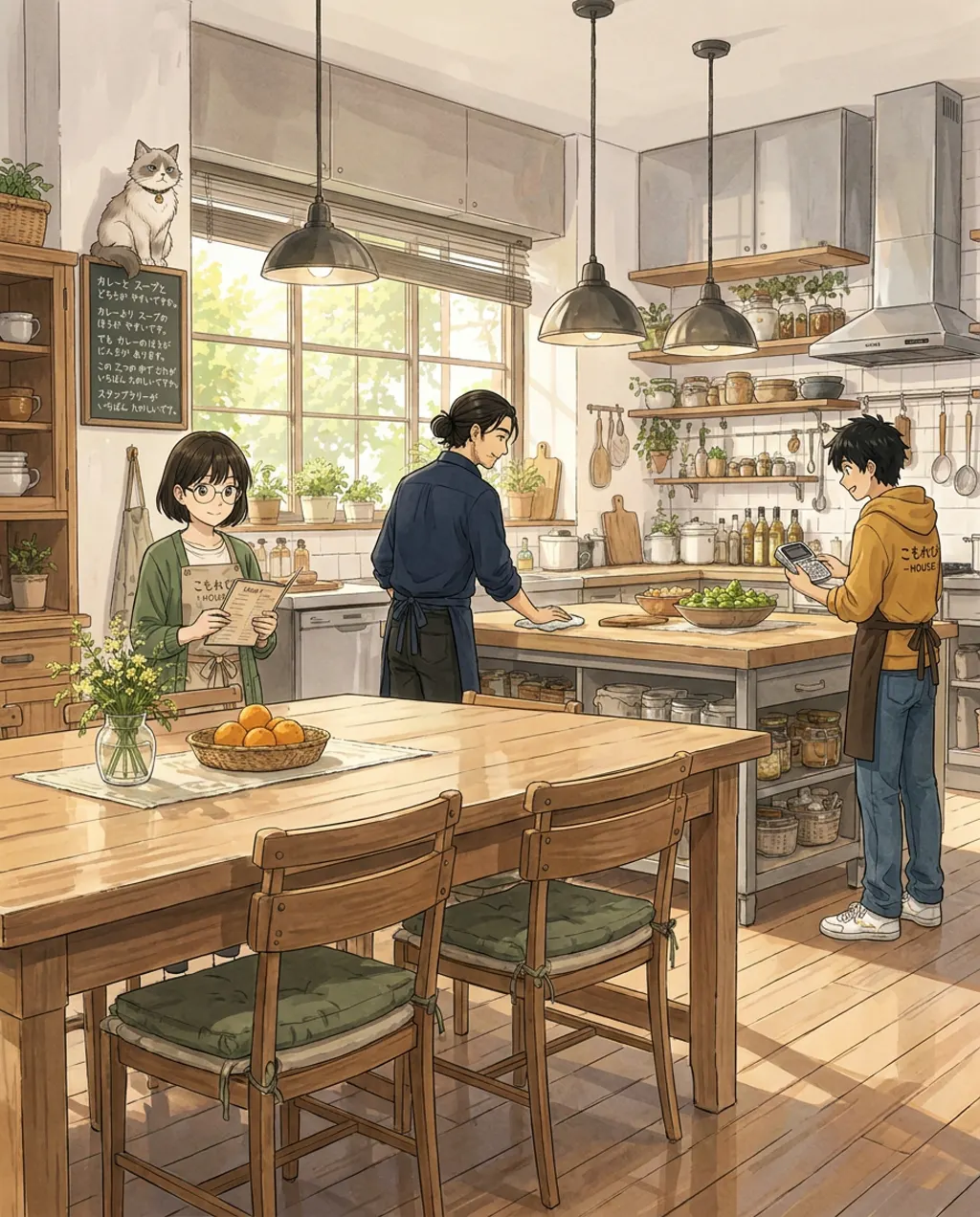
Lesson 14 · ~14 min
Better, Bigger, Spicier
Compare two options and say which of three is the best.
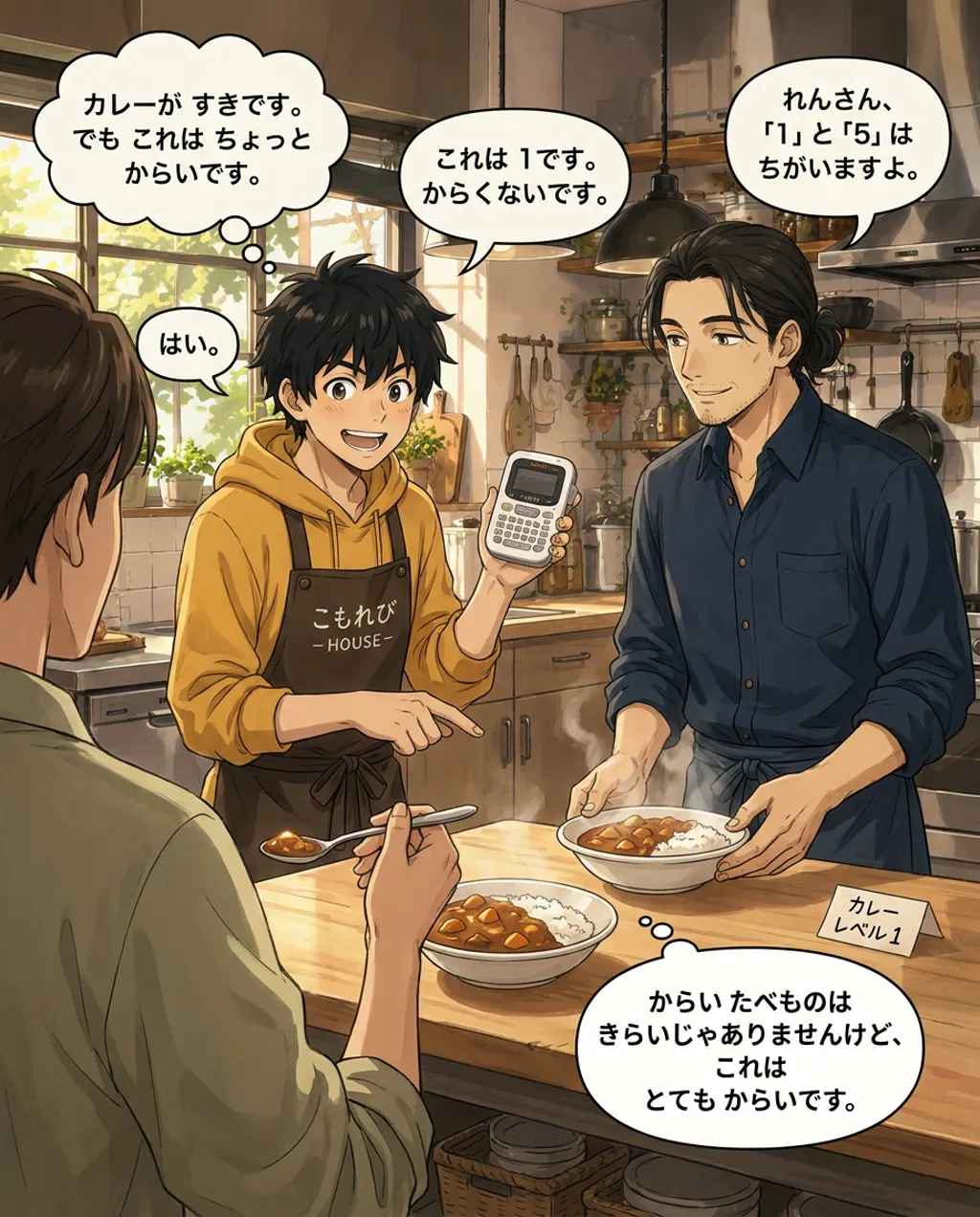
Lesson 15 · ~14 min
I Like It, but My Tongue Disagrees
Say what you like, dislike and are good at, and add a contrast.
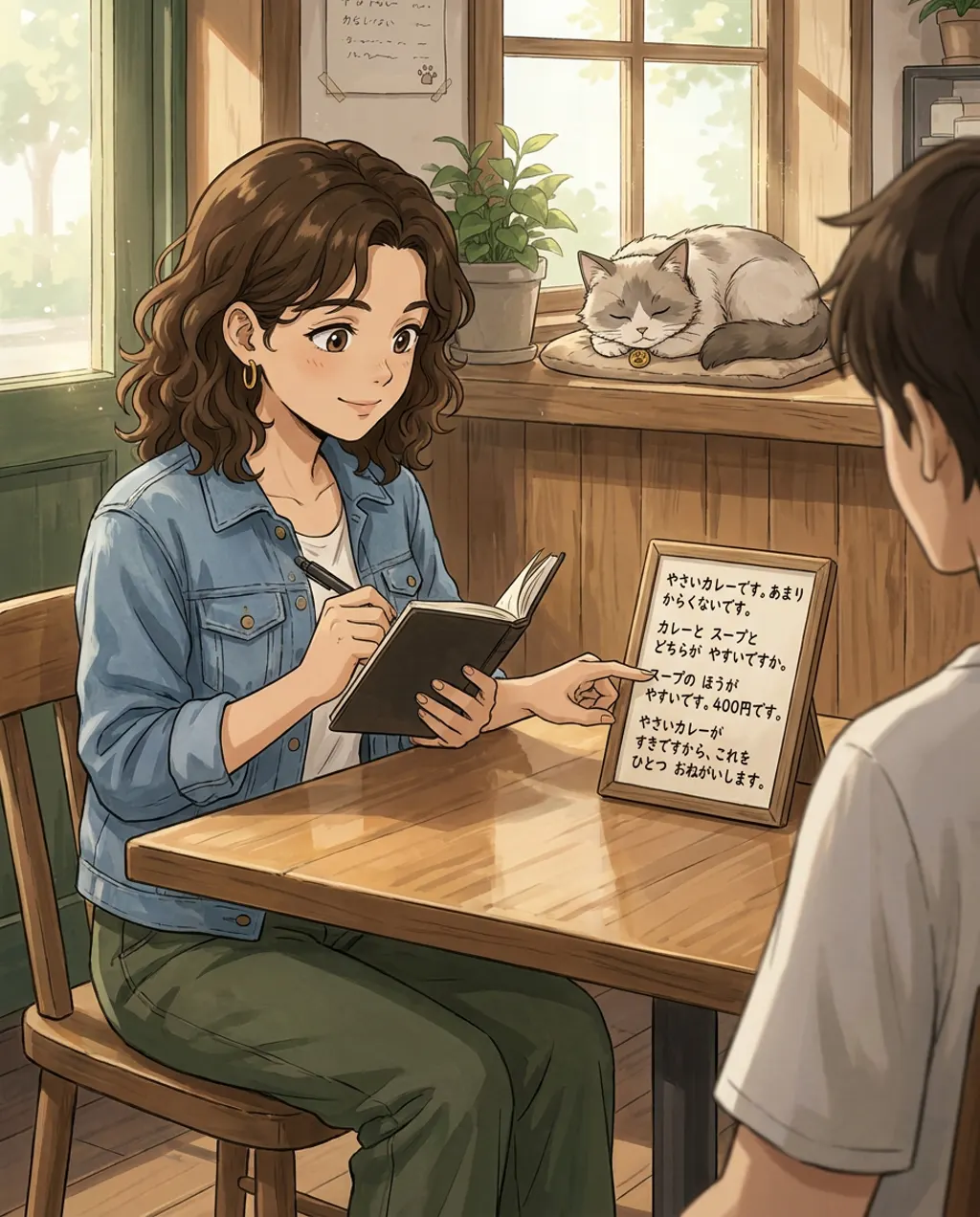
Lesson 16 · ~15 min
The Menu Test Checkpoint
Read a menu, compare two items, order one, and say why you chose it.
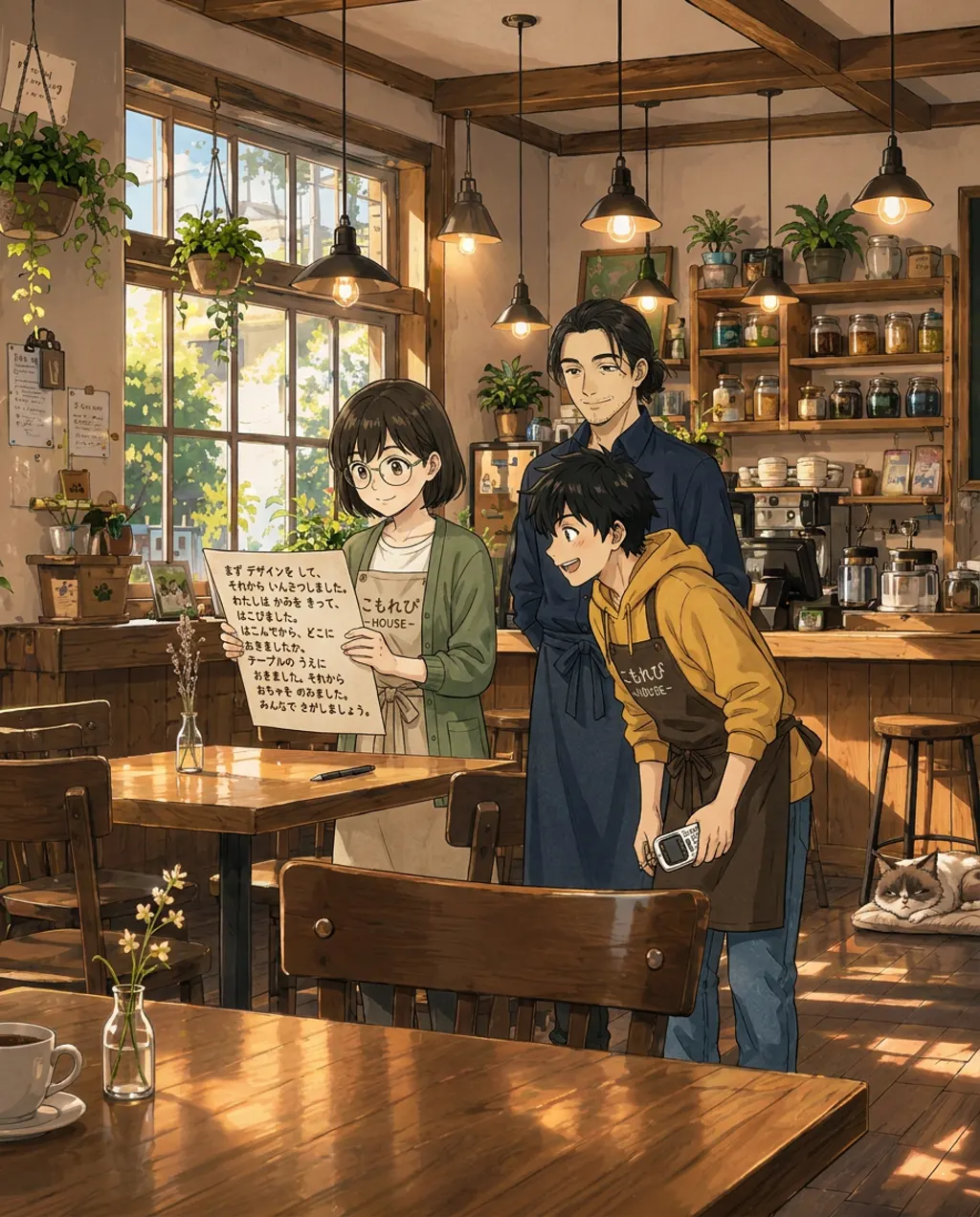
Lesson 17 · ~15 min
The Poster Is Missing
Join two actions together and say what happened in what order.
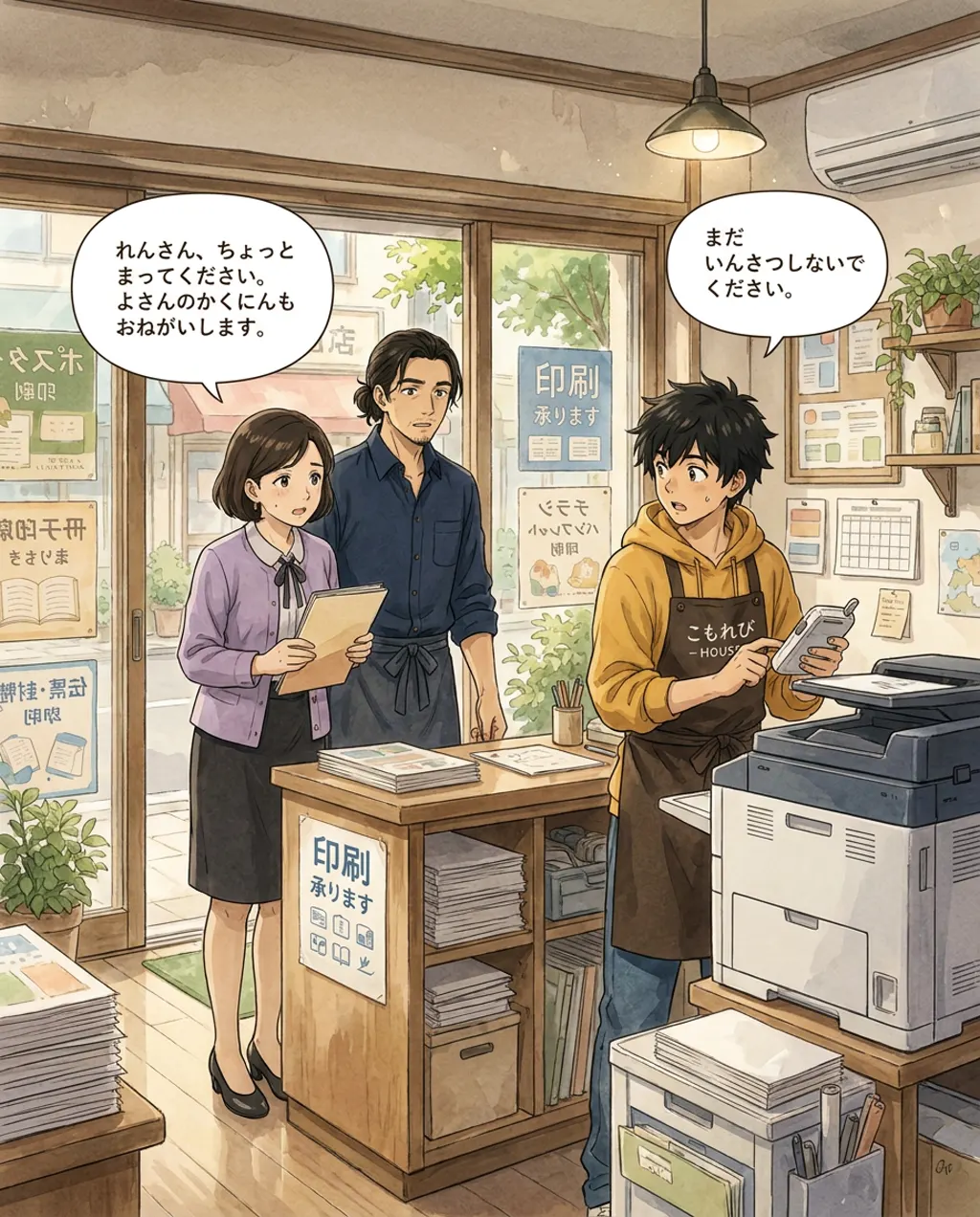
Lesson 18 · ~14 min
Please Do Not Print 200 Yet
Ask someone to do something, and ask them not to.
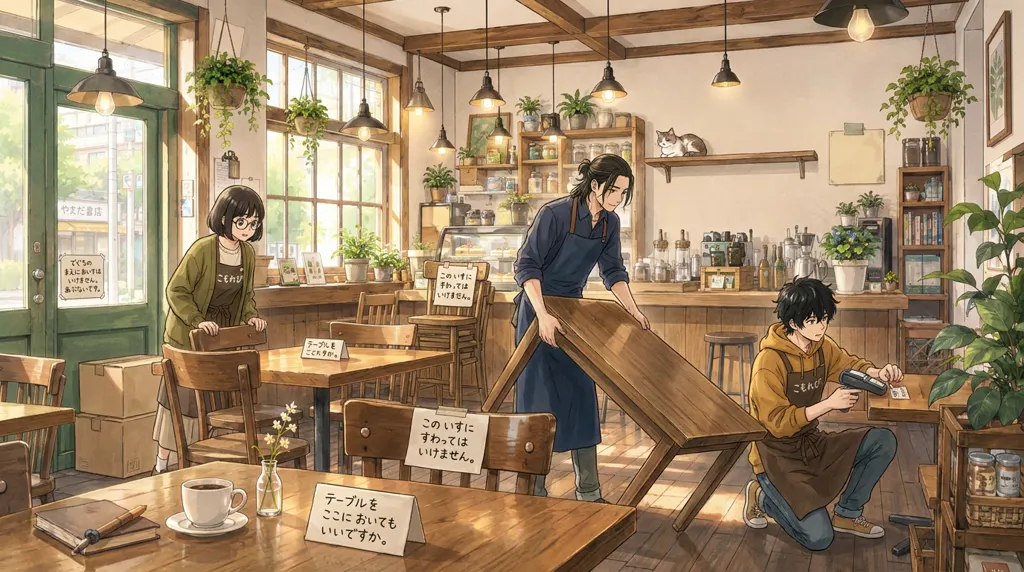
Lesson 19 · ~14 min
Can We Put This Here?
Ask whether something is allowed, and understand a sign that says it is not.
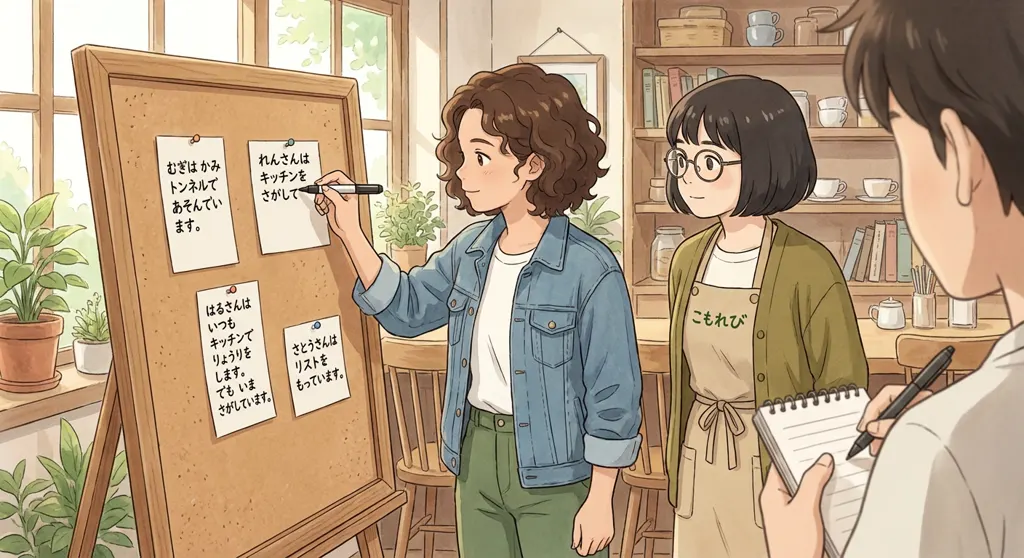
Lesson 20 · ~15 min
What Is Everyone Doing? Checkpoint
Say what someone is doing right now, and tell that apart from what they usually do.
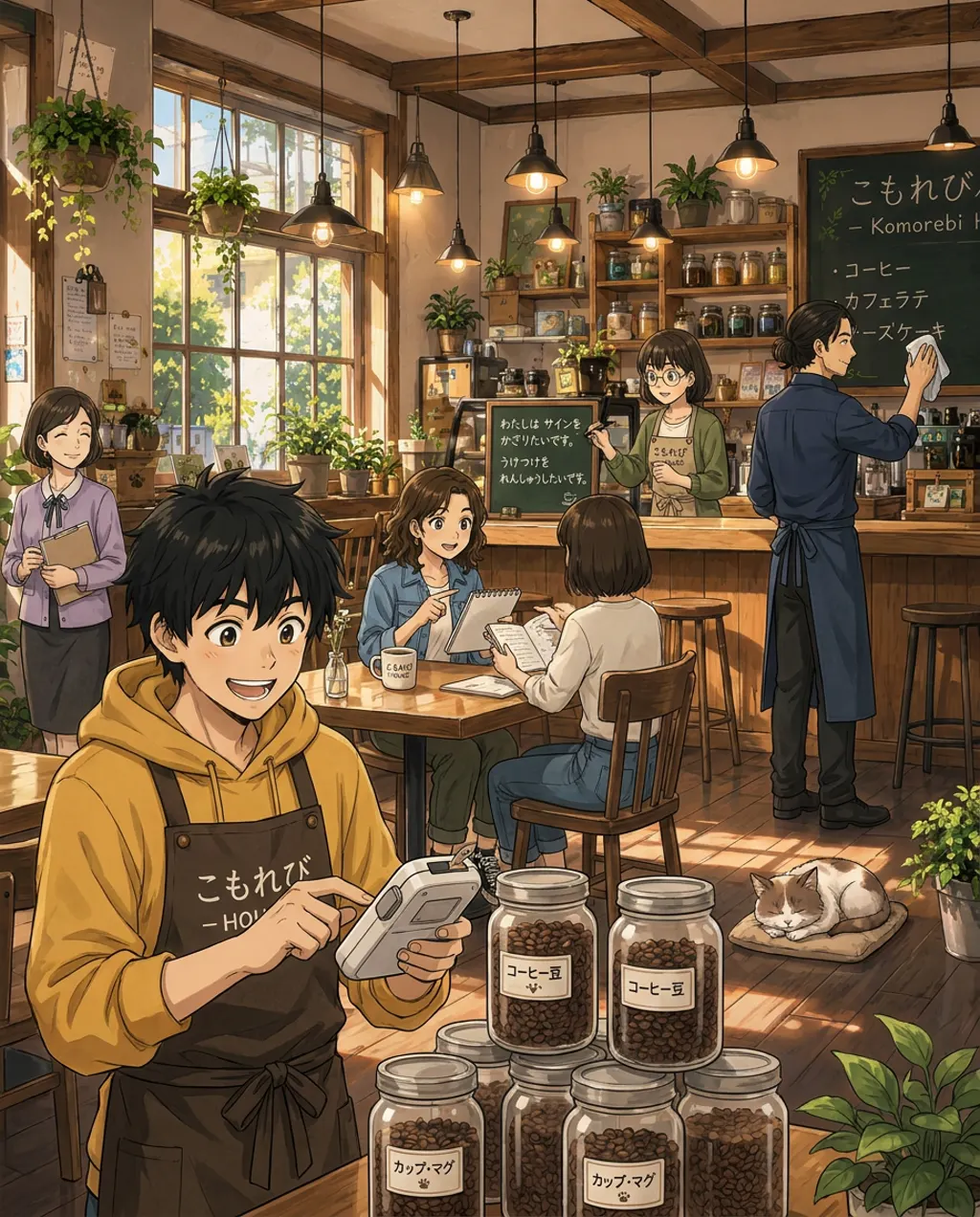
Lesson 21 · ~14 min
What Do You Want to Do?
Say what you want to do, what you want, and why you are going somewhere.
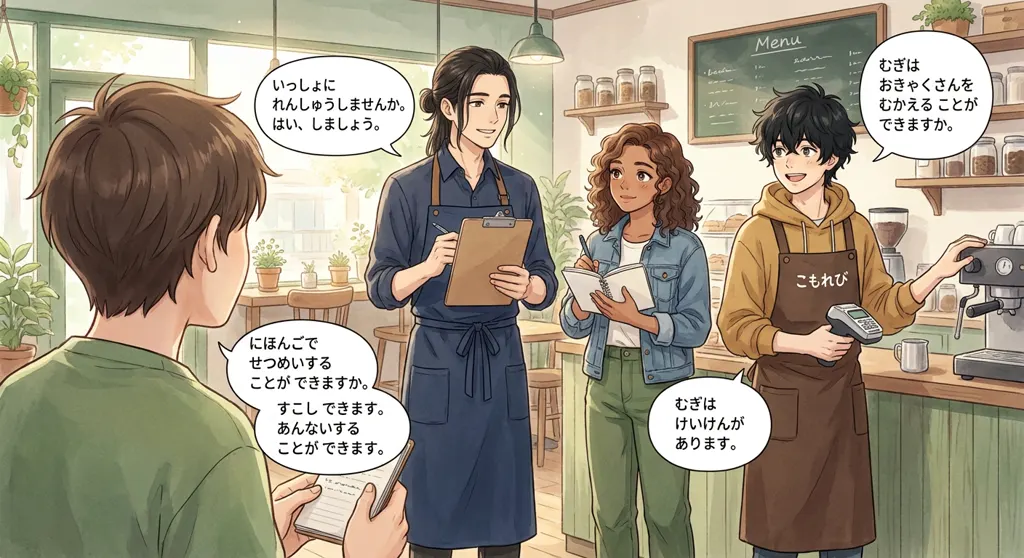
Lesson 22 · ~15 min
Shall We? Can You?
Invite someone to do something, and say what you can do and what you have done before.
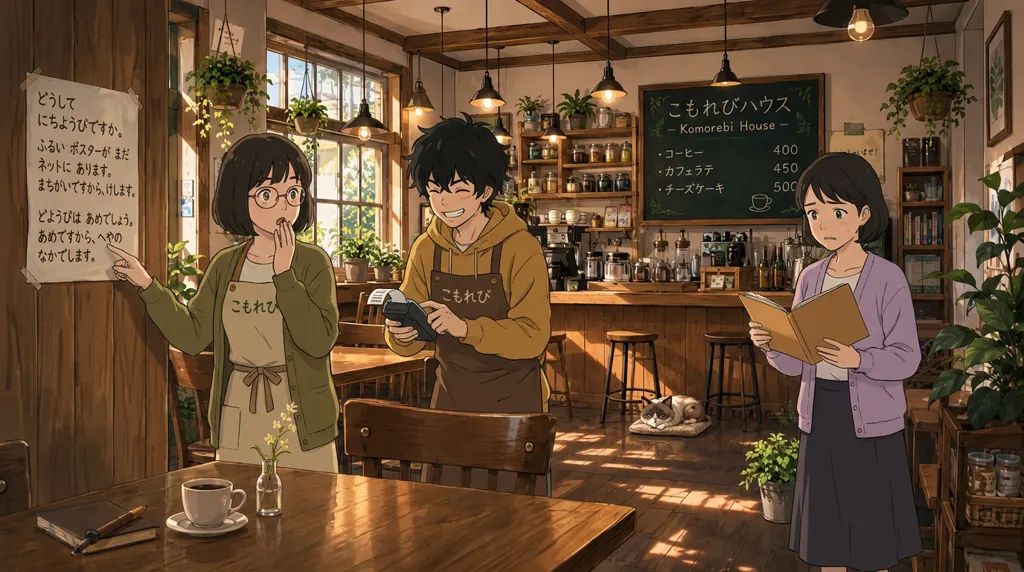
Lesson 23 · ~15 min
Because the Poster Says Sunday
Give a reason for something, and ask which of two conflicting facts is right.
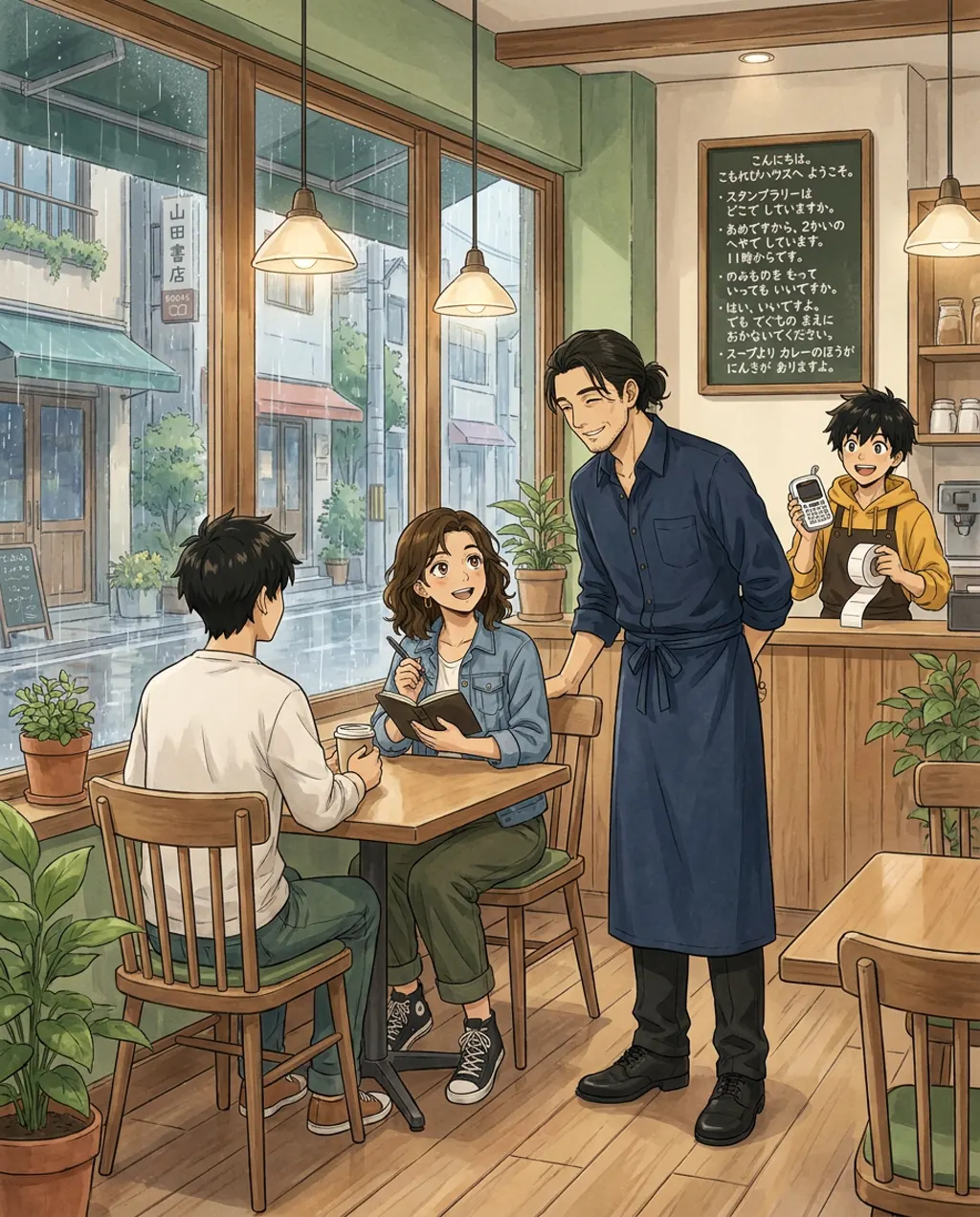
Lesson 24 · ~18 min
Komorebi Open Day
Welcome a visitor, answer where and when something is, and say whether they may do something.
Kana Sprints
Short sprints that turn hiragana and katakana into reading
Kana Sprints are short, take-them-when-you-need-them lessons. Each one puts a handful of characters into something worth reading — a menu, a station board, a price tag — so recognition comes from use rather than from repetition of a grid.
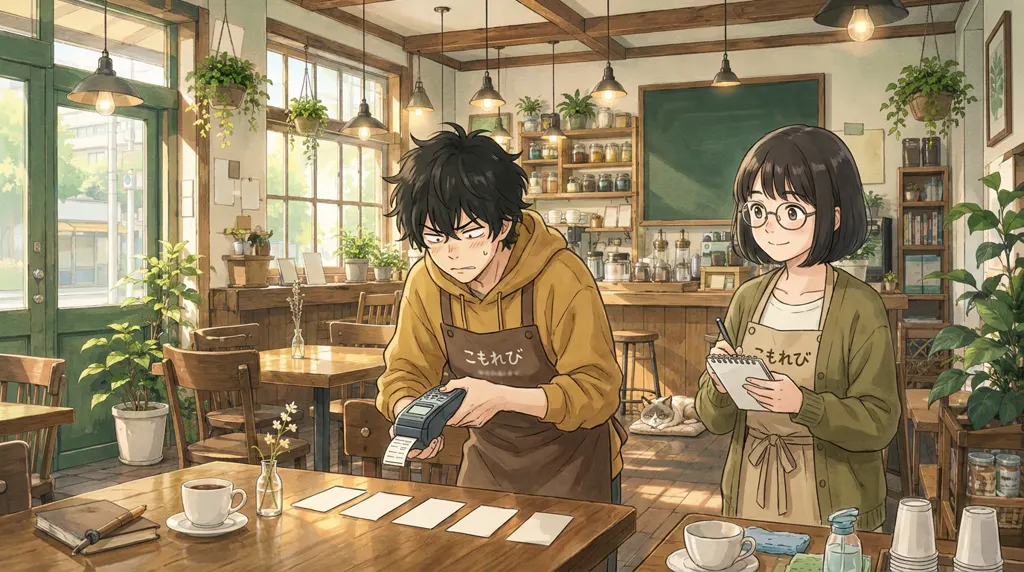
Lesson 1 · free preview · ~5 min
Kana Sprint 1 — the five vowels
Read あ, い, う, え and お on sight.
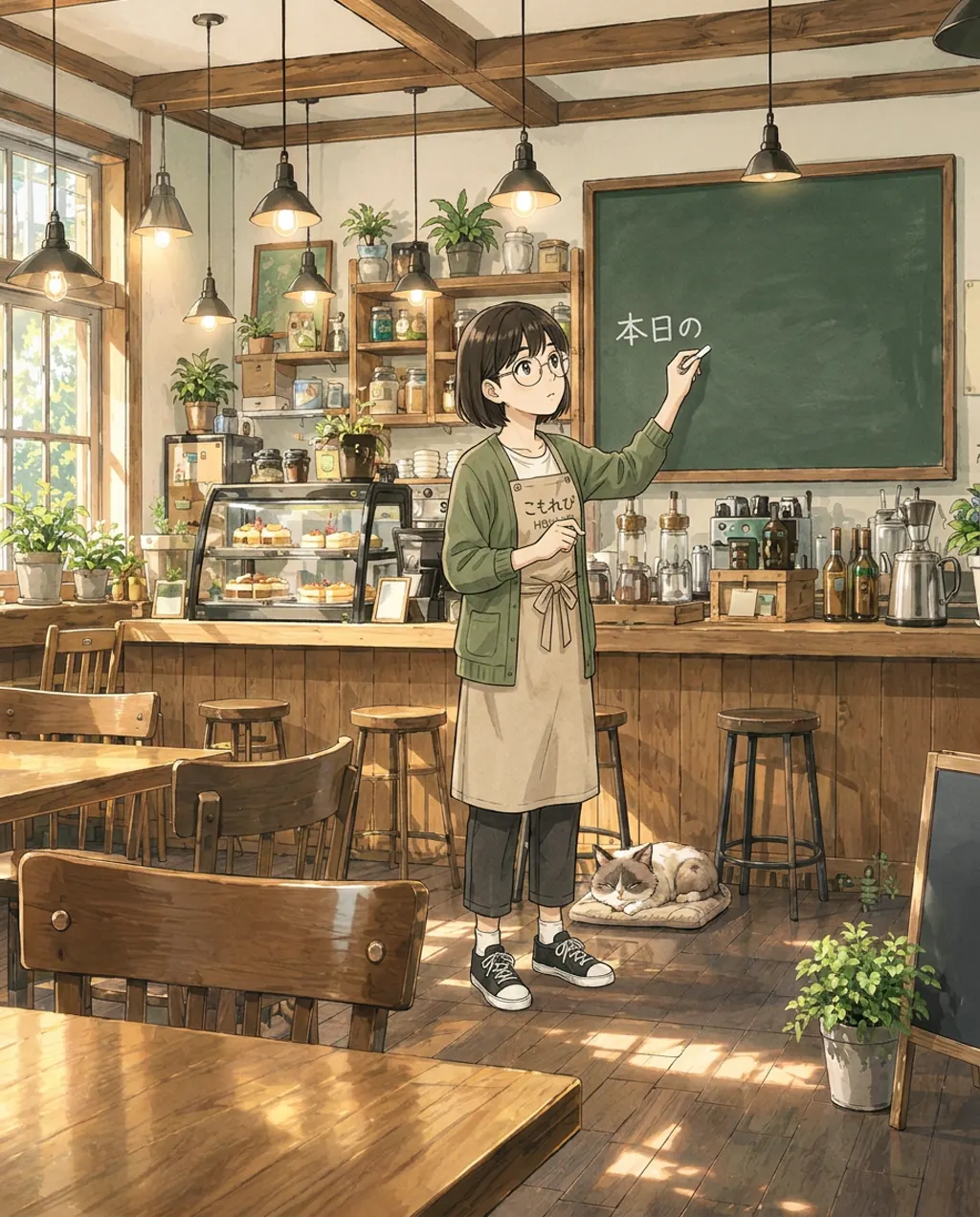
Lesson 2 · ~5 min
Kana Sprint 2 — か and さ
Read the か and さ rows on sight, including し.

Lesson 3 · ~5 min
Kana Sprint 3 — た and な
Read the た and な rows on sight, including ち and つ.
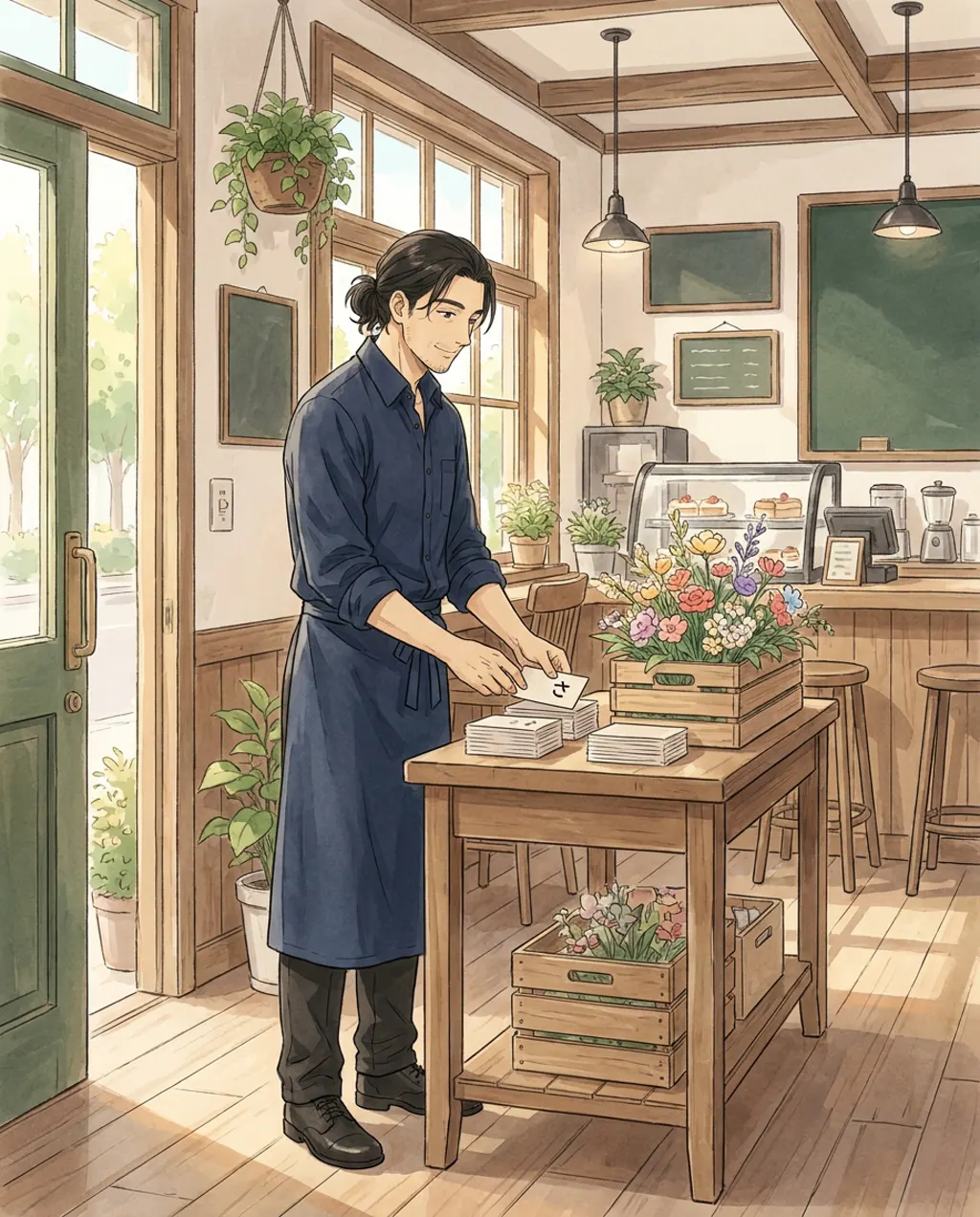
Lesson 4 · ~5 min
Kana Sprint 4 — は and ま
Read the は and ま rows on sight.
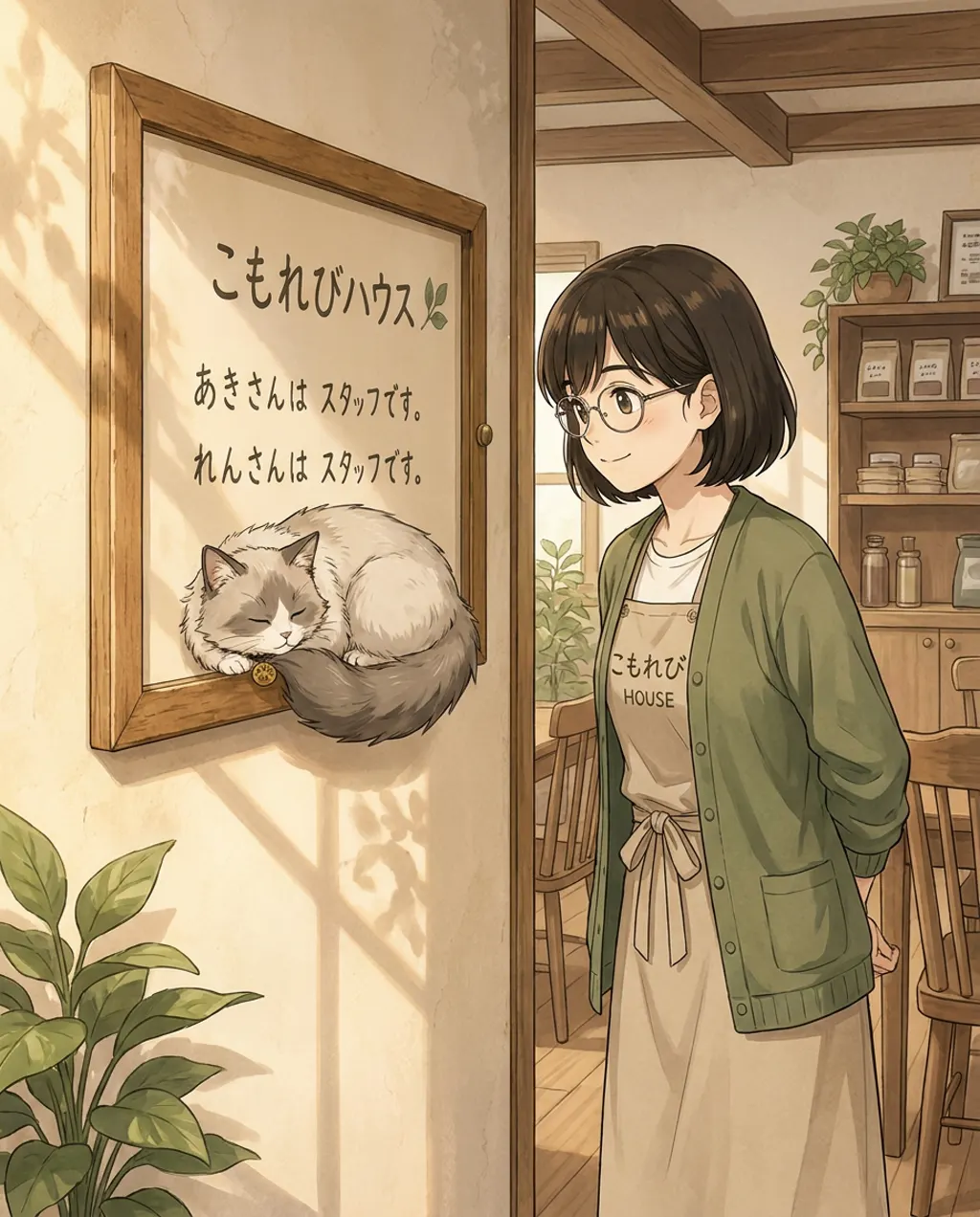
Lesson 5 · ~5 min
Kana Sprint 5 — や, ら, わ and ん
Read the や, ら and わ rows and ん on sight.
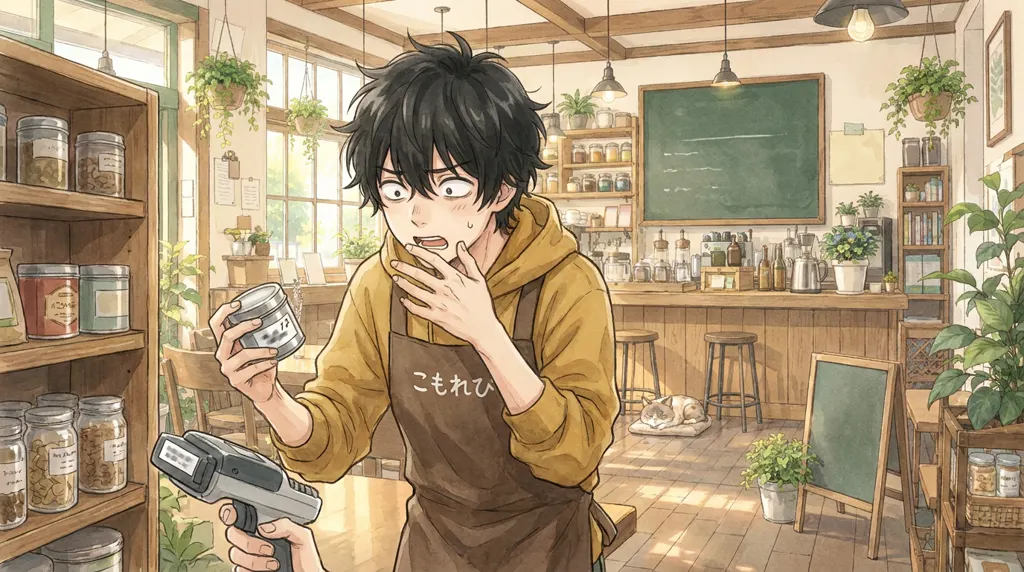
Lesson 6 · ~5 min
Kana Sprint 6 — two dots and a circle
Read any voiced kana, and say which base character it comes from.
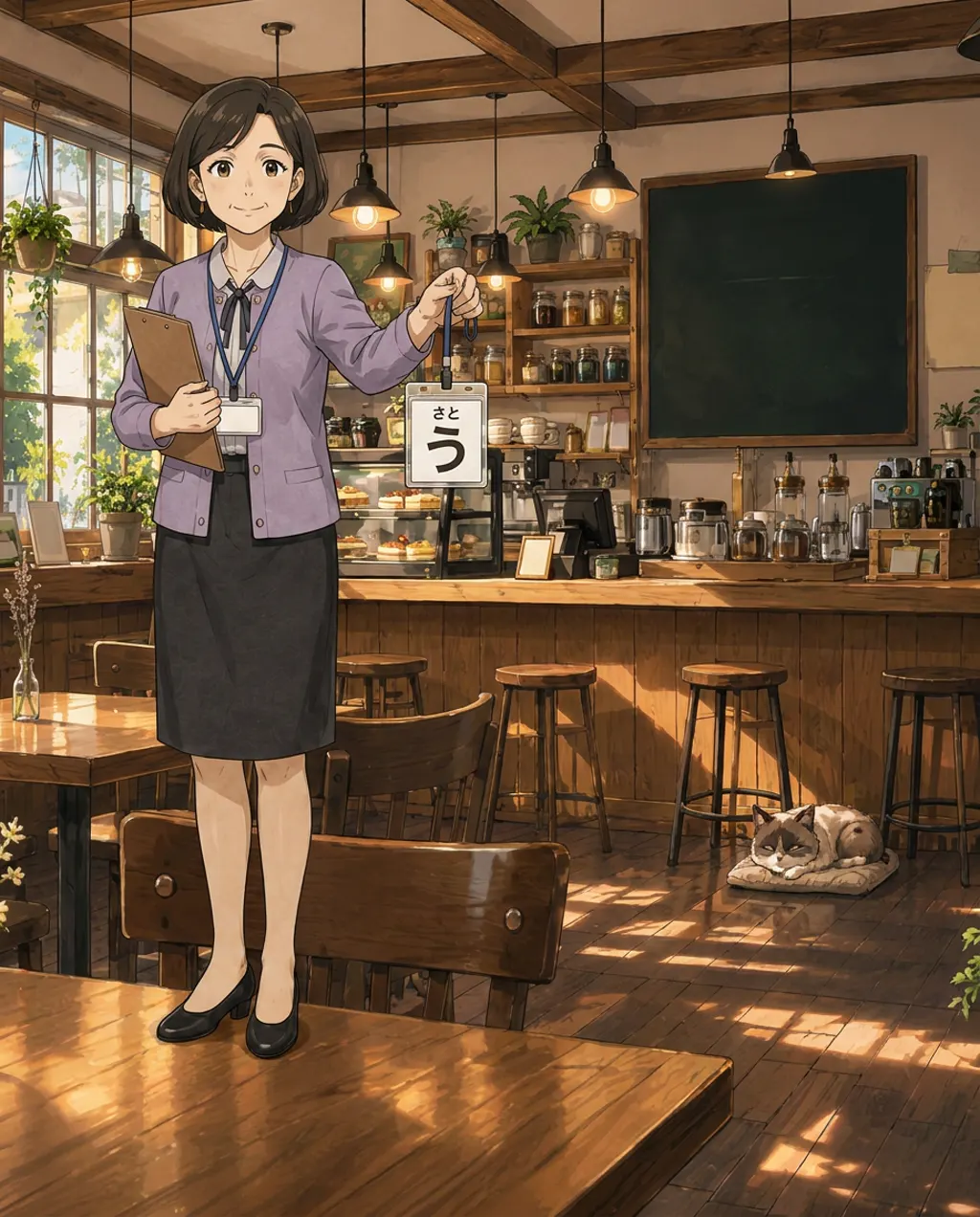
Lesson 7 · ~5 min
Kana Sprint 7 — the small ones
Read a small ゃ, ゅ or ょ as part of one beat with the character before it.
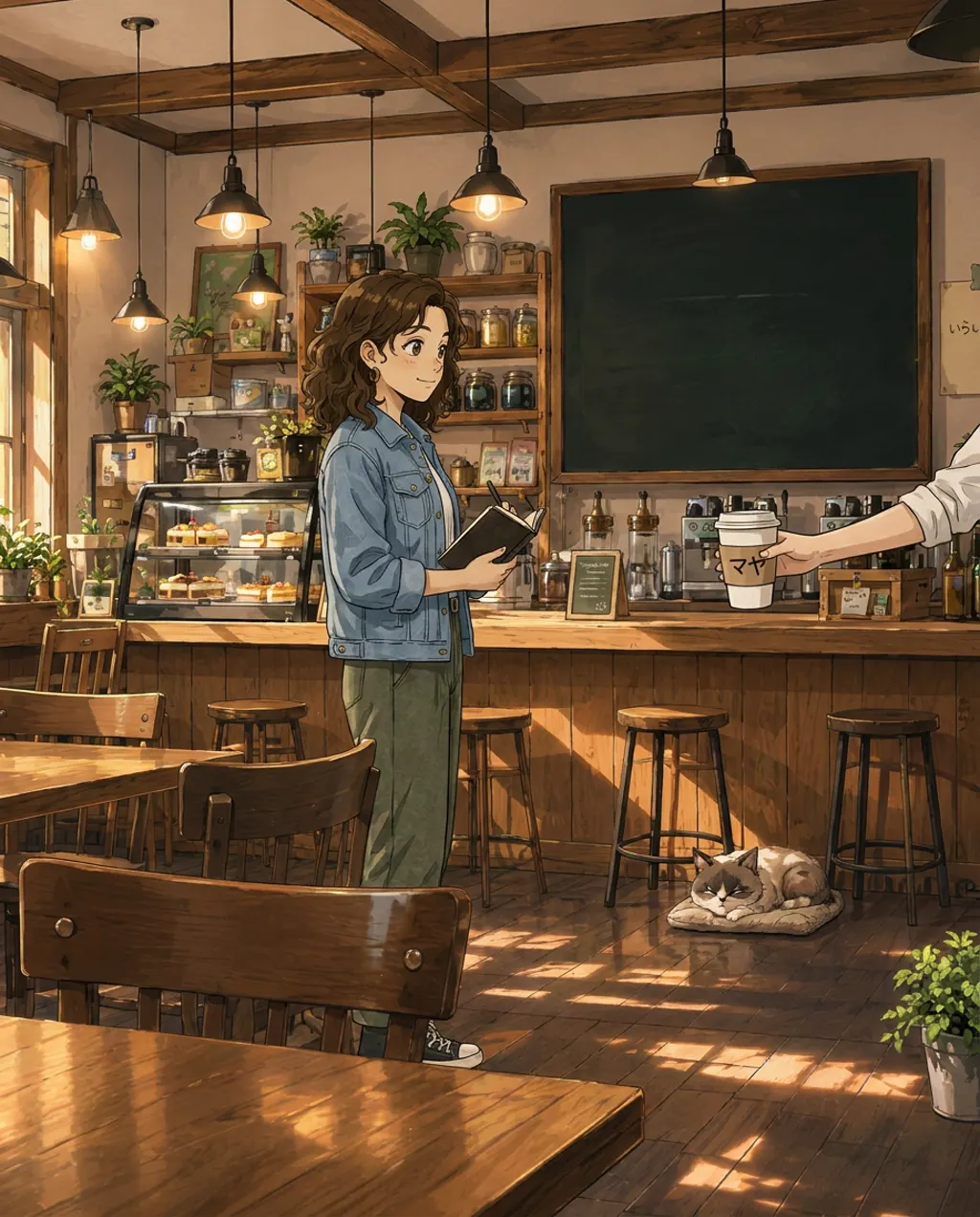
Lesson 8 · ~6 min
Kana Sprint 8 — the second alphabet
Read katakana for a sound already known in hiragana.
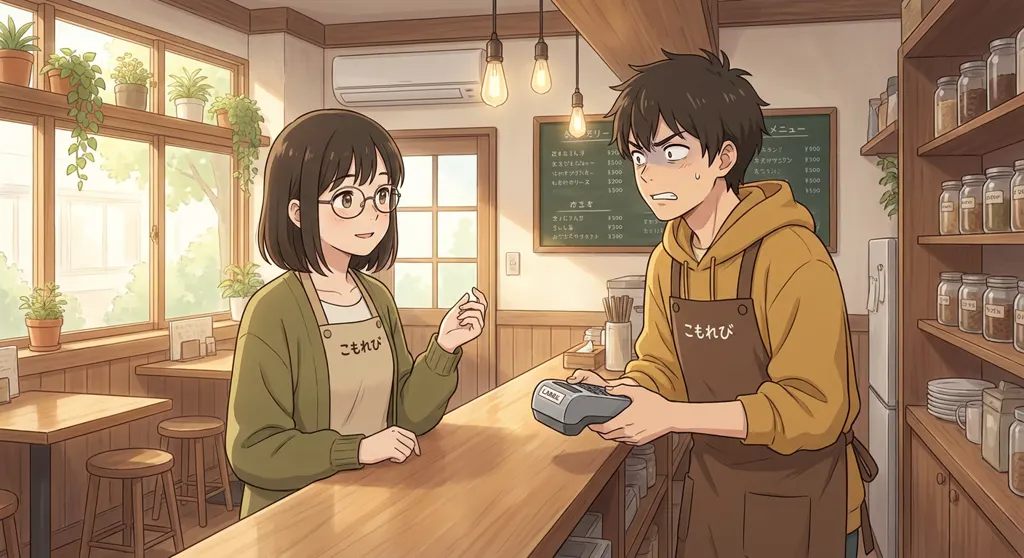
Lesson 9 · ~5 min
Kana Sprint 9 — holding the vowel
Read ー as a doubling of the vowel before it.
Lesson 10 · ~6 min
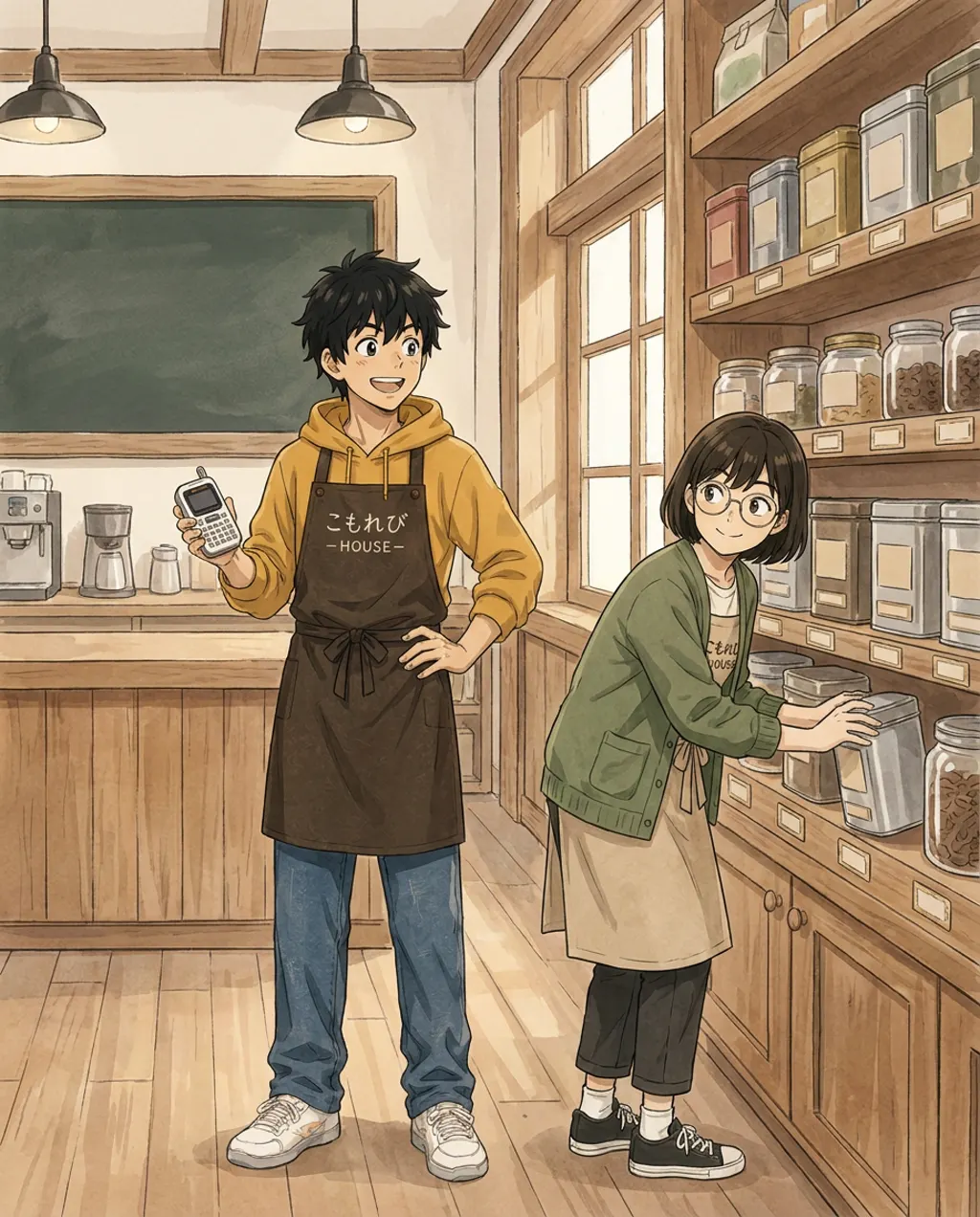
Kana Sprint 10 — reading Komorebi
Read every sign and name in the Komorebi story without support.
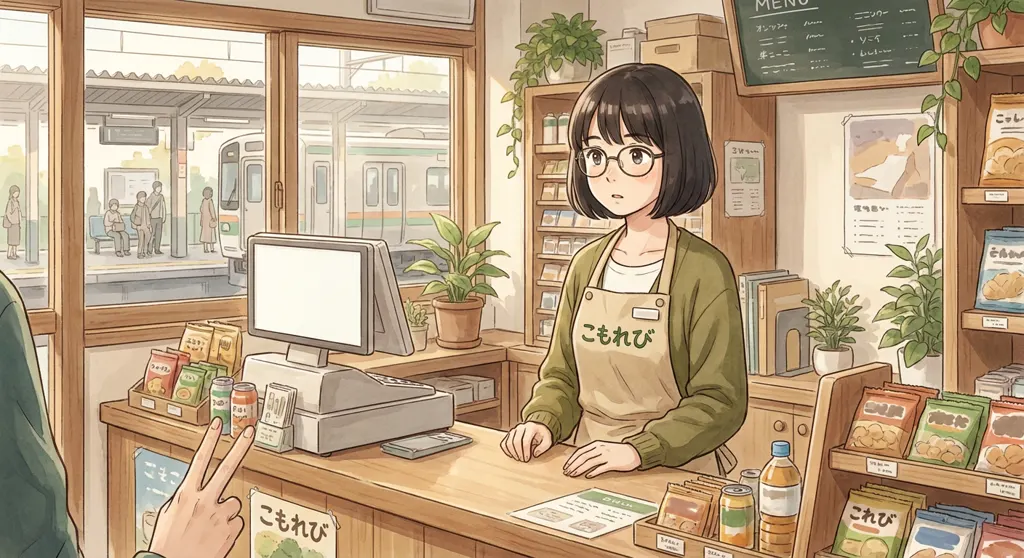
Lesson 11 · ~6 min
Kana Sprint 11 — counting out loud
Read the numbers one to ten written in kana.
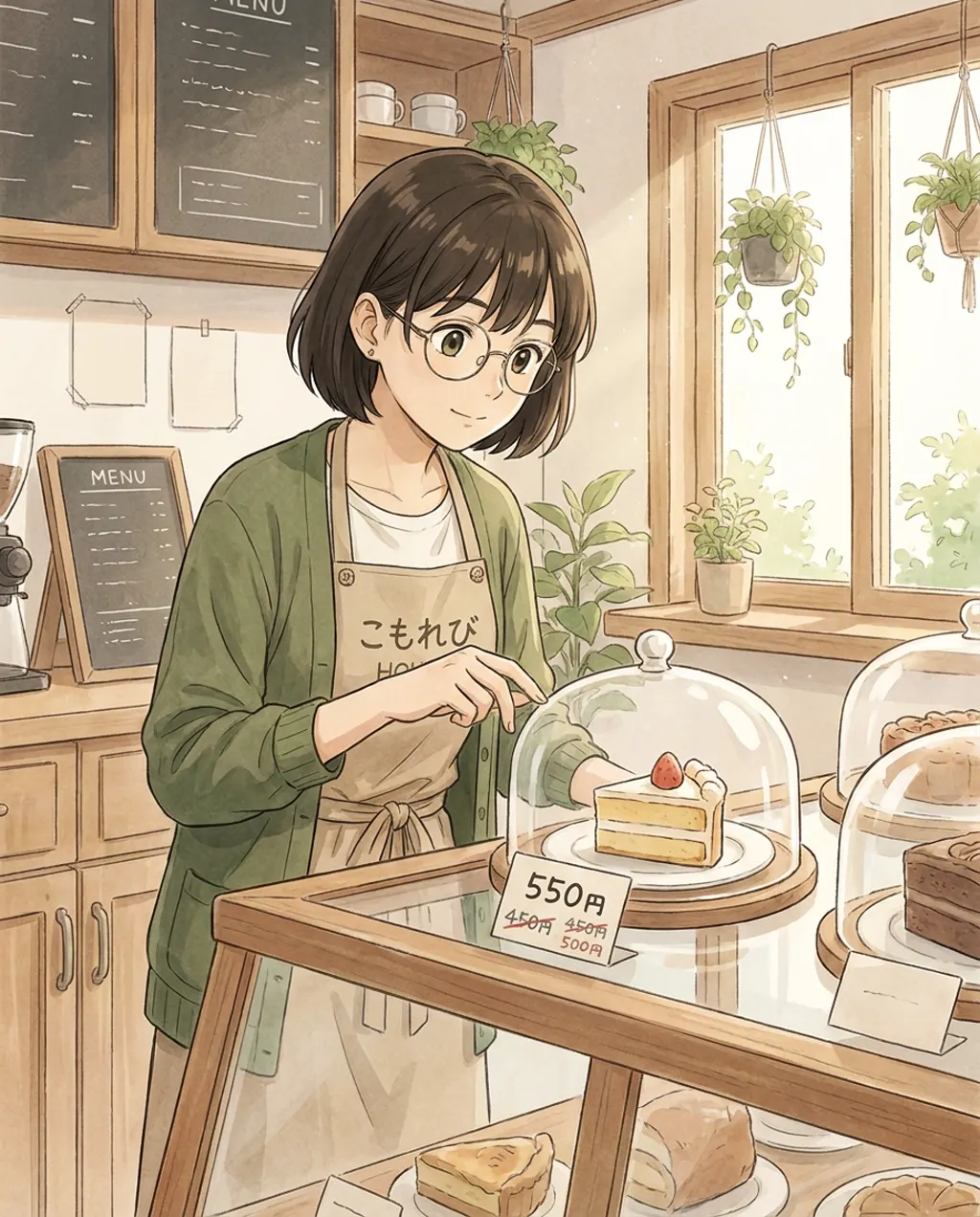
Lesson 12 · ~6 min
Kana Sprint 12 — how much is it
Read prices in hundreds and thousands of yen out loud.
Grammar Labs
Second-pass labs for the patterns that need one
Labs are the workshop next door to the story. Each one takes a single mechanism — verb groups, the te-form, plain form, adjective types, question words — shows it inside a scene you already recognise, then drills it until the shape is automatic.

Lesson 1 · free preview · ~8 min
Verb Lab A — the form in the dictionary
Convert between the ます form and the dictionary form of a known verb.
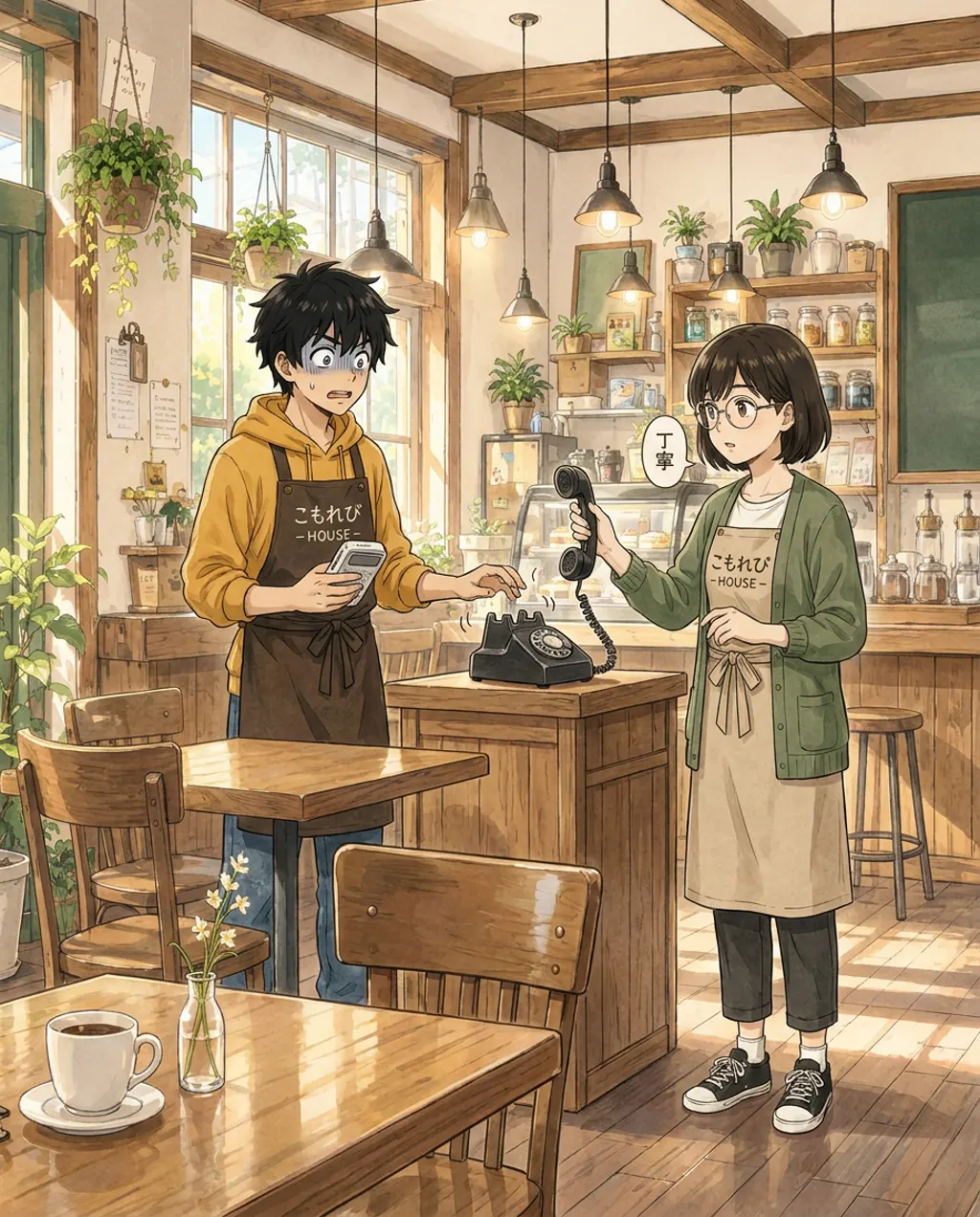
Lesson 2 · ~8 min
Verb Lab B — four cells, one verb
Produce all four polite forms of a known verb: present, past, negative and negative past.
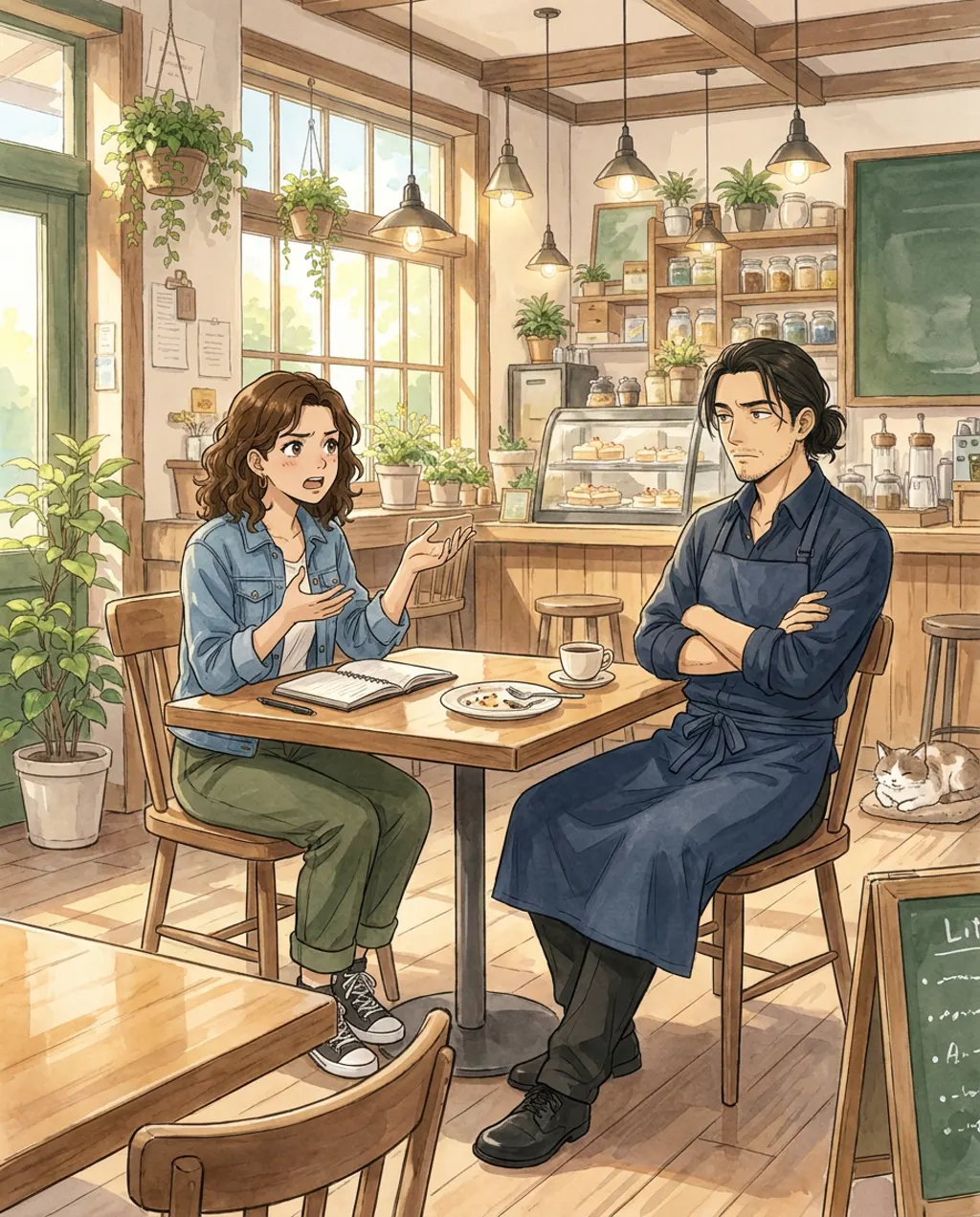
Lesson 3 · ~9 min
Adjective Lab — eight boxes and two liars
Produce present, past, negative and negative past for both い-adjectives and な-adjectives.
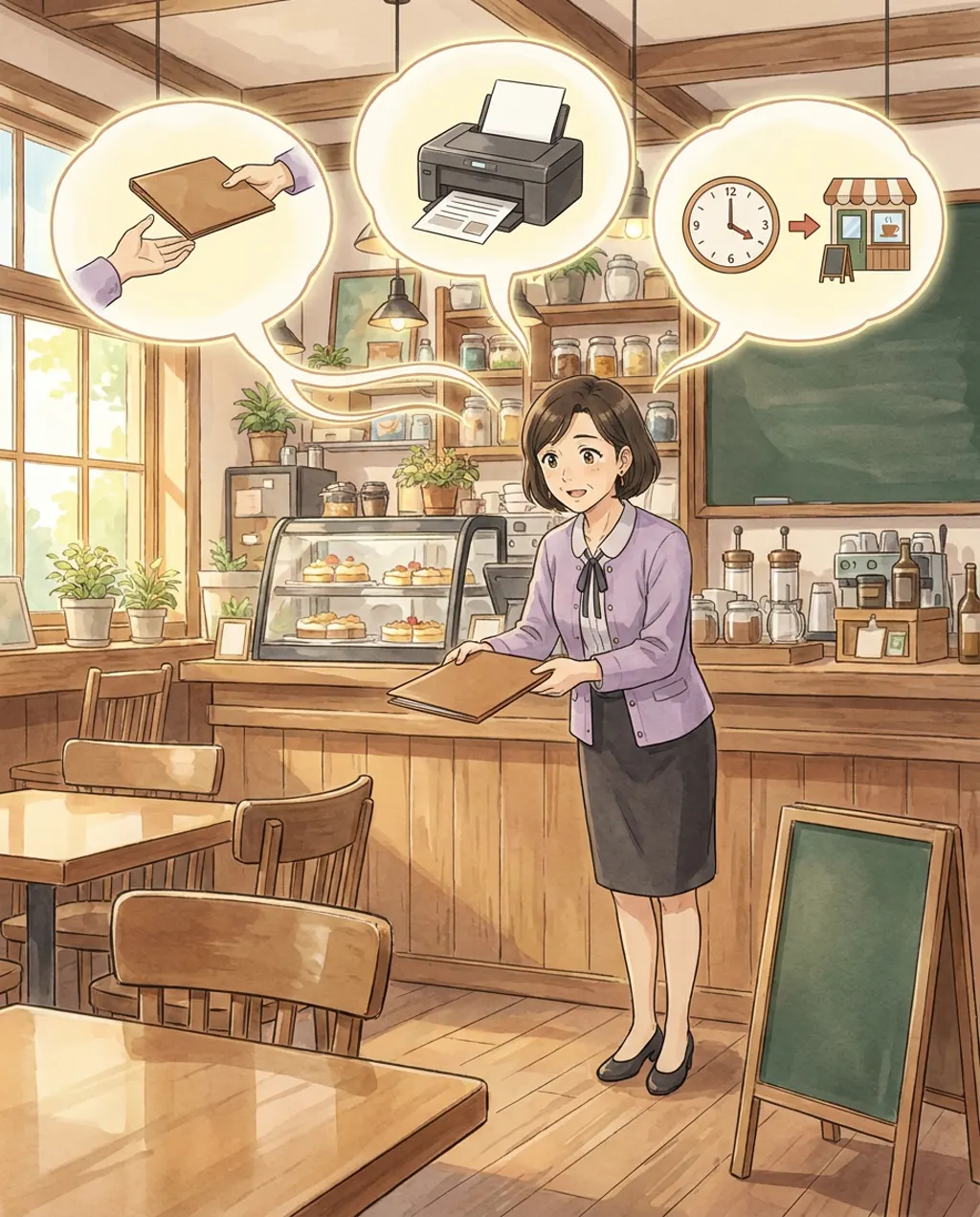
Lesson 4 · ~10 min
Te-form Lab — nine ways in, one ending
Produce the te-form of a known verb from its dictionary form and its group.
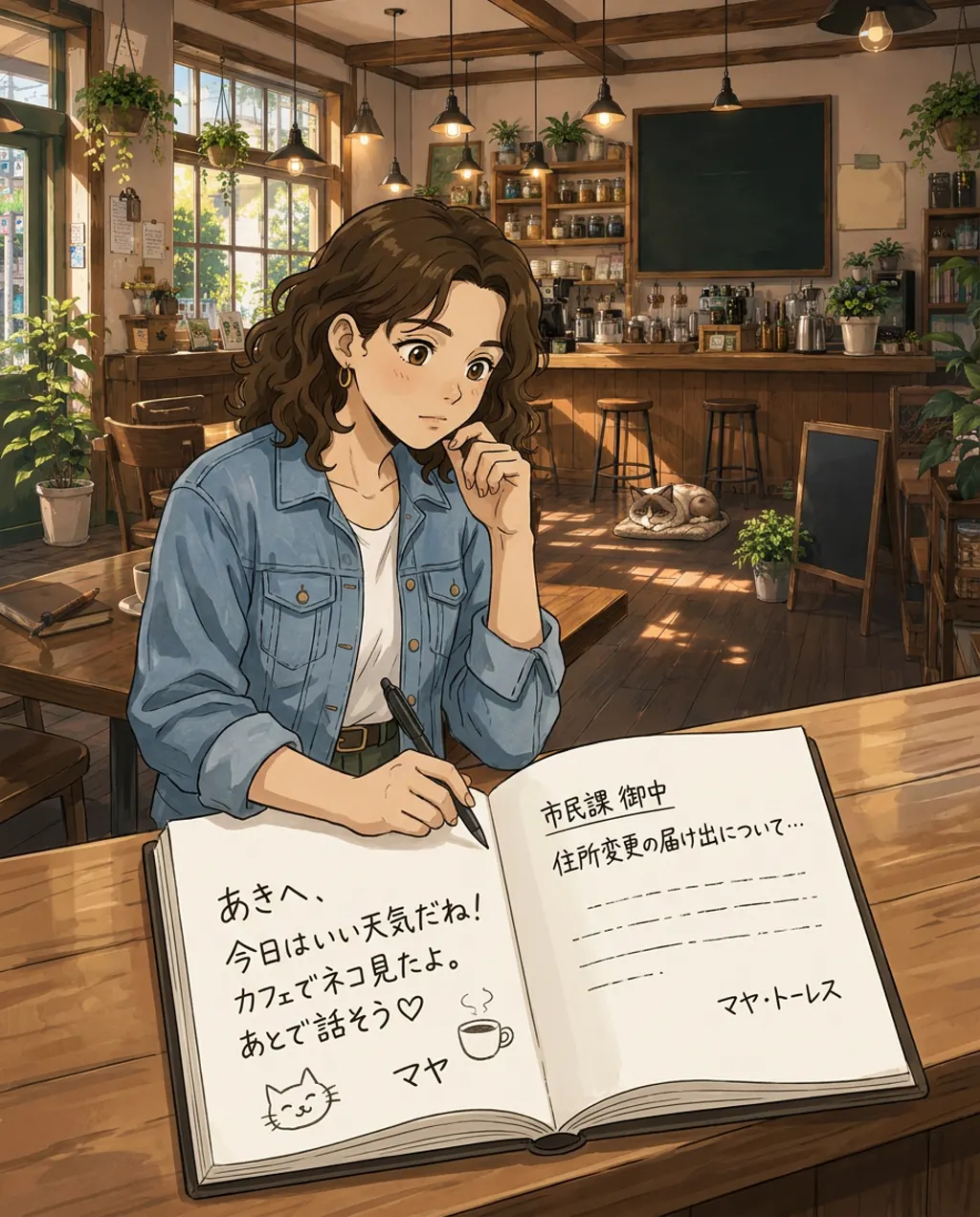
Lesson 5 · ~10 min
Plain-form Lab — four more boxes, mostly free
Derive the plain past of a verb from its te-form.
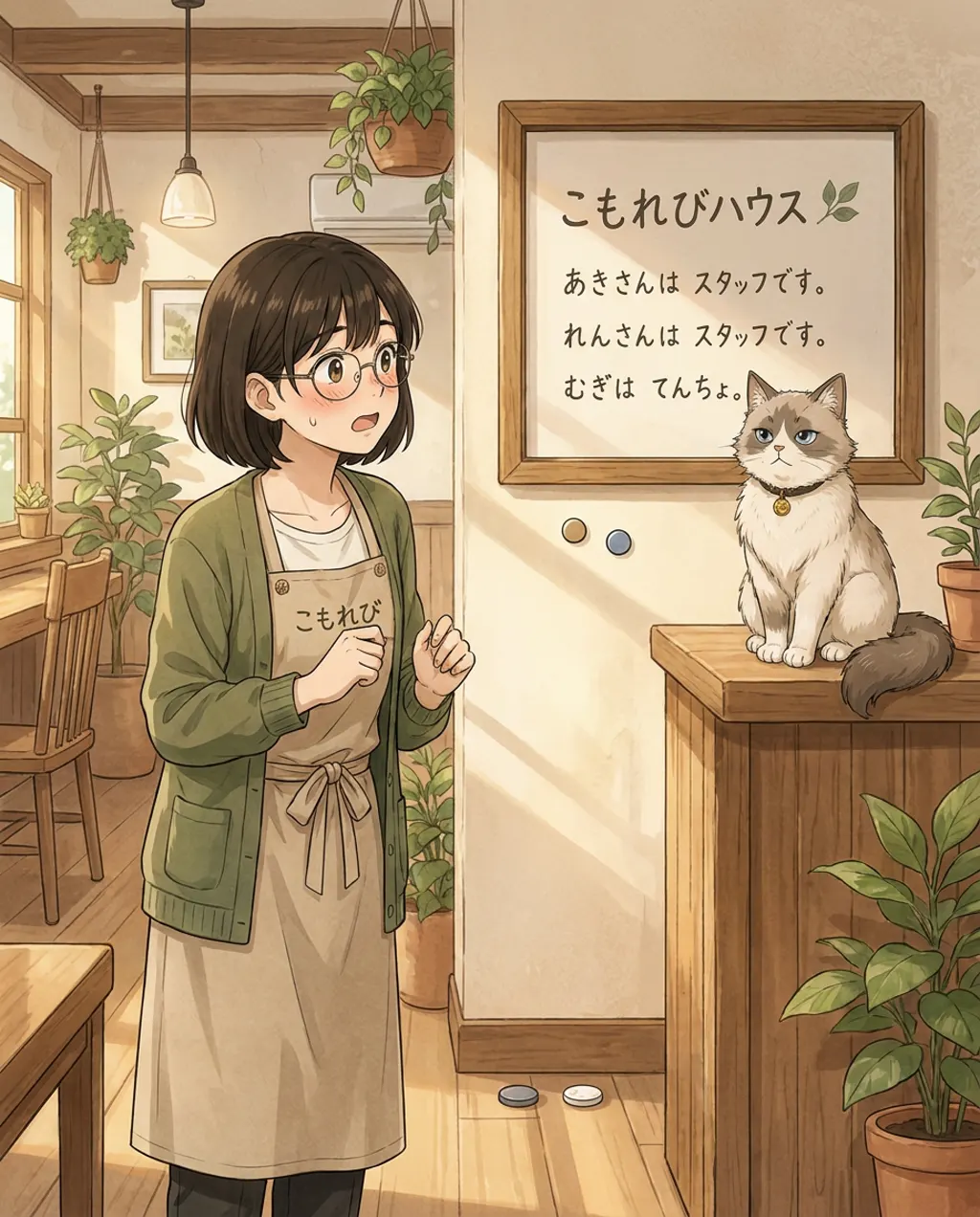
Lesson 6 · ~9 min
Particle Repair — は or が, に or で, へ or に, と or や
Choose between に and で according to whether the place is where something is or where something happens.
Lesson 7 · ~8 min
Question Words — なに, だれ, どこ, いつ, いくら, どう
Choose the right question word for the piece of information you are missing.
Lesson 8 · ~8 min
Starter Particles — は, を and も
Mark the thing a verb acts on with を.