Lesson 1 of 16
The Door with Two Signs
about 8 minutes
After this lesson you can
- Greet someone, thank them, get their attention, and answer a yes-or-no question.
- Recognise that Japanese is written in three systems at once.
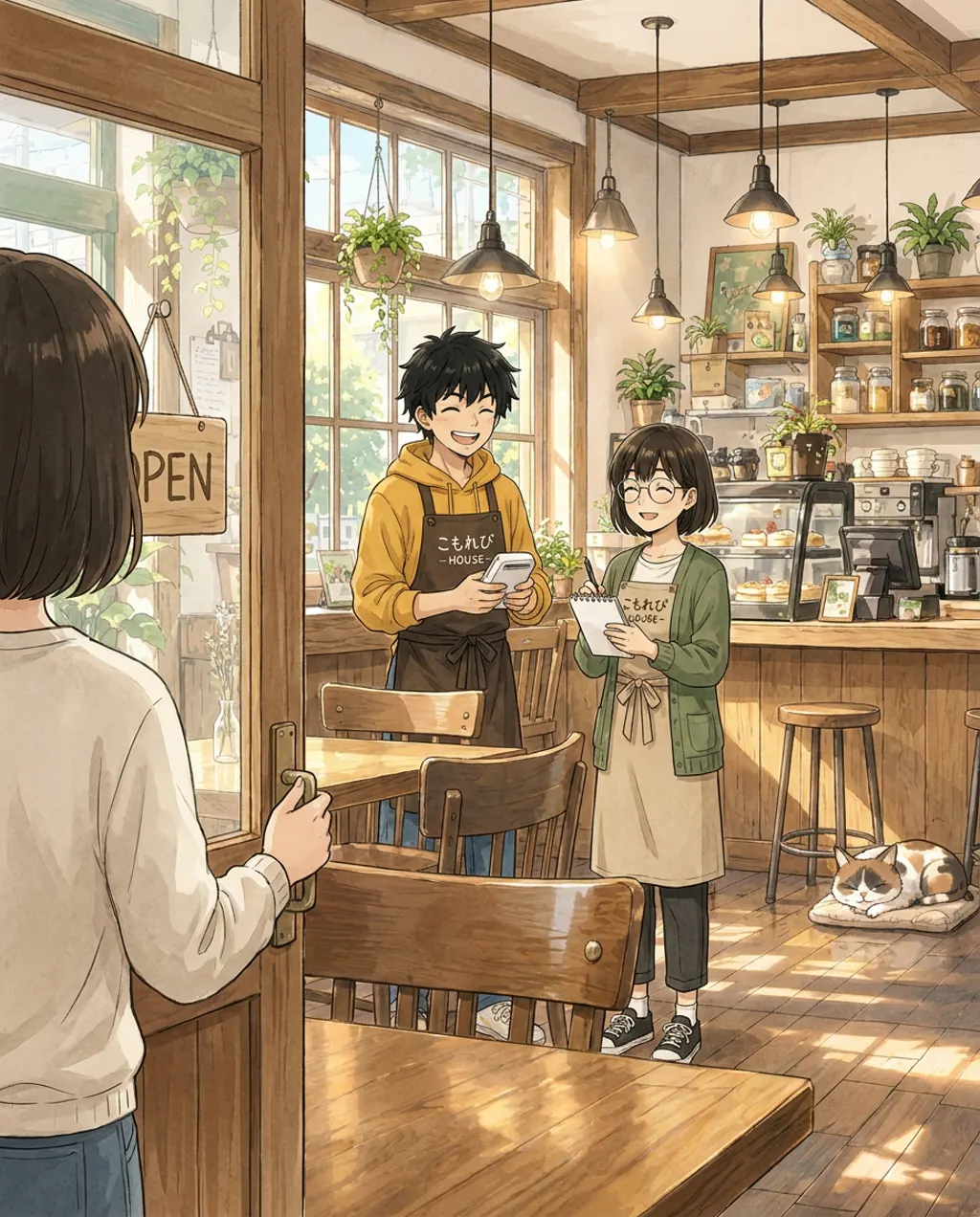
The front door will not budge, so you try the side one, and it gives. Inside is coffee, warm paper, and someone who looks up before you have decided what to say.
Ren
こんにちは。
Hello.
He is holding a label maker in both hands, the way you hold something you have already tried to fix once, and he looks extremely pleased to see you.
Ren
You are not the repair person?
You
いいえ。
No.
Ren
すみません。
Sorry.
Aki
こんにちは。はじめまして。
Hello. Nice to meet you.
Aki
He asks everyone that. Come in — the coffee is better than the label maker.
You
ありがとうございます。
Thank you.
Nobody is touching the label maker. It clicks once and prints a single label: ねこ.
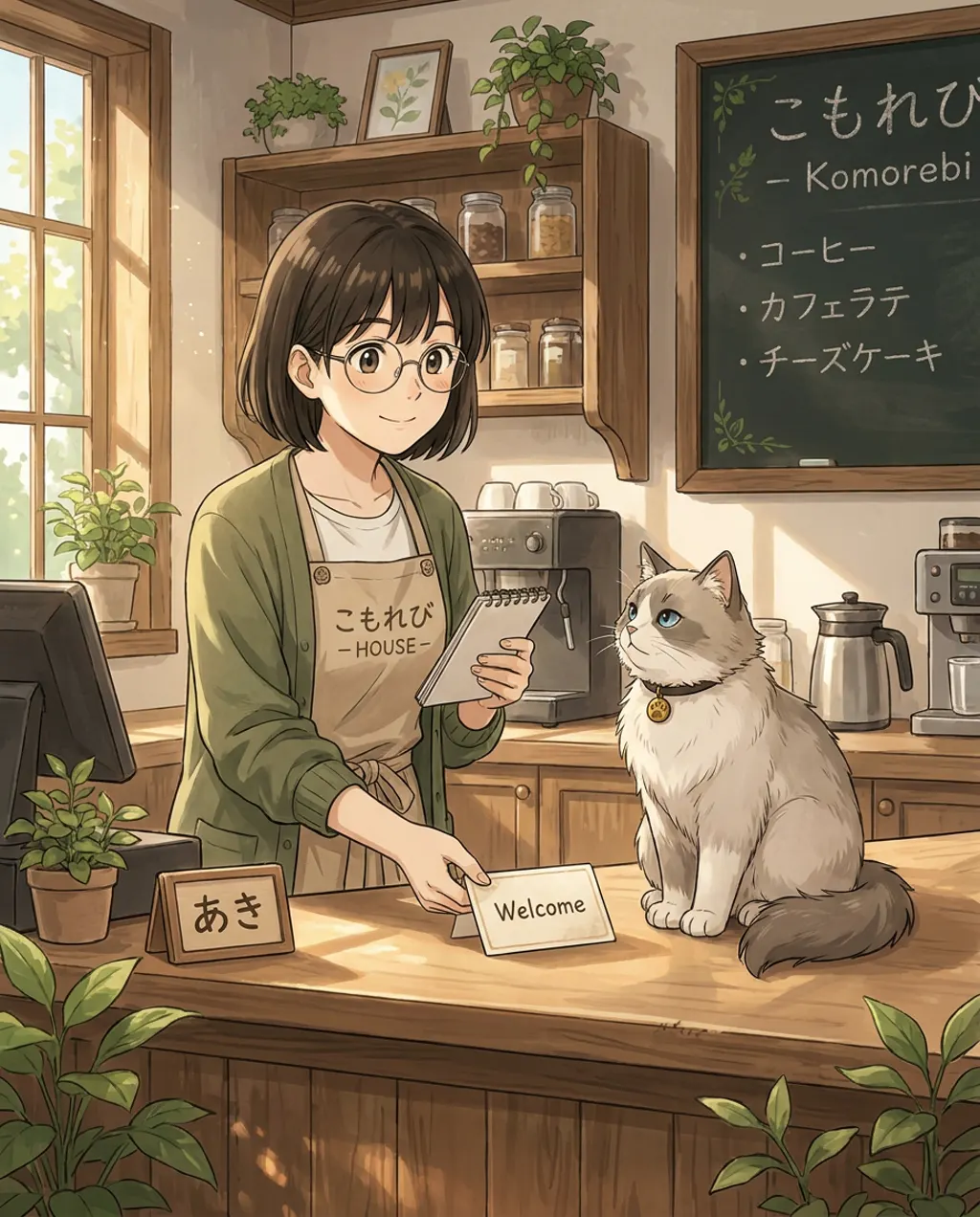
Aki reaches for the welcome card on the counter. Mugi, the café cat, is sitting on it, and has no intention of moving.
Aki
すみません。
Excuse me. (to the cat)
Words this lesson teaches
- こんにちは
- hello (daytime greeting)
- すみません
- excuse me; sorry
- ありがとうございます
- thank you (polite)
- はい
- yes
- いいえ
- no
- はじめまして
- nice to meet you (first meeting only)
What it explains
Japanese uses three systems at once
こもれび is hiragana — rounded, curving shapes, used for Japanese words and grammar. ハウス is katakana — angular and straight, used mostly for words borrowed from other languages. 入口 is kanji — dense characters carrying meaning rather than sound. They are not alternatives to choose between. A single sentence normally uses all three, and you learn to read them together rather than one at a time.
すみません is not only an apology
Ren used すみません to apologise for the mix-up, which is the use you would guess. It is also how you get someone's attention — walking into a shop, stopping someone to ask a question. Both uses are extremely common, and which one it is comes from the situation rather than from the word.