Foundations is one continuous story. You walk into Komorebi House, a café where the staff board is mislabelled and the cat has opinions, and every lesson gives you the exact Japanese that scene needs — greetings, then names, then places, then your first verbs. Each lesson is drawn, so the words attach to a picture and a person rather than a list.
Who it's for
- —You have never studied Japanese and want a first step that is not a grammar table
- —You bounced off apps that drill words with no story around them
- —You are heading to Japan and want the sentences you will actually say
Free preview — lesson 1
The Door with Two Signs
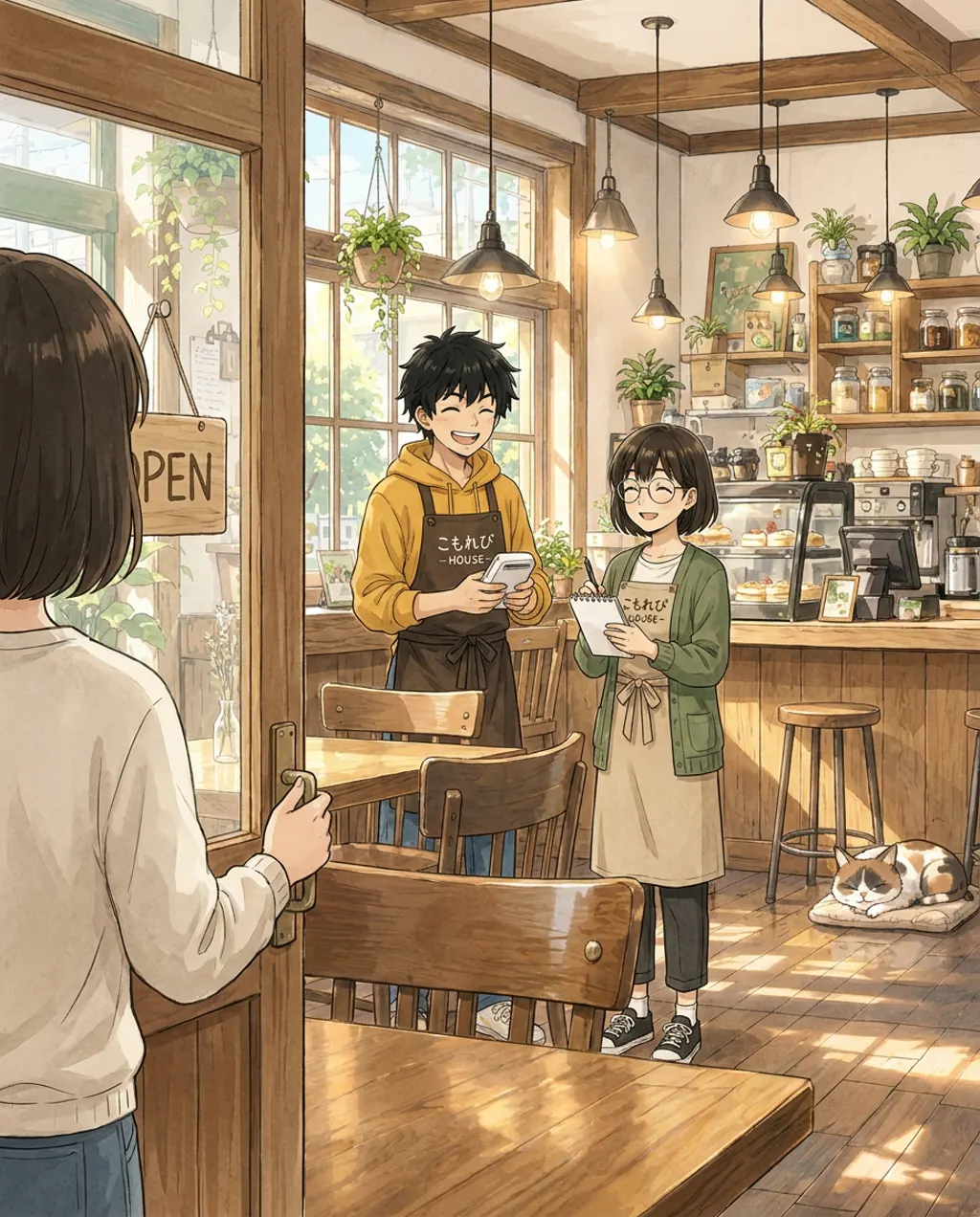
After this lesson you can
- Greet someone, thank them, get their attention, and answer a yes-or-no question.
- Recognise that Japanese is written in three systems at once.
The front door will not budge, so you try the side one, and it gives. Inside is coffee, warm paper, and someone who looks up before you have decided what to say.
Ren
こんにちは。
Hello.
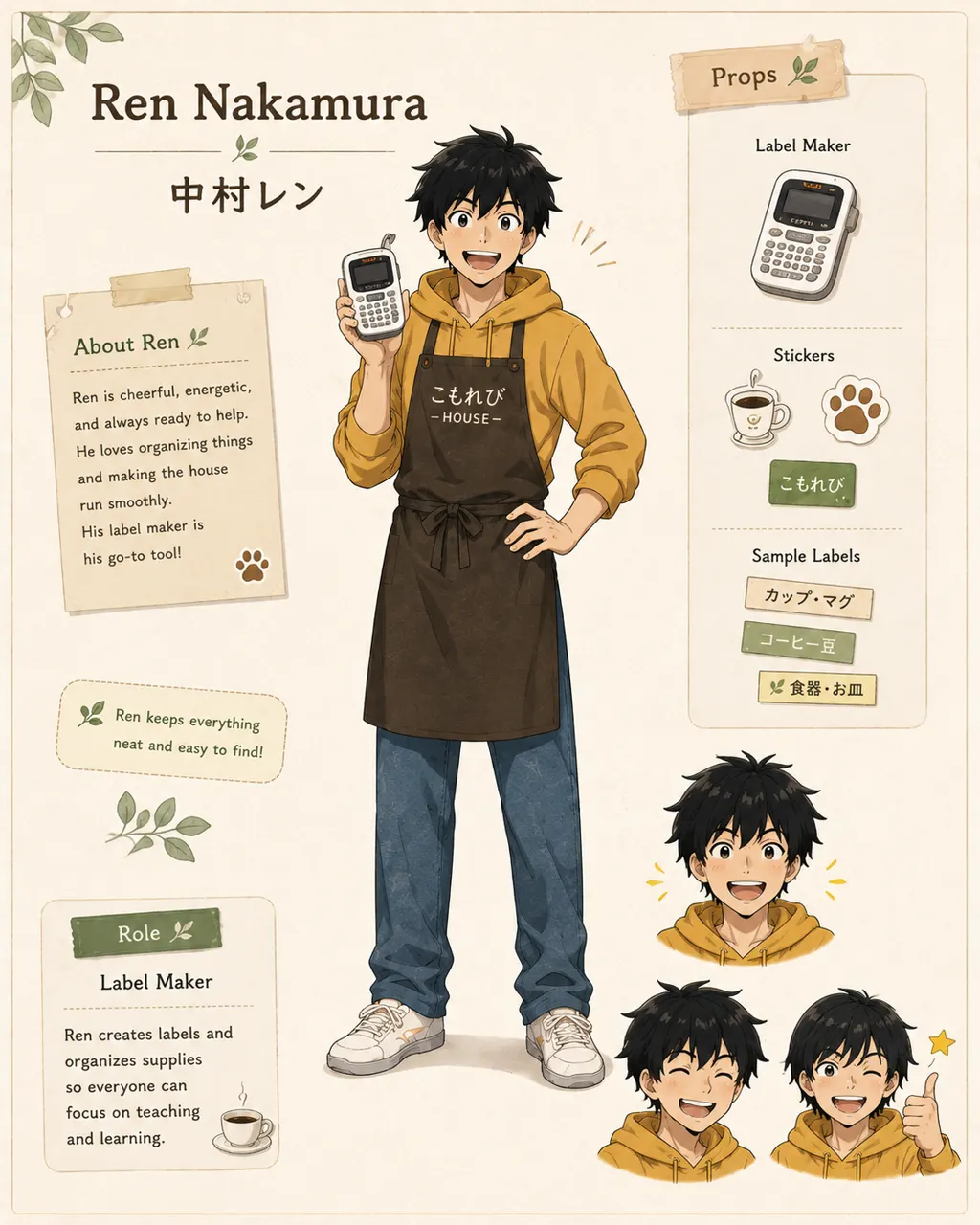
He is holding a label maker in both hands, the way you hold something you have already tried to fix once, and he looks extremely pleased to see you.
Ren
You are not the repair person?
You
いいえ。
No.
Ren
すみません。
Sorry.
Aki
こんにちは。はじめまして。
Hello. Nice to meet you.
Aki
He asks everyone that. Come in — the coffee is better than the label maker.
You
ありがとうございます。
Thank you.
Nobody is touching the label maker. It clicks once and prints a single label: ねこ.
Aki reaches for the welcome card on the counter. Mugi, the café cat, is sitting on it, and has no intention of moving.
Aki
すみません。
Excuse me. (to the cat)
Words this lesson teaches
- こんにちは
- hello (daytime greeting)
- すみません
- excuse me; sorry
- ありがとうございます
- thank you (polite)
- はい
- yes
- いいえ
- no
- はじめまして
- nice to meet you (first meeting only)
What it explains
Japanese uses three systems at once
こもれび is hiragana — rounded, curving shapes, used for Japanese words and grammar. ハウス is katakana — angular and straight, used mostly for words borrowed from other languages. 入口 is kanji — dense characters carrying meaning rather than sound. They are not alternatives to choose between. A single sentence normally uses all three, and you learn to read them together rather than one at a time.
すみません is not only an apology
Ren used すみません to apologise for the mix-up, which is the use you would guess. It is also how you get someone's attention — walking into a shop, stopping someone to ask a question. Both uses are extremely common, and which one it is comes from the situation rather than from the word.
All 16 lessons
1. The Door with Two Signs
8 minGreet someone, thank them, get their attention, and answer a yes-or-no question.
2. A Name Tag for Everyone
10 minSay your own name, and say who someone else is.
3. Is Mugi the Manager?
9 minAsk a yes-or-no question, answer one, and say that something applies to someone else too.
4. This, That and the Mystery Umbrella
11 minPoint out an object near you or near someone else, and say whose it is or is not.
5. One Cake, Surprisingly Expensive
11 minAsk what something costs, understand the answer, and order one of it.
6. The Schedule Has Three Mondays
11 minAsk what time something starts, and say when something happens or how long it runs.
7. What Happens at Komorebi?
12 minSay what someone regularly does, what they do it to, and where.
8. Where Is the Cat?
12 minAsk where something or someone is, and describe where it is in relation to something else.
9. Good Coffee, Bad Map
12 minDescribe something as good, bad, big or small, and say what you like.
10. The Umbrella Returns
14 minHand something over, thank someone, ask them to repeat, and accept an invitation.
11. Where You Came From
12 minSay which country or town you came from, and ask someone the same.
12. From Six to Nine
12 minSay when something runs from and until, using clock times.
13. What Didn't Happen
12 minSay what you did and did not do yesterday.
14. Which Way From Here
12 minSay where you are going, coming from or heading back to.
15. With Whom, By What
12 minSay who you did something with.
16. The Order Things Go In
12 minBuild a sentence with a time, a place, a thing and a verb in the usual order.
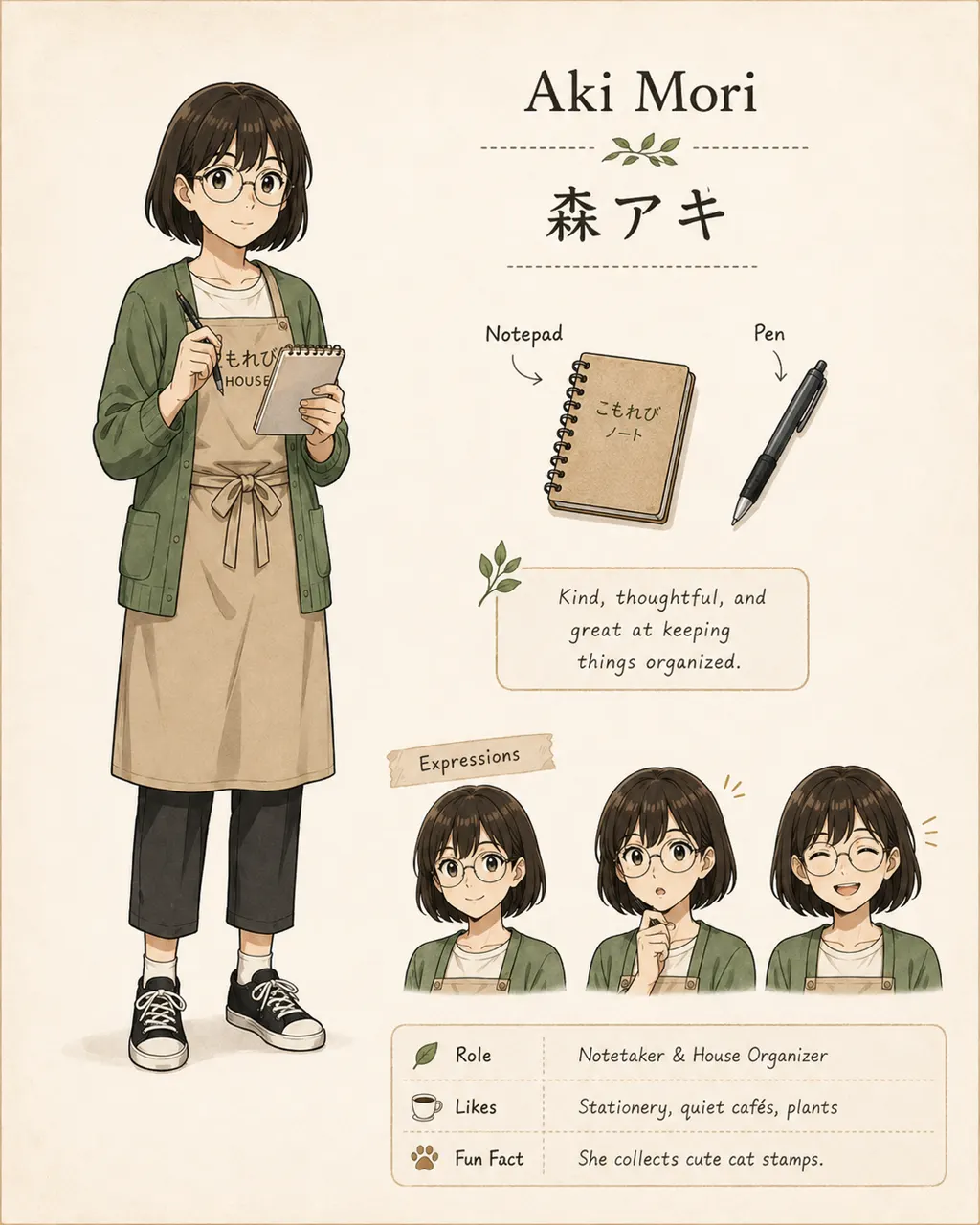
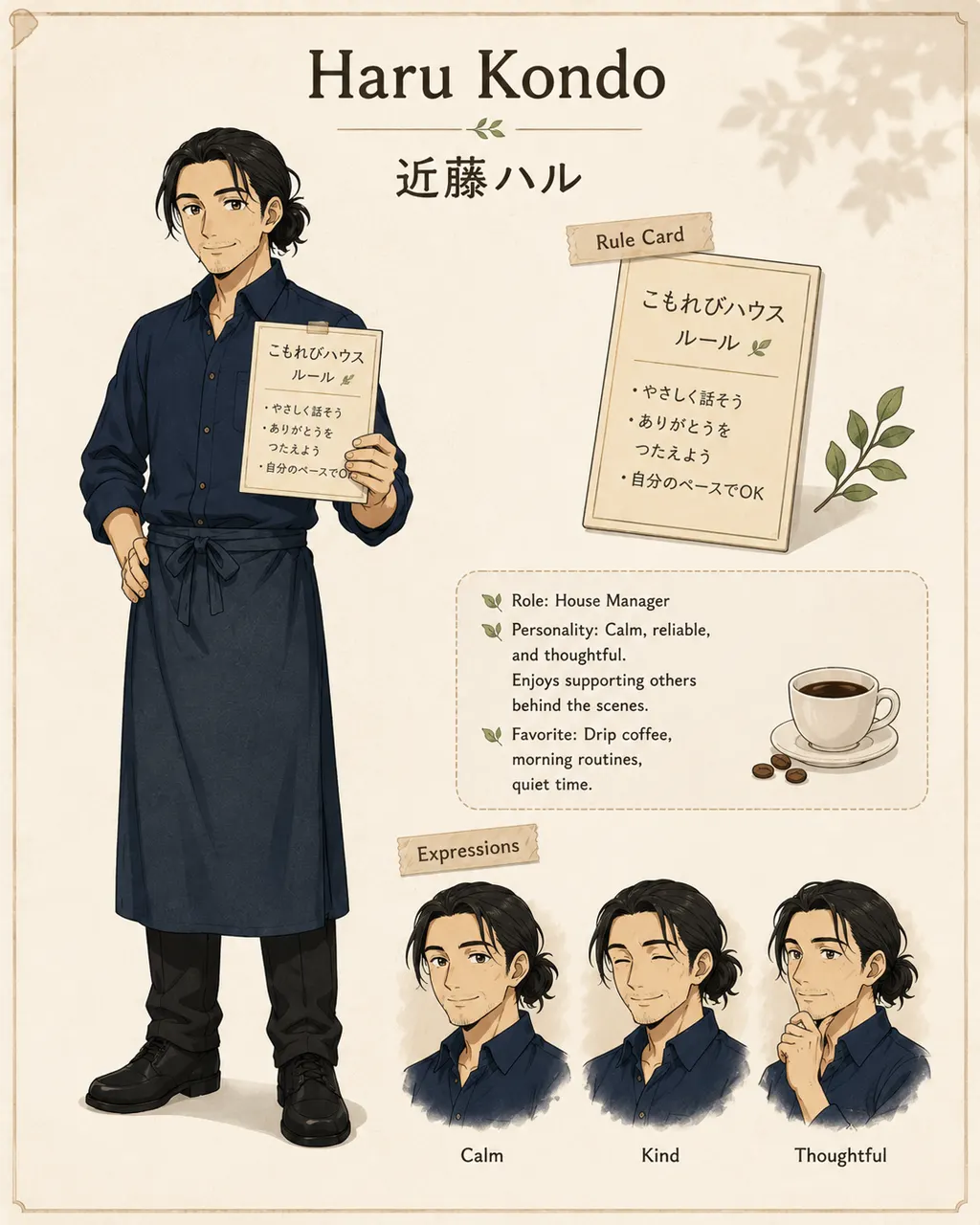
The recurring cast
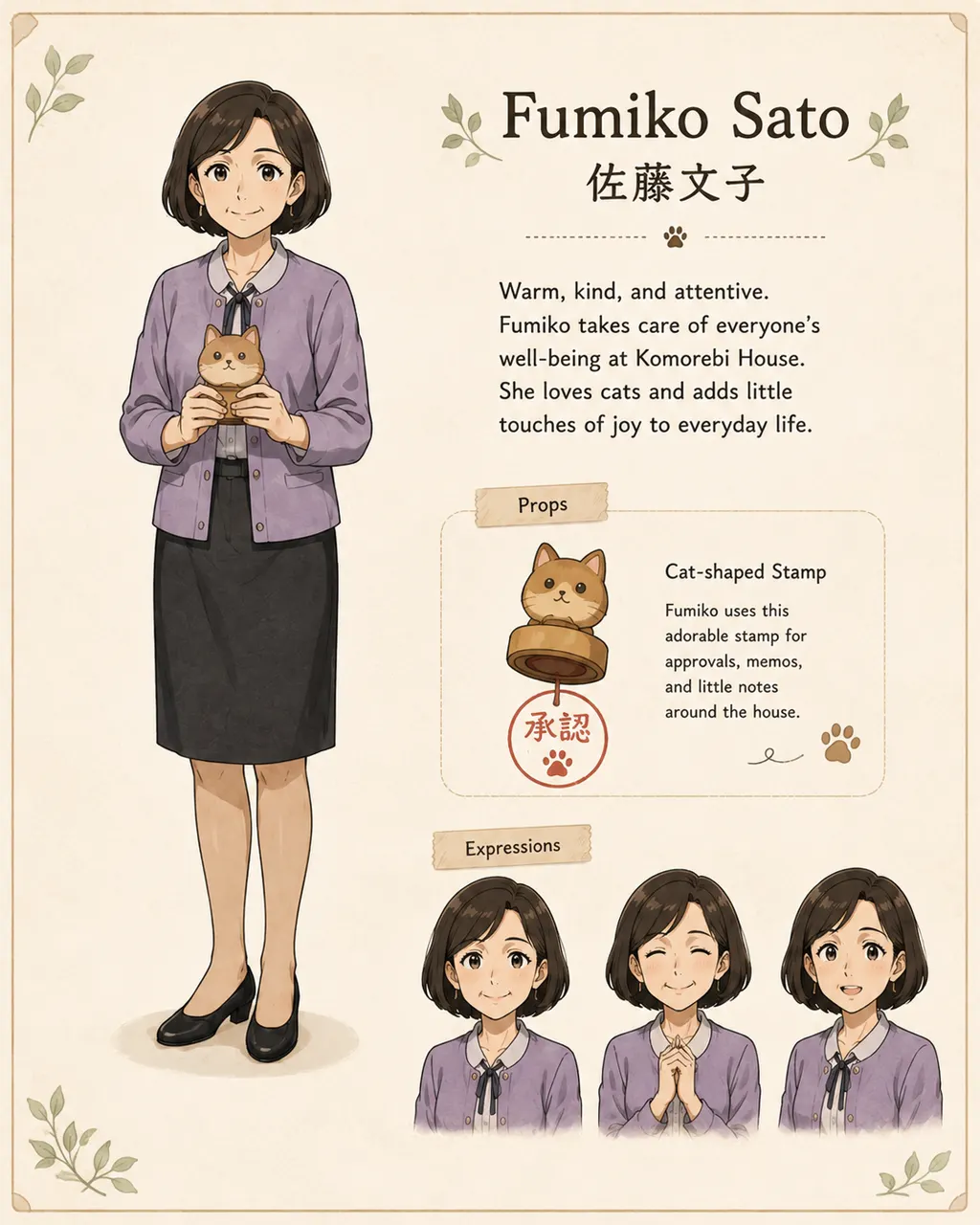
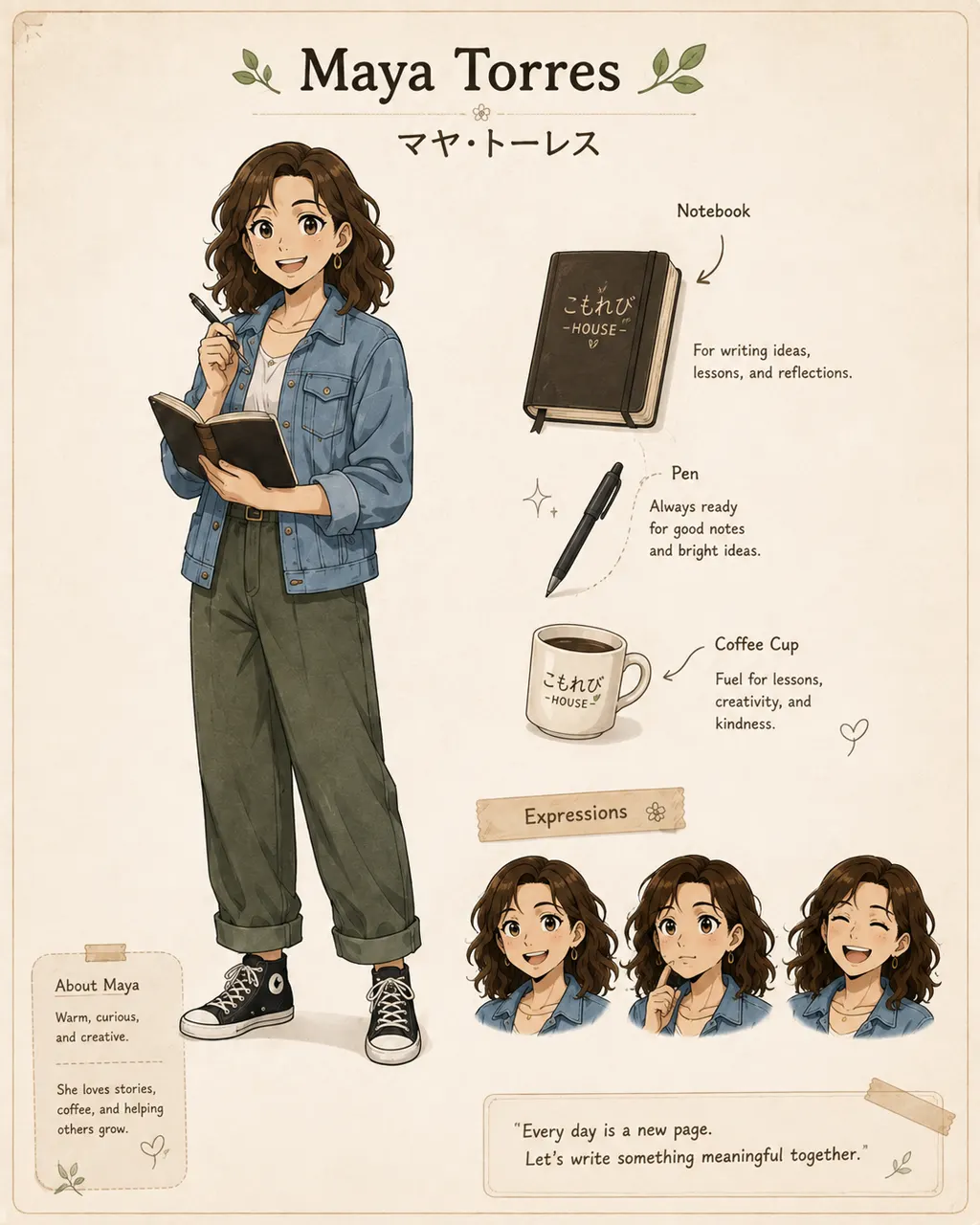
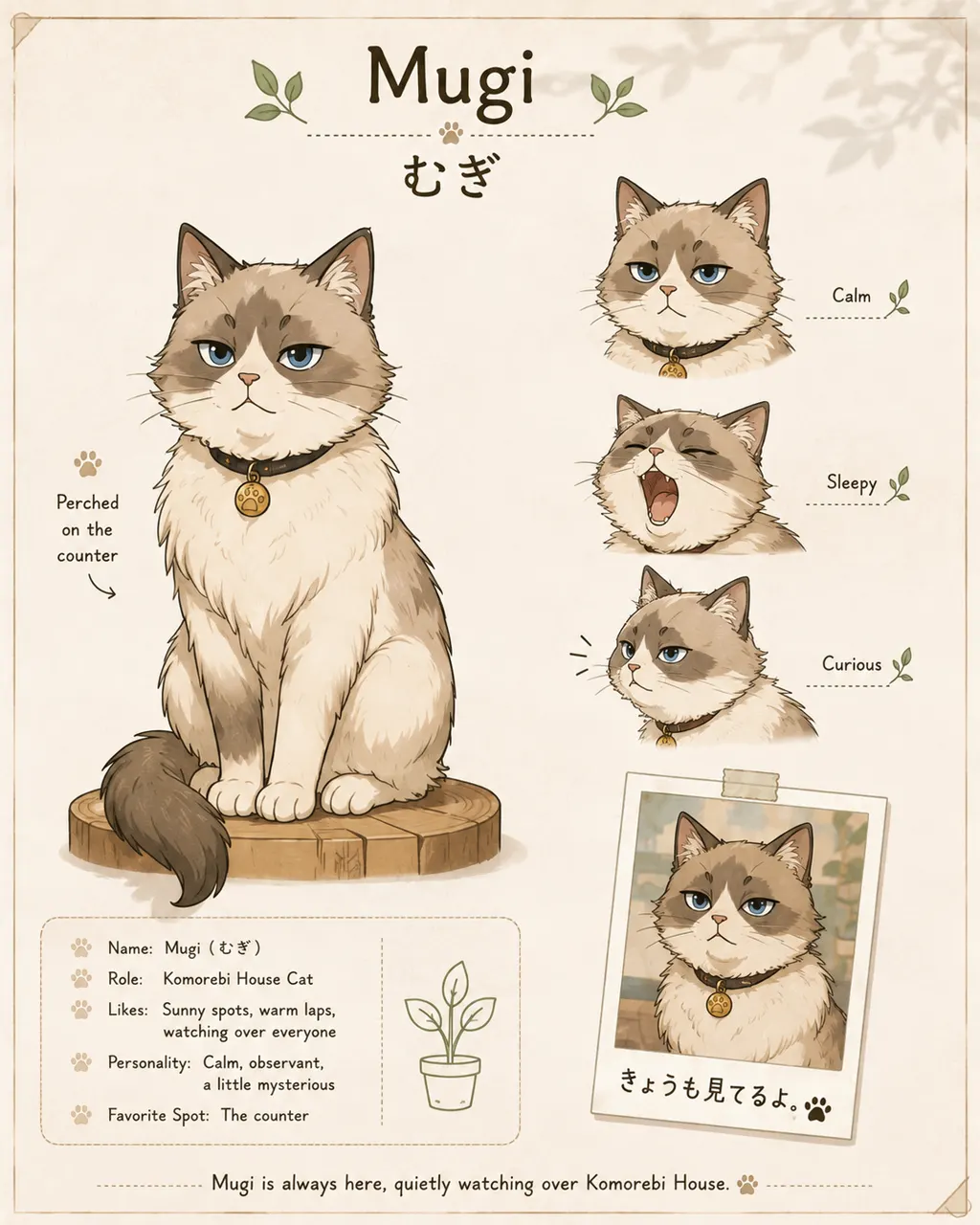
Questions
Do I need to know hiragana before I start?
No. Foundations introduces the scripts as the story runs into them, and the Kana Sprints track is there if you want a focused pass at hiragana and katakana alongside it.
How long does a lesson take?
Most lessons run eight to twelve minutes: a scene to read, the words it used, a short explanation, and a few checks.
What comes after Foundations?
The Japanese N5 track picks up the same cast and covers the full JLPT N5 grammar and vocabulary arc.