Lesson 2 of 16
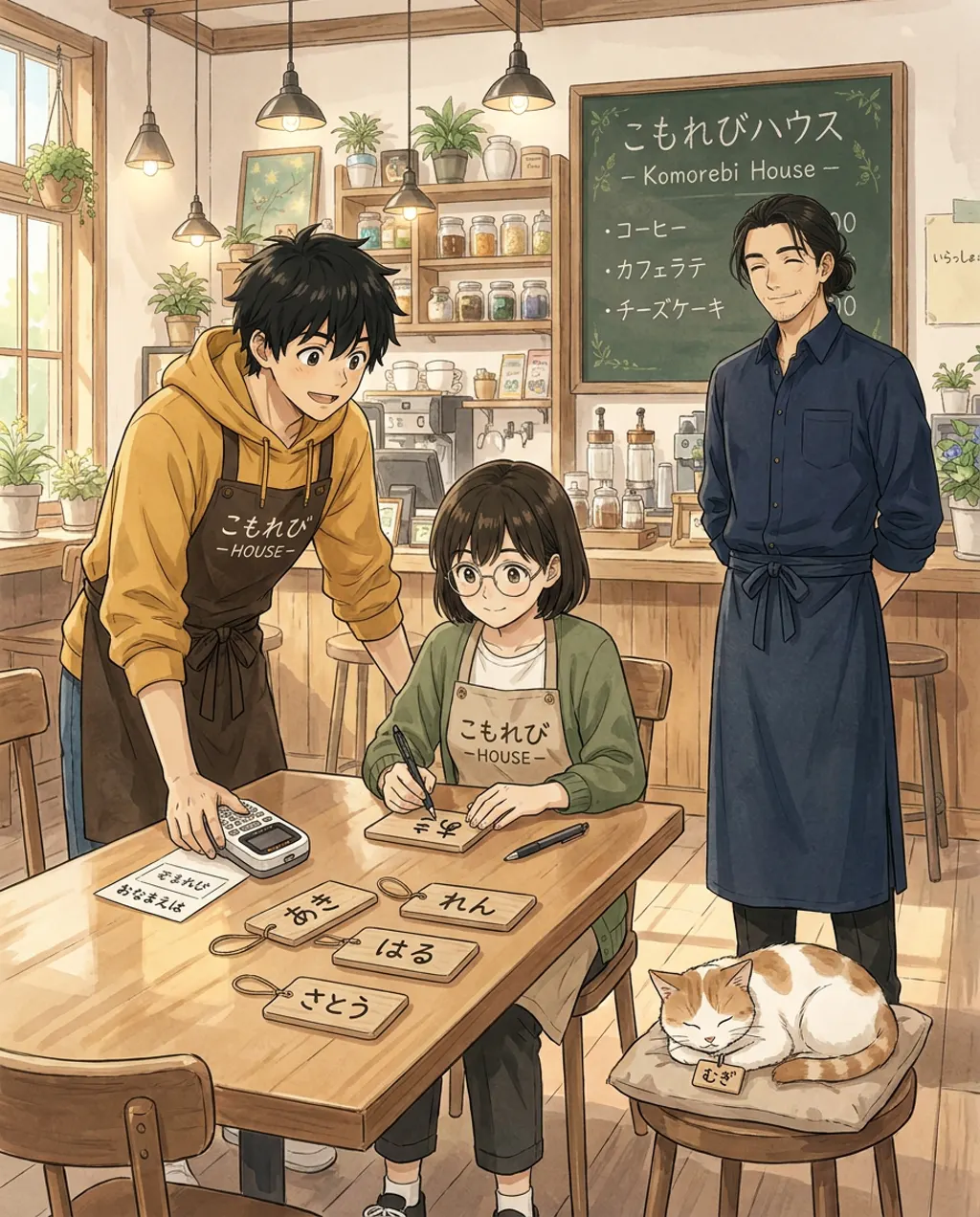
A Name Tag for Everyone
about 10 minutes
After this lesson you can
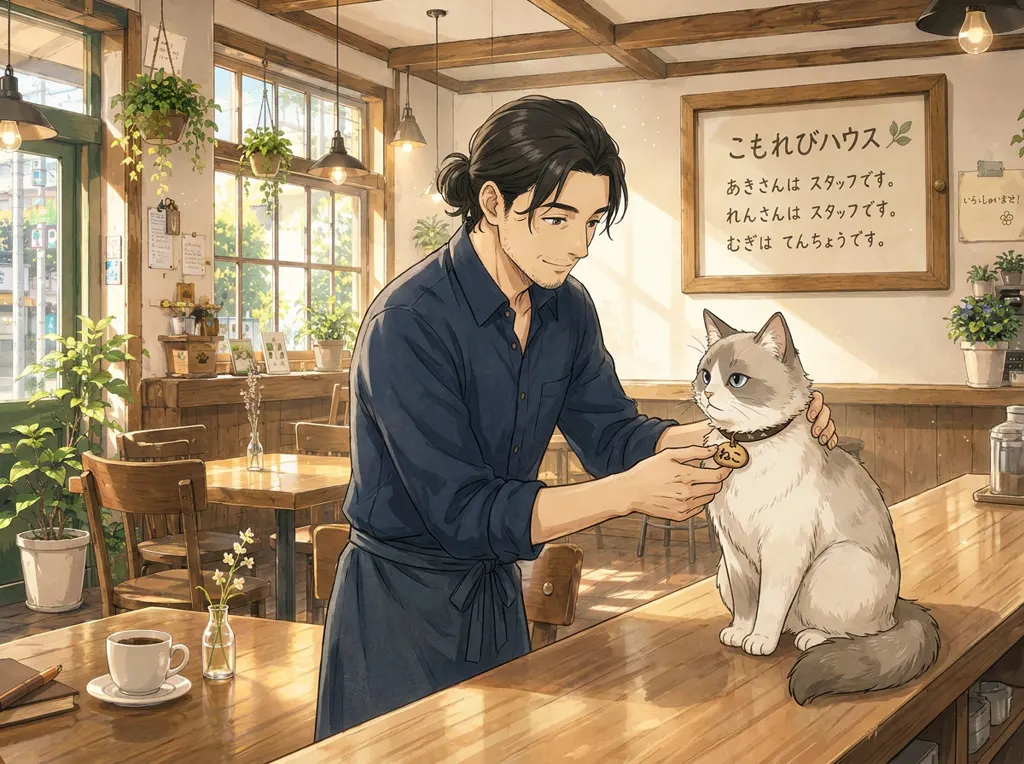
- Say your own name, and say who someone else is.
Words this lesson teaches
- わたし
- I, me
- なまえ
- name
- ねこ
- cat
- スタッフ
- staff
- てんちょう
- shop manager
- がくせい
- student
- せんせい
- teacher
- にほん
- Japan
What it explains
X は Y です
は marks what the sentence is about, and です closes it politely. わたしは あきです is literally 'as for me — Aki'. There is no verb doing the work of 'is'; です is doing something closer to politely ending the sentence. Note also that は is written with the hiragana for ha but pronounced wa when it does this job — the one spelling irregularity you meet on day one.
さん
さん attaches to someone else's name as a respectful default: れんさん, あきさん. It is not gendered and it is not formal in the way 'Mr.' is — it is simply what you use unless you have a reason not to. The one rule that matters immediately: never attach it to your own name. Aki says わたしは あきです, not あきさんです.
The scene itself is in the app.
Lesson one of this track is free to read in full. From lesson two on, the story, the audio and the review are part of a free account.