Lesson 14 of 28
Kanji Unit 14 — the heart underneath
about 9 minutes
After this lesson you can
- Recognise 心 at the bottom of a character and expect the character to be about feeling.
- Say what a phonetic component is, and use one to guess a reading.
Words this lesson teaches
- 心
- heart, mind
- 思
- think, feel that
- 急
- hurry; sudden
- 悪
- bad, wrong
- 意
- mind, intent, meaning — as in 意見, an opinion
- 持
- hold, carry
- 待
- wait
- 特
- special, particular
- 強
- strong
What it explains
Some parts mean, some parts sound
A compound character usually has one part for the sense and one for the sound. In 持 the hand 扌 is the sense — holding — and 寺 is the sound. and there the system works. In 待 and 特 the same 寺 sits in the same slot and the reading has moved on. So the honest answer to the question every learner asks — is there any way to guess a reading? — is: sometimes, and you will not know which time you are in. Learn the readings, and treat a phonetic component as a hint that occasionally pays.
思います, which you have been saying since N5
〜と思います arrived in N5 and has been written おもいます ever since. It is 思います. The same is true of 待ちます, 持ちます and 急ぎます, all of them verbs the courses already use in kana. This unit adds no new vocabulary at all — it makes nine words you already say into words you can read, which is the whole contract of the kanji track.
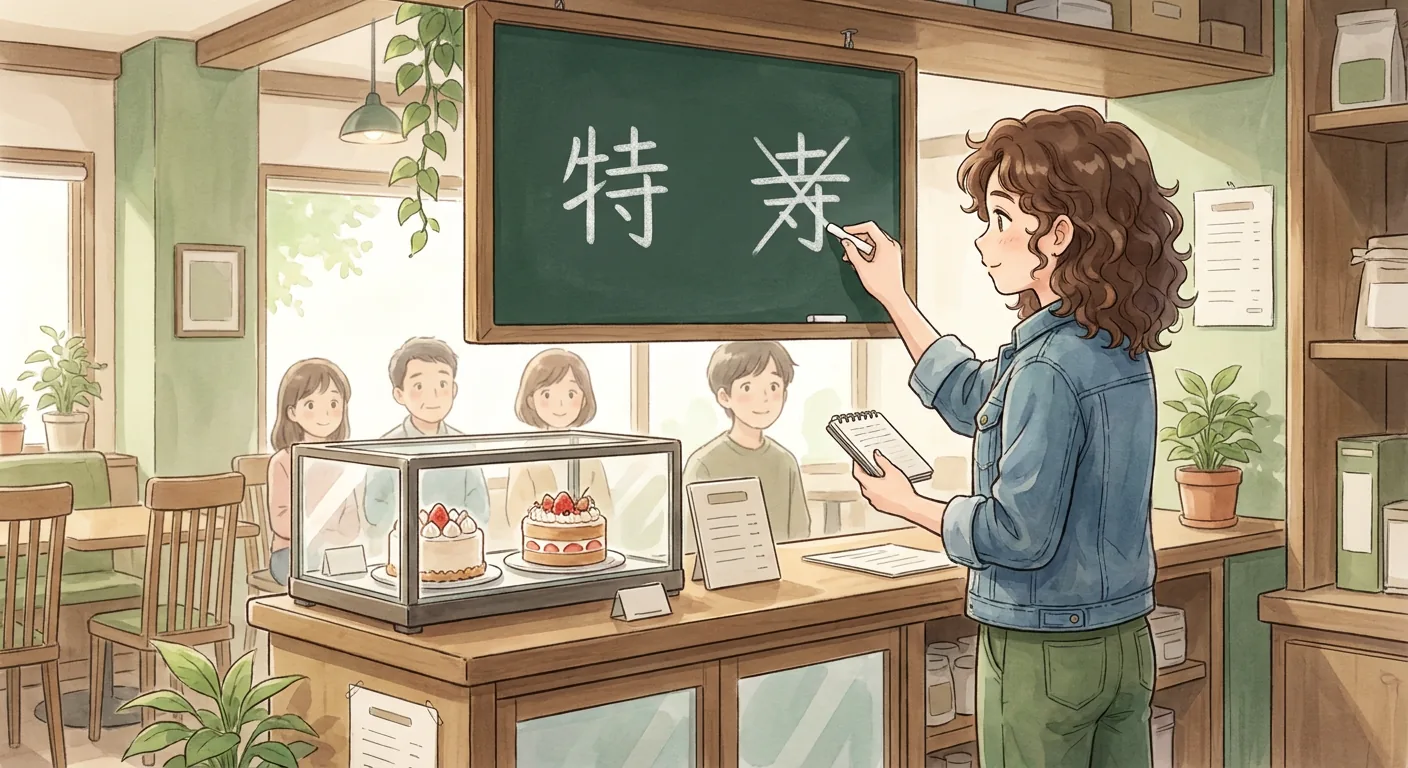
The scene itself is in the app.
Lesson one of this track is free to read in full. From lesson two on, the story, the audio and the review are part of a free account.