Lesson 1 of 24
Someone Did It Already
about 12 minutes
After this lesson you can
- Say that someone did something for you, and thank them for it.
- Tell the difference between what happened and what someone did for you.
First Saturday session, and you are twenty minutes early. The chairs are already out in a half circle, the board is wiped, and the kettle has just boiled.
Aki
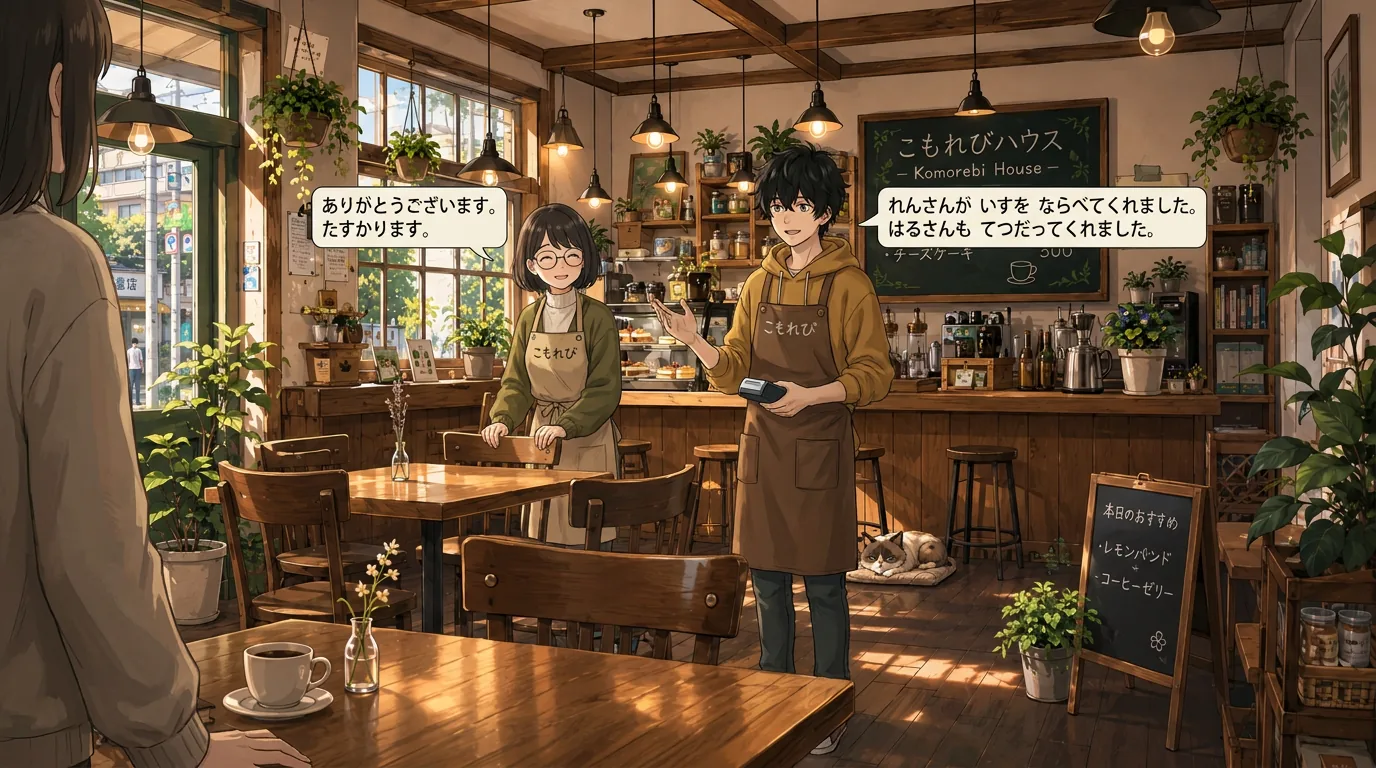
れんさんが いすを ならべてくれました。
Ren set the chairs out for us.
Aki
はるさんも てつだってくれました。
Haru helped out too.
Ren is at the board with a marker, adding a ninth rule to a list that had eight of them at the end of last season.
You
ありがとうございます。たすかります。
Thank you. That really helps.
Ren
土曜日は 早く 来ますから。
I come in early on Saturdays anyway.
You
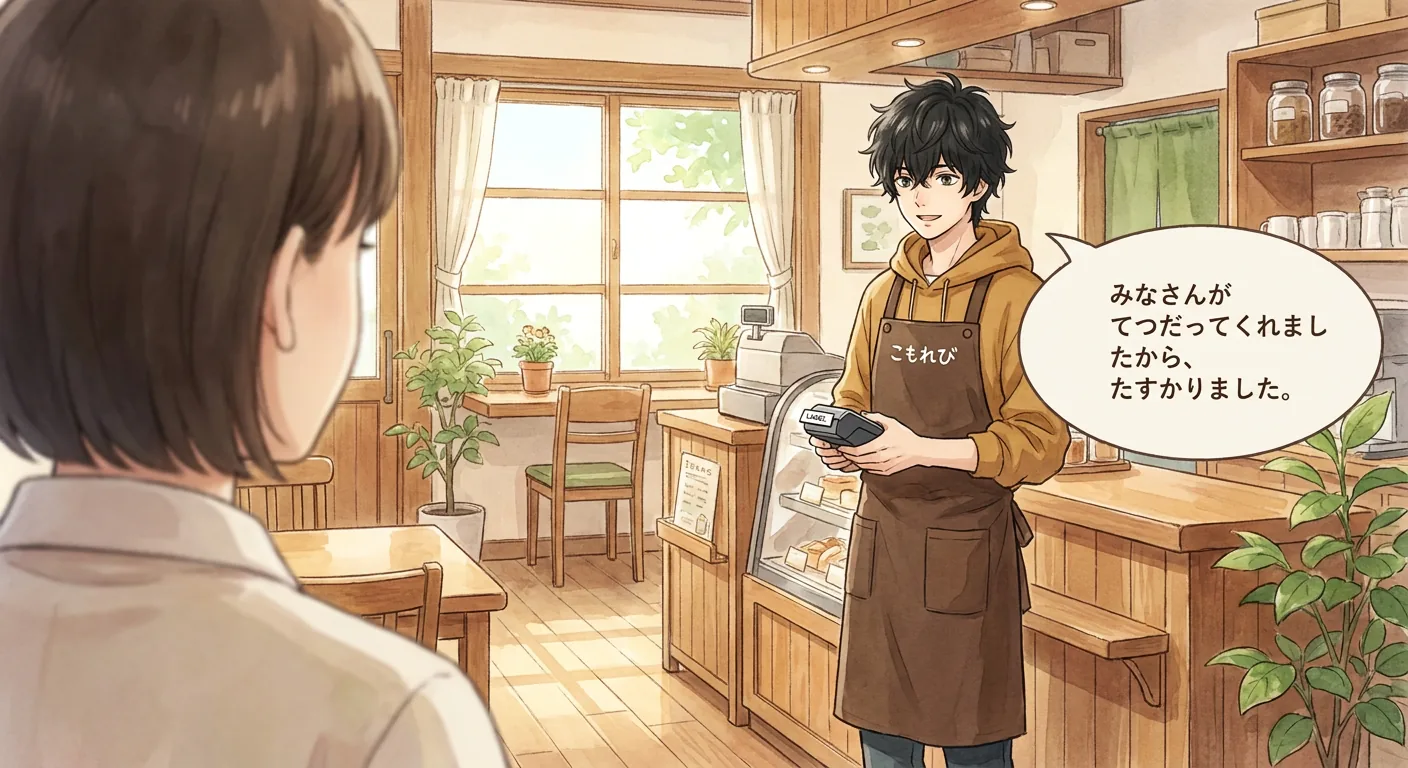
みなさんが てつだってくれましたから、たすかりました。
Everyone pitched in for us, so it really helped.
Ren writes rule nine on the board: あさは コーヒーを つくる. Nobody asks whose rule it is, and nobody rubs it out.
Words this lesson teaches
- くれます
- gives me, does for me
- ならべます
- lines up, sets out
- かたづけます
- tidies away, clears up
- たすかります
- that helps, you've saved me
- おれい
- thanks, a token of thanks
- 早く
- early, quickly
- さいしょ
- the first one, the beginning
- つづけます
- continues, keeps doing
What it explains
〜てくれる: they did it, and it landed on you
Attach くれる to the て-form and the sentence gains a direction: the action moved towards the speaker, or towards someone the speaker counts as theirs. ならべました is a report. ならべてくれました is a report plus a thank-you built into the grammar. Japanese speakers hear the plain version as cold in exactly the places English would expect warmth, which is why this comes first in N4 rather than later.
が, not は, for the person who did it
れんさんが いすを ならべてくれました. The doer takes が here, not は, because the sentence is answering who — and answering who is what が is for. You met that in N5 with だれが うけつけを しますか. It is the same が, doing the same job, in a bigger sentence.