Lesson 22 of 24
Shall We? Can You?
about 15 minutes
After this lesson you can
- Invite someone to do something, and say what you can do and what you have done before.
Words this lesson teaches
- いっしょに
- together
- せつめいします
- explains
- あんないします
- shows around, guides
- けいけん
- experience
- はなします
- speaks, talks
- できます
- can do, is able
- まえに
- before, previously
- すこし
- a little
- イベント
- an event
What it explains
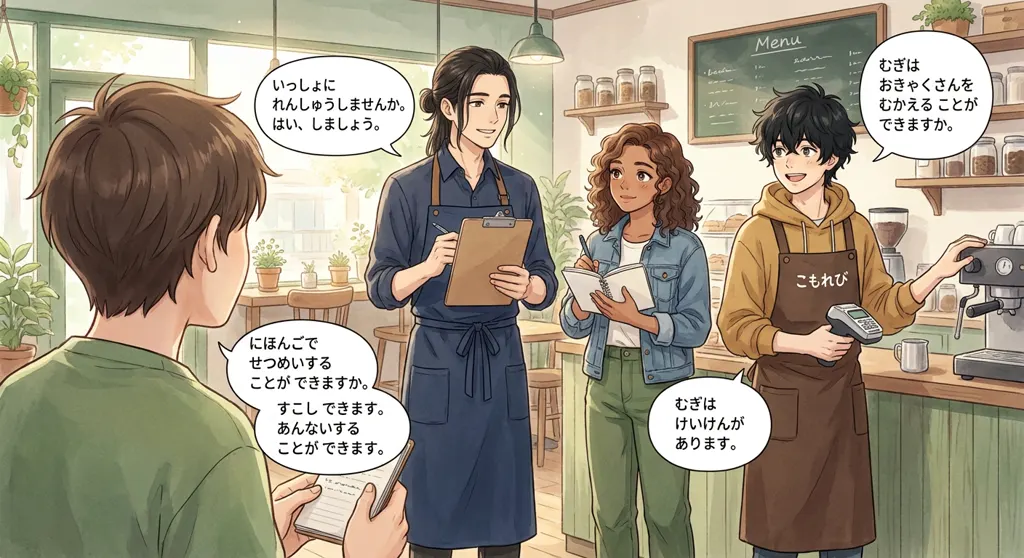
Vませんか — won't you?
The polite negative with か on the end, used as an invitation: れんしゅうしませんか, shall we practise? Phrasing an invitation negatively leaves the other person room to decline without contradicting you, which is why it is softer than ましょう and the safer opener with someone you do not know well.
Vましょう — let's
Drop ます, add ましょう: しましょう, let's do it. It assumes agreement, so it is what you say once the invitation has been accepted, or to a group you are leading. ましょうか offers rather than assumes: てつだいましょうか, shall I help?
…ことが できます — the dictionary form arrives
This needs the plain, unconjugated verb — the form a dictionary lists. せつめいします becomes せつめいする; はなします becomes はなす; たべます becomes たべる. Then add ことが できます: せつめいする ことが できます, I can explain. You have used ます forms for thirty lessons; this is the first pattern that needs the verb undressed.
…た ことが あります — have done before
Same shape, but with the plain past: てつだった ことが あります, I have helped before. It states experience at some unspecified point, not a particular occasion — for that you would just use ました. けいけんが あります is the noun version and needs no verb form at all, which is what Ren reaches for.
The scene itself is in the app.
Lesson one of this track is free to read in full. From lesson two on, the story, the audio and the review are part of a free account.