Lesson 8 of 24
A Day in Messages Checkpoint
about 15 minutes

After this lesson you can
- Follow a day across a schedule and a set of messages, and say what happened where.
- Send a short status update using past and non-past correctly.
Words this lesson teaches
- ほうこく
- a report, an update
- かくにん
- a check, confirmation
- こんしゅう
- this week
- よてい
- a plan, what is scheduled
- ぜんぶ
- all of it
What it explains
Messages leave out what everyone already knows
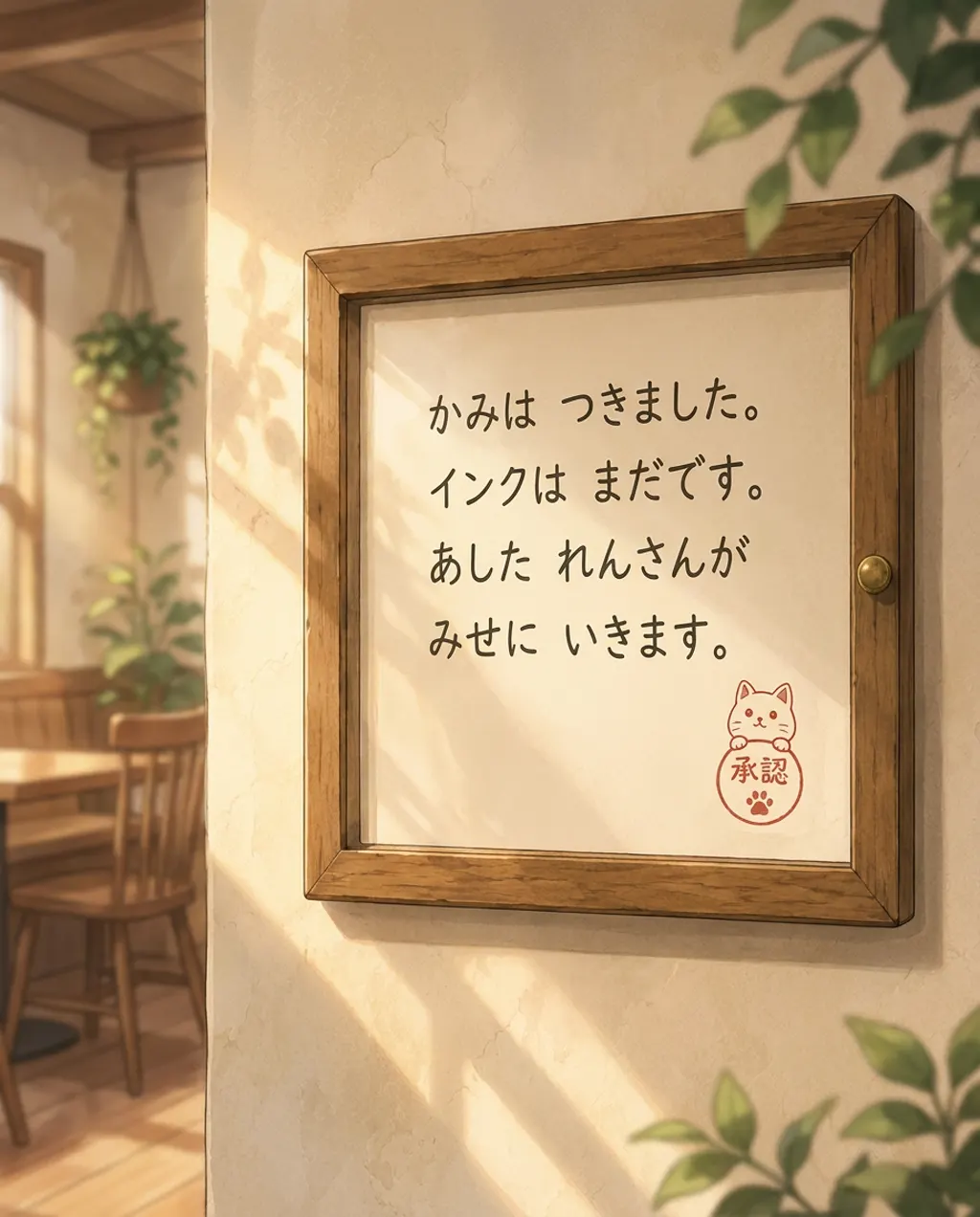
みせに いきました can be a complete message: went to the shop. Who went is left out because the group already knows. This is not a special feature of Japanese messaging so much as what any language does when the context is shared — English does it too, in notes and texts. The practical consequence is that reading a chat means tracking who is being talked about across several messages.
Confirm the person, time or object
When the omitted piece matters, ask for it rather than assuming: だれが いきましたか, なんじですか, どれですか. Maya does this constantly and it is why she understands more of the chat than anyone else who has been here the same length of time. Guessing is faster and wrong more often.
A status update is mostly two tenses
What is finished takes ました. What has not happened takes ませんでした if it failed, or the plain non-past ます if it is still to come. Getting that split right is most of what makes an update readable — おわりました and まだです carry almost the whole message.
The scene itself is in the app.
Lesson one of this track is free to read in full. From lesson two on, the story, the audio and the review are part of a free account.