Lesson 17 of 24
The Poster Is Missing
about 15 minutes
After this lesson you can
- Join two actions together and say what happened in what order.
Words this lesson teaches
- きります
- cuts
- はこびます
- carries
- おきます
- puts, places
- さがします
- looks for, searches
- みつけます
- finds
- あけます
- opens
- しめます
- closes
- まず
- first of all
- いんさつします
- prints
What it explains
The te-form — the shape everything else attaches to
This is the single most useful conjugation in Japanese, and the only one worth drilling as a form in its own right. From ます: たべます becomes たべて, みます becomes みて — drop ます, add て. Verbs ending います, ちます, ります become って: かいます → かって. みます, びます, にます become んで: はこびます → はこんで. きます → いて, ぎます → いで, します → して. します is して and きます is きて. Two irregulars, five patterns, and then every request, permission and ongoing action in the language is built on it.
Vて、Vます — and then
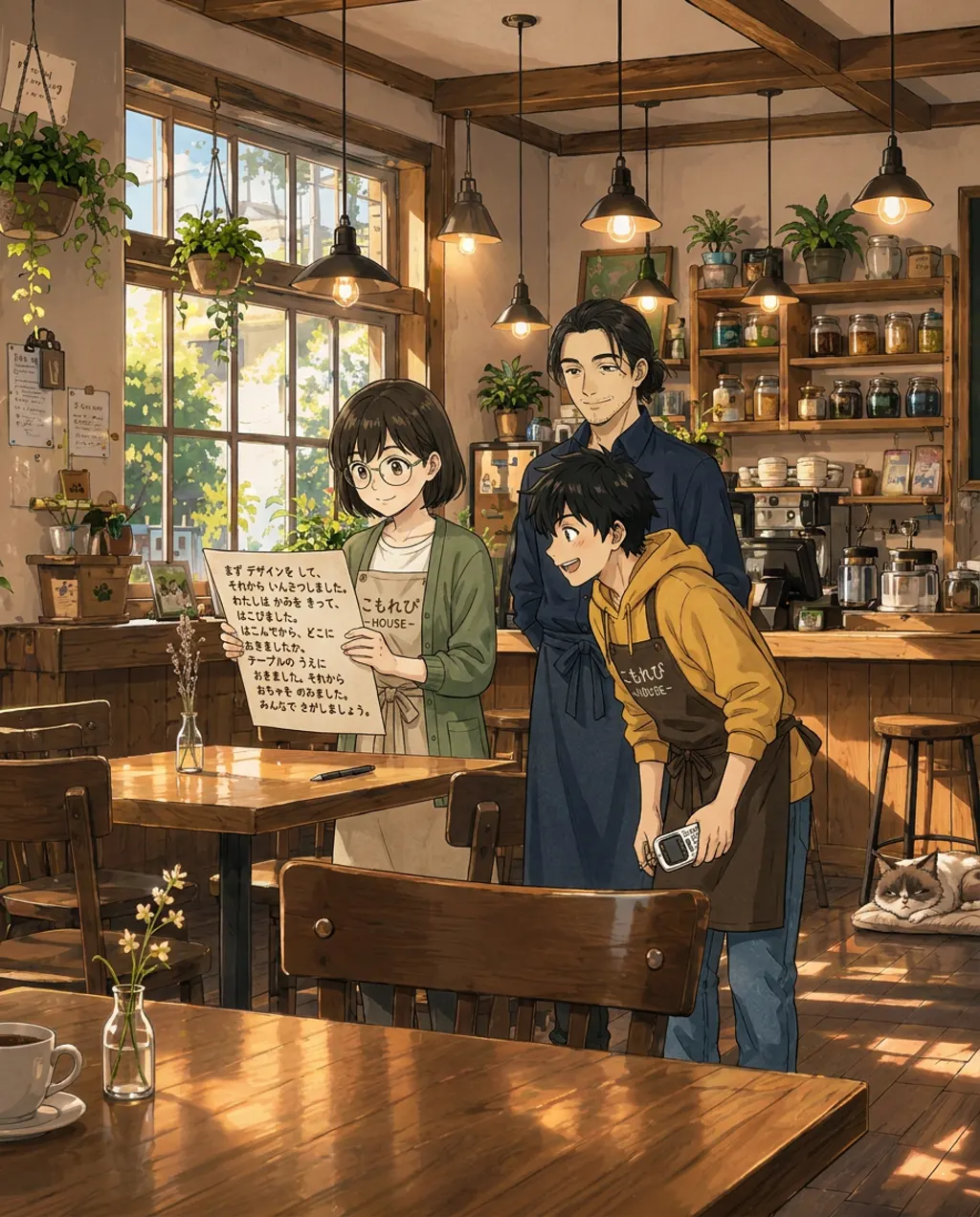
かみを きって、はこびました: cut the paper and carried it. The te-form joins the actions in order; only the last verb carries the tense, which is why きって does not need to be past. This is how you say two things happened without starting a second sentence.
Vてから — after doing
はこんでから、おきました — after carrying it, I put it down. てから is stronger than plain て: it insists the first action finished before the second began. Use it when the order genuinely matters, and plain て when the actions simply follow one another.
The scene itself is in the app.
Lesson one of this track is free to read in full. From lesson two on, the story, the audio and the review are part of a free account.