Lesson 3 of 16
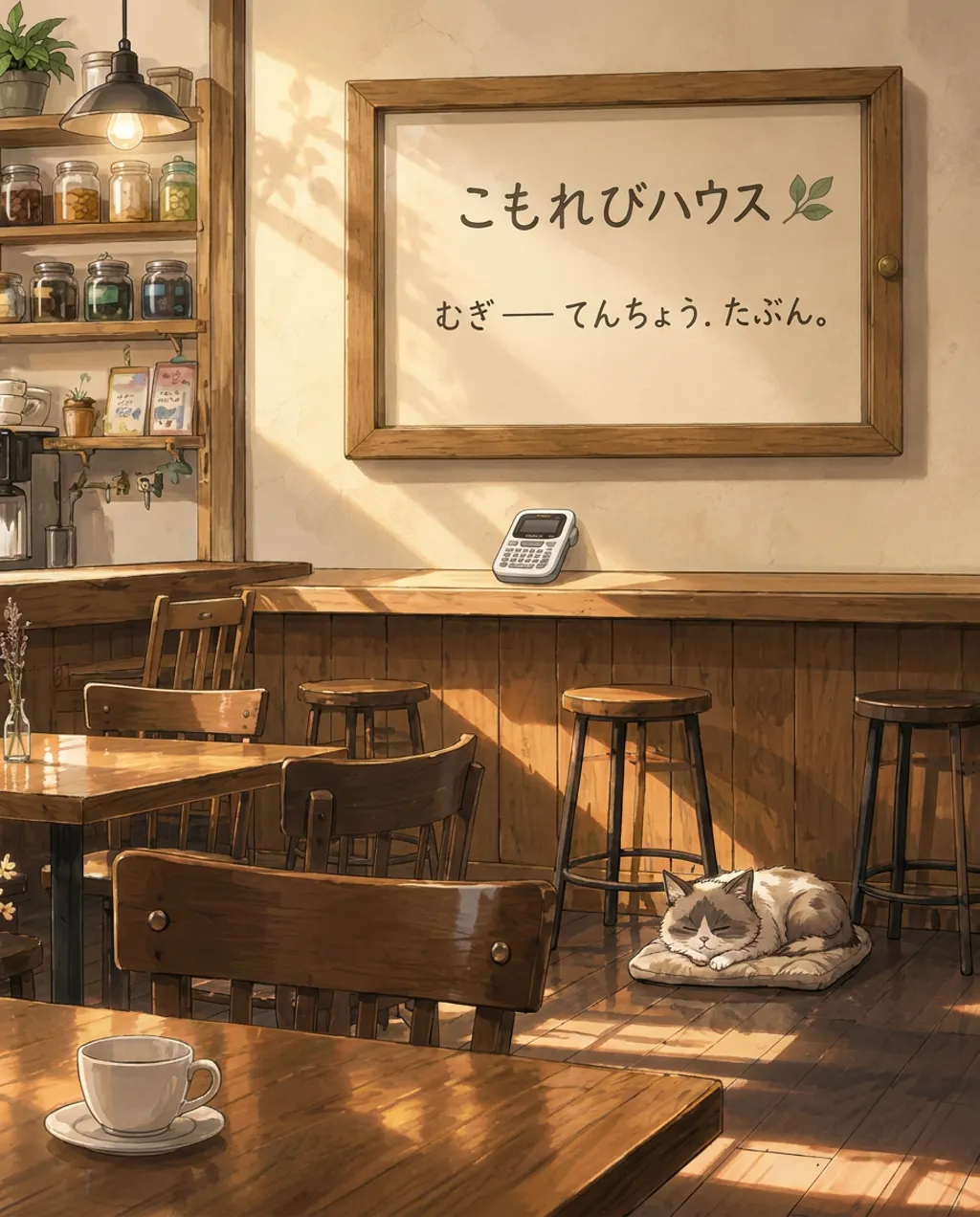
Is Mugi the Manager?
about 9 minutes
After this lesson you can
- Ask a yes-or-no question, answer one, and say that something applies to someone else too.
Words this lesson teaches
- てんちょう
- shop manager
- そうです
- that's right
- ちがいます
- that's not right; it's different
- も
- also, too
- ともだち
- friend
- きっさてん
- café
- にほんご
- the Japanese language
What it explains
か turns a statement into a question
Add か to the end and むぎは てんちょうです becomes むぎは てんちょうですか. Nothing else moves — no word order change, no rising intonation required. This is one of the few things in Japanese that is simpler than the English equivalent.
も replaces は to mean "too"
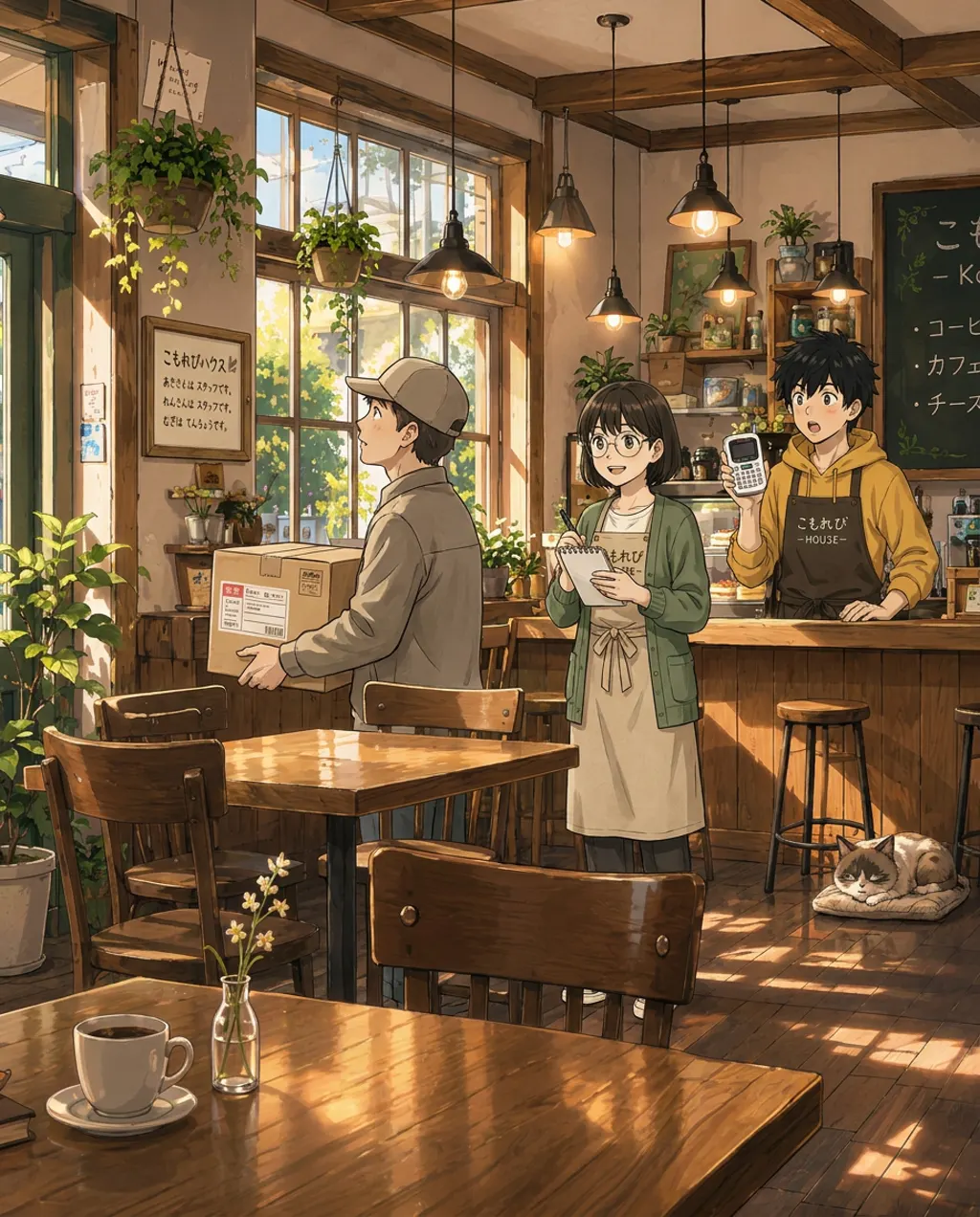
あきさんは スタッフです says Aki is staff. あきさんも スタッフです says Aki is staff as well — as well as someone already mentioned. も takes は's place rather than joining it, so you never write はも.
の, holding two nouns together
にほんご の がくせい means a student of Japanese. の links two nouns, with the owner or category first. Here it is enough to see it holding にほんご and がくせい together.
The scene itself is in the app.
Lesson one of this track is free to read in full. From lesson two on, the story, the audio and the review are part of a free account.