Lesson 16 of 16
The Order Things Go In
about 12 minutes
After this lesson you can
- Build a sentence with a time, a place, a thing and a verb in the usual order.
- Answer a who question with が rather than は.
Words this lesson teaches
- が
- marks which one it is (subject)
- だれが
- which person; who (as the one doing it)
- うけつけ
- reception; the welcome desk
- ごご
- afternoon
- つぎ
- the next one
- なまえ
- name
- ボード
- board (the one shifts are written on)
What it explains
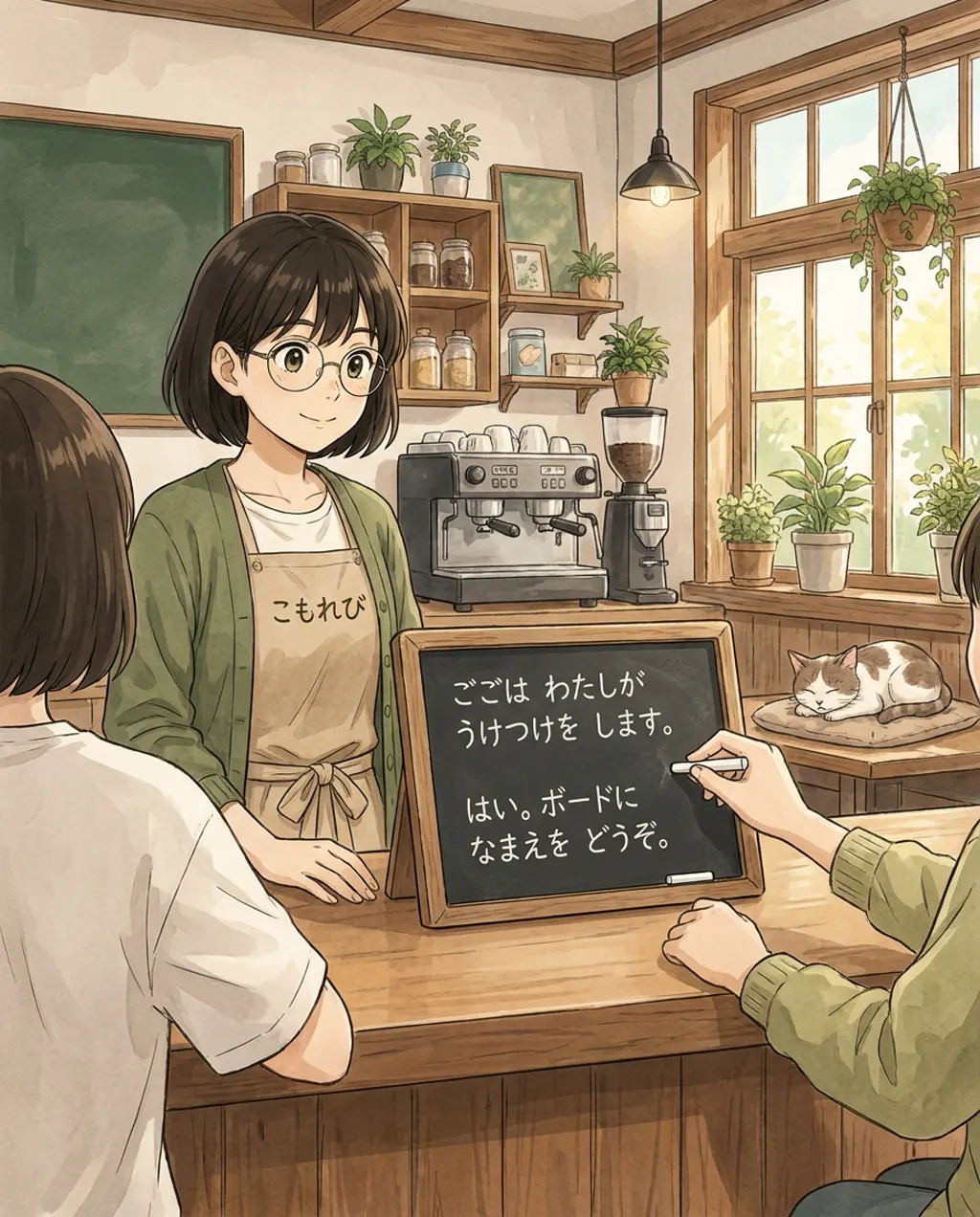
は sets the topic, が picks the one
わたしは します answers what about me; わたしが します answers which of us. When the question is だれが, the answer keeps が, because the new information is the person and が is what points at it. Both markers can appear in the same sentence — あさは わたしが します — the topic first, the chosen one second.
Time, place, thing, verb — and the verb is always last
あした、こもれびで うけつけを します holds four of the pieces this course has taught, each one carrying its own marker: に or a bare time word, で for where it happens, を for what is done, and the verb closing the sentence. Move the middle parts around and the sentence still works, because the markers travel with them. Drop the verb from the end and nothing does.
The scene itself is in the app.
Lesson one of this track is free to read in full. From lesson two on, the story, the audio and the review are part of a free account.