Japanese Foundations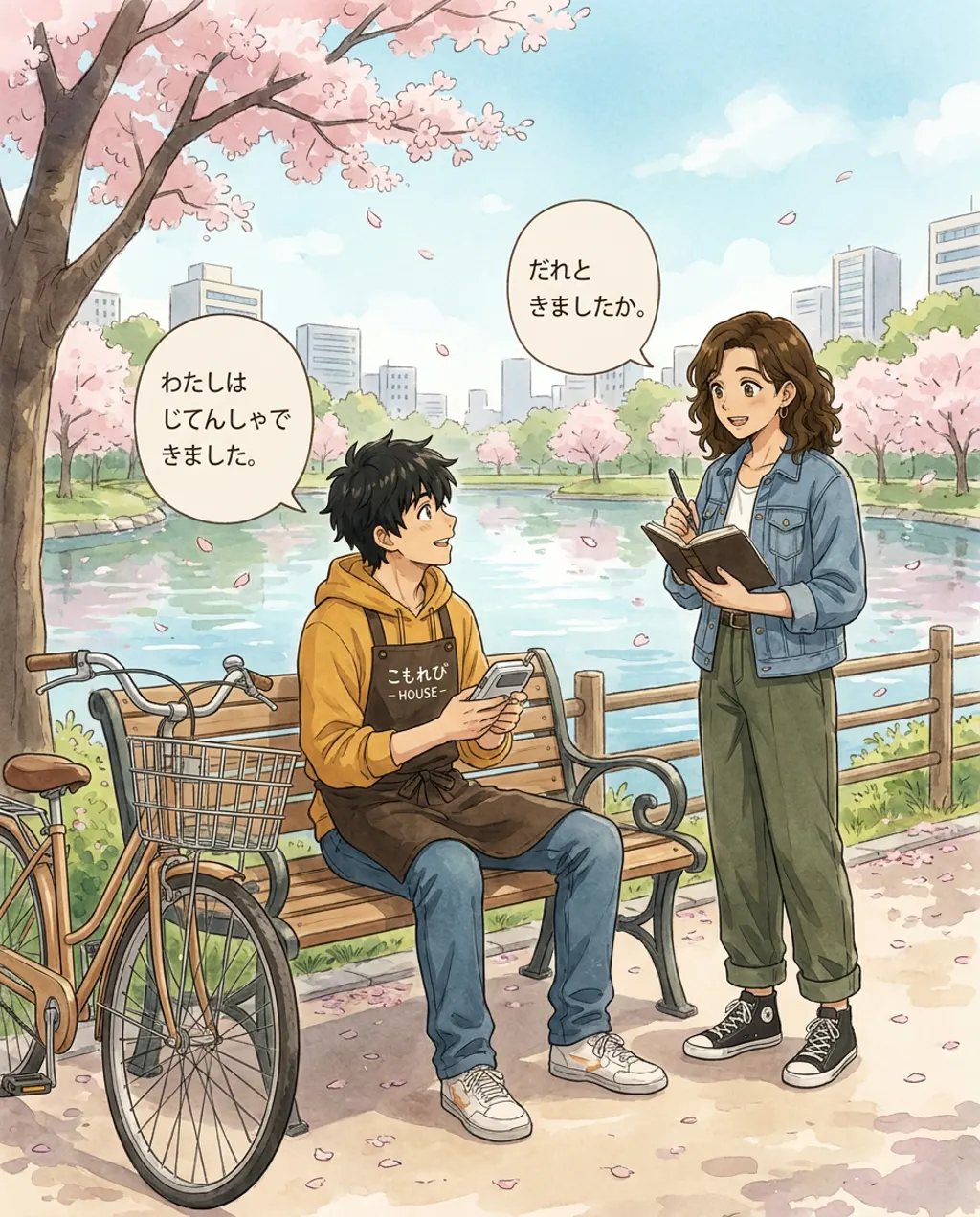
Lesson 15 of 16
With Whom, By What
about 12 minutes
After this lesson you can
- Say who you did something with.
- Say how you travelled: on foot, by bike, by train.
Words this lesson teaches
- と
- with (a person); and (between nouns)
- でんしゃ
- train
- じてんしゃ
- bicycle
- バス
- bus
- あるいて
- on foot
- だれ
- who
- ひとりで
- alone; by yourself
What it explains
と puts a person beside you
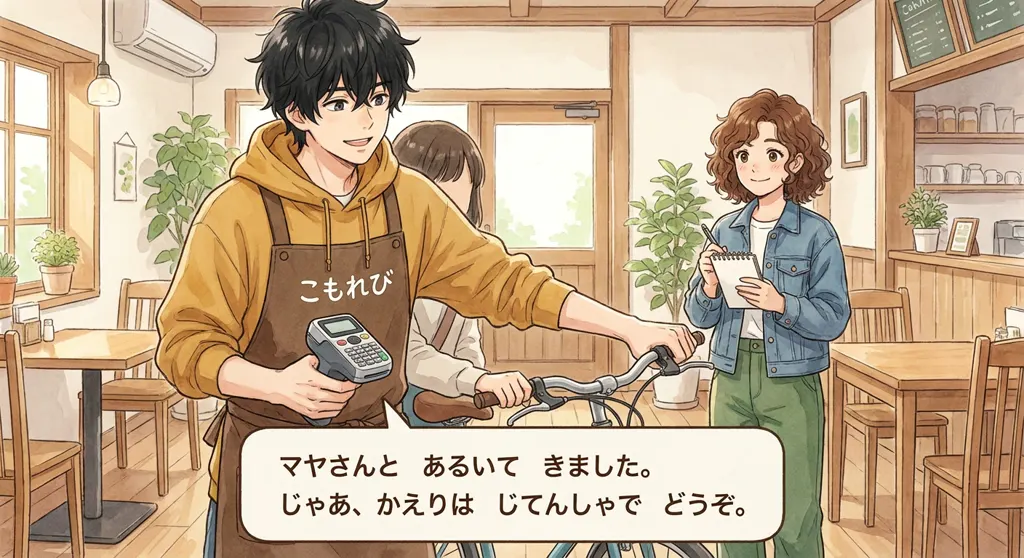
Put と straight after the person and the rest of the sentence carries on unchanged: マヤさんと きました. The same と also joins two nouns into a pair — パンと コーヒー — which is why a shopping note and a travelling companion look alike on the page. If you came alone, the answer is ひとりで.
で is the one you arrive in
でんしゃで, バスで, じてんしゃで — で marks the thing that got you there, and it is the same で you already use for where an action happens. Walking is the exception: it takes no vehicle and no で, just あるいて きました.
The scene itself is in the app.
Lesson one of this track is free to read in full. From lesson two on, the story, the audio and the review are part of a free account.