Japanese N4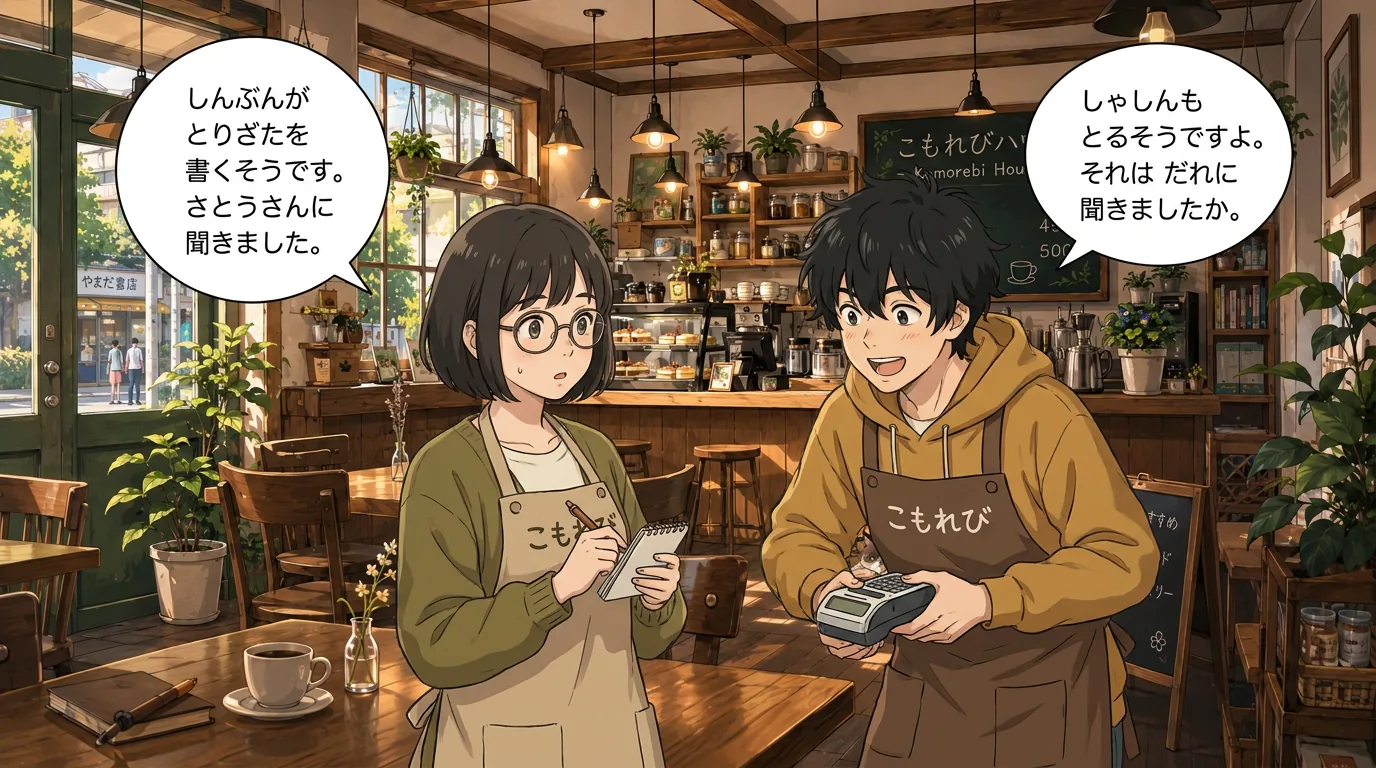

Lesson 10 of 24
I Heard From Sato
about 12 minutes
After this lesson you can
- Pass on something you were told, and say where it came from.
- Tell the two そう apart by what they attach to.
Words this lesson teaches
- ききます
- hears, asks
- しんぶん
- a newspaper
- しゃしん
- a photograph
- うわさ
- a rumour
- ほんとう
- true, real
- つたえます
- passes on, conveys
- きじ
- an article
- たしか
- if I remember rightly
What it explains
そうです on the plain form: someone told me
Plain form plus そうです reports information as received. 書くそうです, 高いそうです, 休みだそうです — note the だ on nouns and な-adjectives, which the appearance version never takes. It does not conjugate for past: what changes is the verb in front of it.
Name your source, or expect to be asked
そうです marks the information as second-hand but says nothing about whose hand. Japanese conversation tends to supply that anyway — 「さとうさんに 聞きました」, 「ニュースに よると」 — and a report without one invites 「だれに 聞きましたか」, which is what Aki asks Ren and is not entirely friendly.
The scene itself is in the app.
Lesson one of this track is free to read in full. From lesson two on, the story, the audio and the review are part of a free account.