Lesson 12 of 24
How Sure Are You
about 12 minutes
After this lesson you can
- Say how confident you are, at three levels.
- Say what ought to be the case, and admit when it is not.
Words this lesson teaches
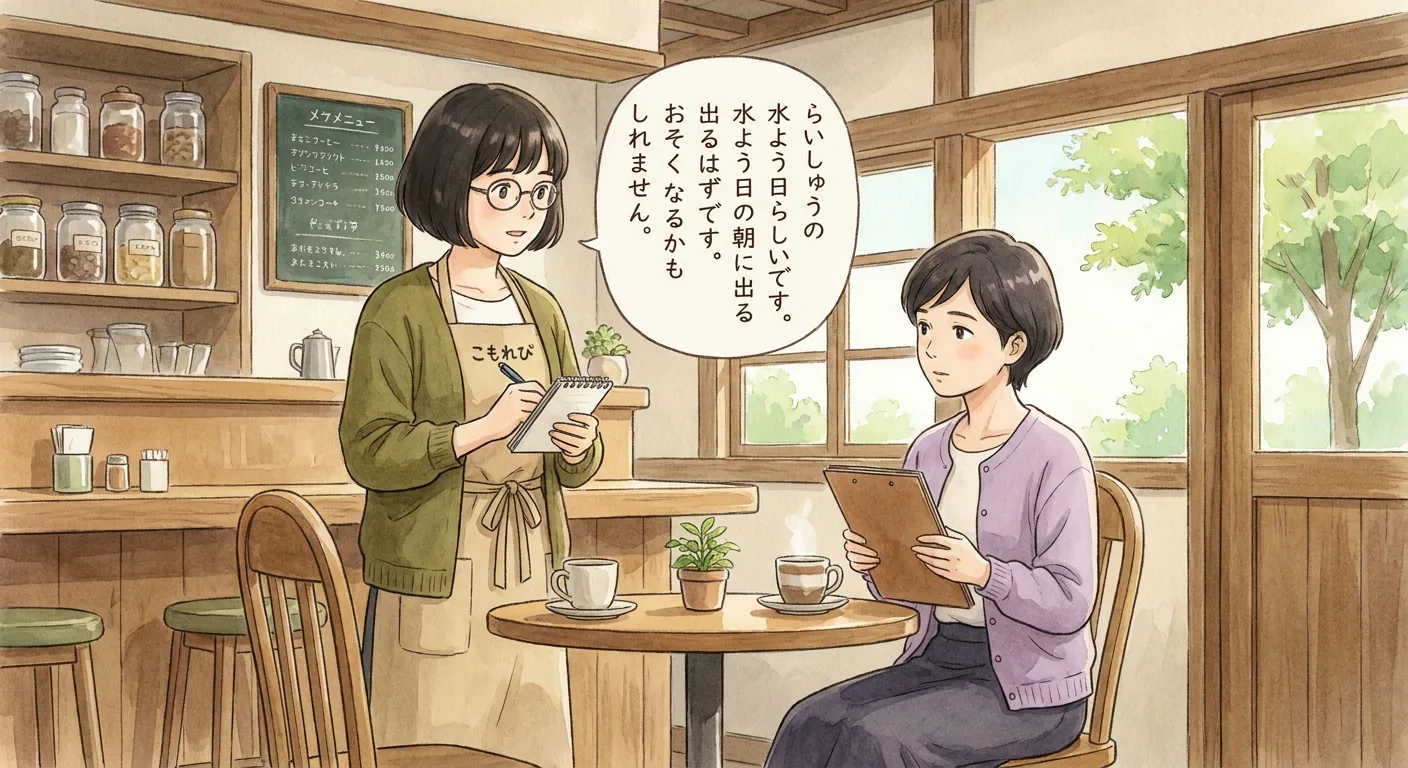
- はず
- ought to be, supposed to be
- らしい
- apparently, from what I gather
- かもしれません
- might, possibly
- きっと
- surely, I'm sure
- たぶん
- probably
- でます
- comes out, appears
- ページ
- a page
- やっぱり
- as expected, after all
What it explains
はず: it follows, so it should be so
はず is not a guess but a deduction: you know the schedule, so it should come out Wednesday. Because it rests on reasons, it can be defeated, and Japanese has a ready form for that — 「はずでしたが」, it was supposed to and it did not. That is the sentence Sato needs here.
らしい, and the trap of translating it as seems
らしい leans on outside information: you heard it, you read it, the evidence points that way. ようだ leans on your own reasoning about what is in front of you. Both come out as seems in English, which is why they blur — the question to ask is whether the basis is out there or in your head.
The scene itself is in the app.
Lesson one of this track is free to read in full. From lesson two on, the story, the audio and the review are part of a free account.