Lesson 23 of 24
In Order To
about 13 minutes
After this lesson you can
- Say what you are doing something for.
- Read the command forms that appear on signs and instructions.
- Introduce something by the name it goes under.
Words this lesson teaches
- ため
- for the sake of, in order to
- あんない
- directions, a guide sign
- つよい
- strong, forceful
- やわらかい
- soft, gentle
- なまえ
- a name
- かいだん
- stairs
- もくてき
- a purpose
- おします
- pushes
What it explains
ために: for a purpose, or because of a cause
Noun plus の plus ために, or a plain-form verb plus ために. With a verb you control, it is purpose: 「おぼえるために かきます」, I write in order to remember. With something you do not control, the same words mean cause: 「雨の ために おくれました」, I was late because of the rain. Use ように instead when the aim is a state rather than an act.
という: the name it goes under
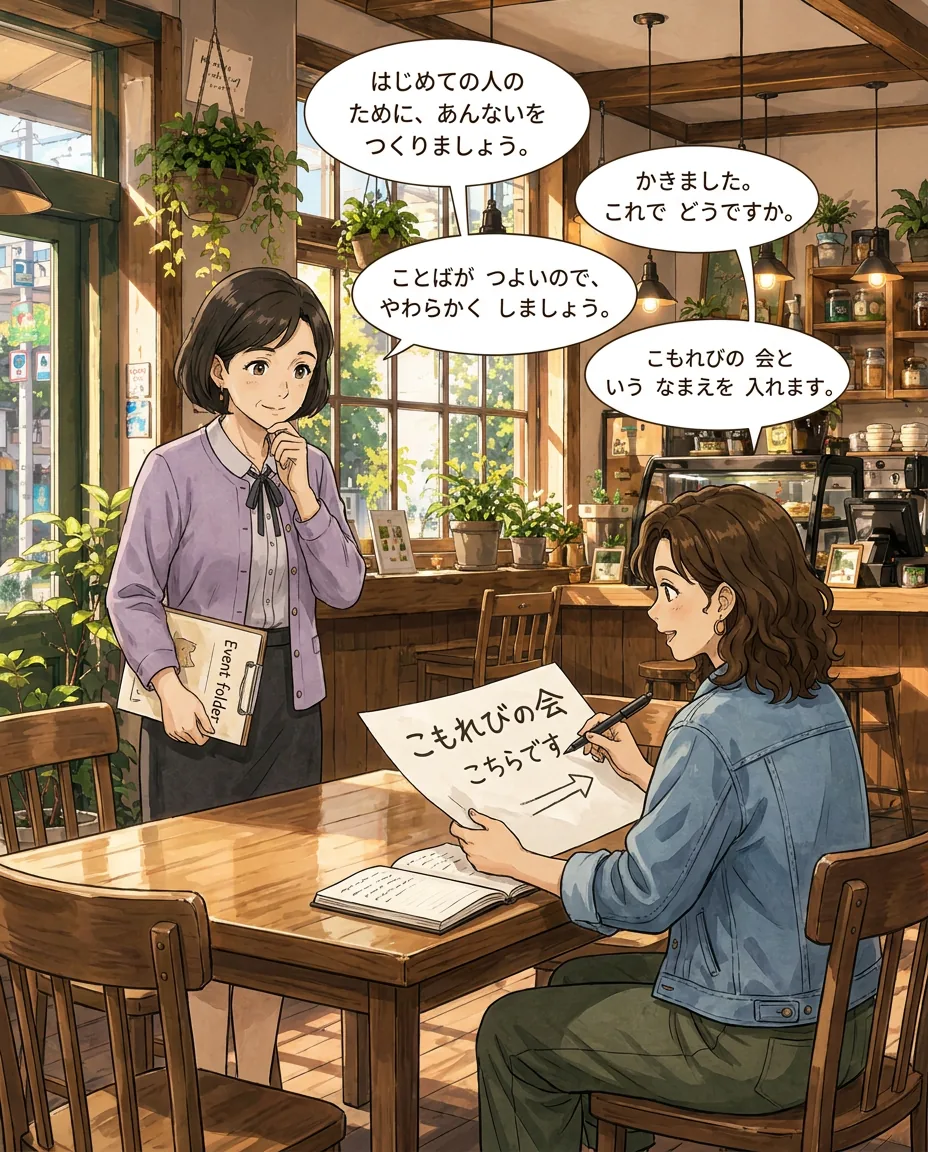
Name plus という plus noun: 「こもれびと いう みせ」, a shop called Komorebi. It marks the name as one the listener may not know, which is why using it about something familiar sounds distancing — 「東京と いう まち」 would suggest you doubt they have heard of Tokyo. It also introduces reported content: 「行くと いいました」, he said he would go.
Where the command forms live
Build なさい from the ます stem: よみなさい, たべなさい. Build the bare imperative by moving group 1 verbs to the e row — よめ, いけ — and replacing る with ろ in group 2: たべろ. する gives しろ and くる gives こい. You will meet these on exam papers, road signs, in sport and in dialogue between characters who know each other well. Producing them at a counter is a different act entirely, and the course does not ask you to.
The scene itself is in the app.
Lesson one of this track is free to read in full. From lesson two on, the story, the audio and the review are part of a free account.