Lesson 4 of 24
Three Directions
about 11 minutes
After this lesson you can
- Choose between くれる, あげる and もらう without stopping to think.
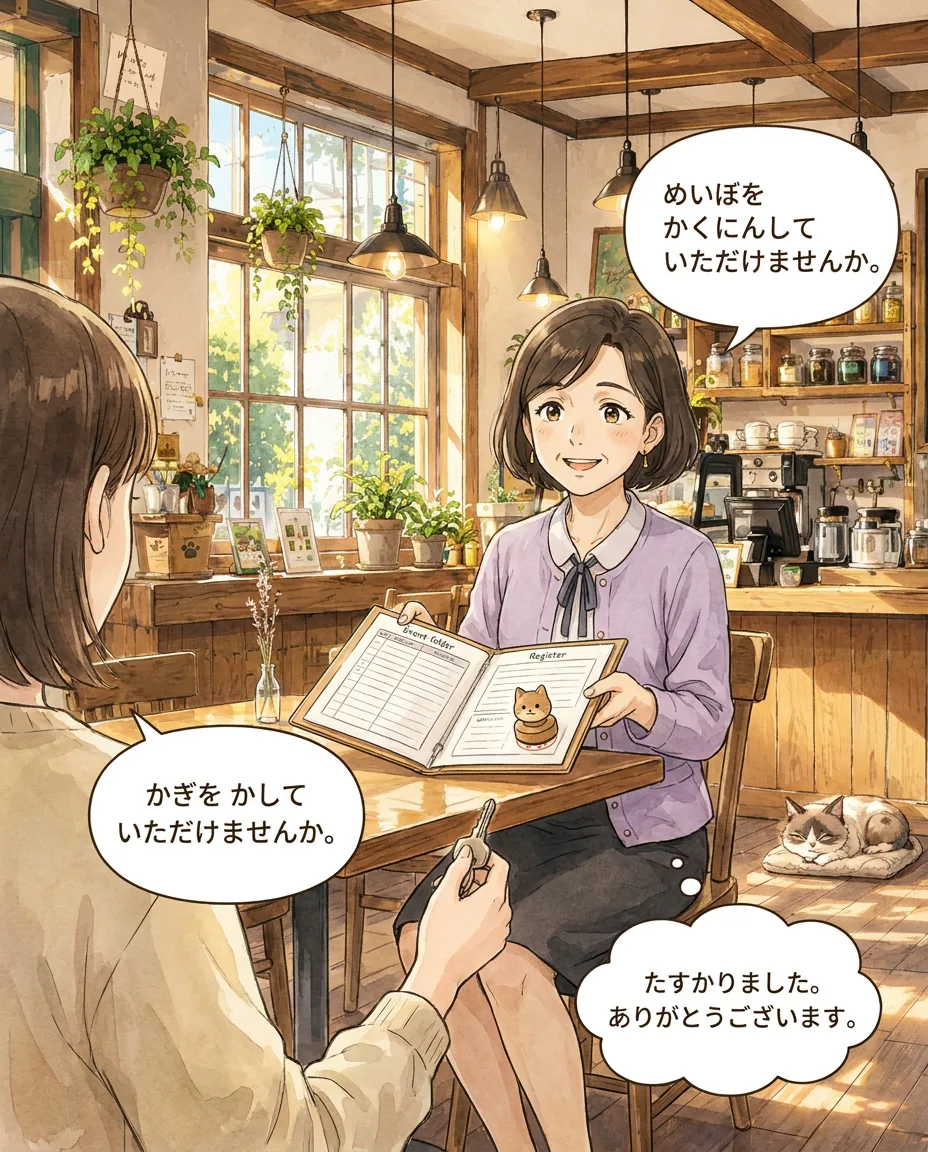
- Ask someone senior for a favour, and apologise for the trouble.
Words this lesson teaches
- いただけませんか
- could I ask you to ~
- めいぼ
- the register, the name list
- かぎ
- the key
- おそく
- late
- おかげで
- thanks to, because of your help
- たしかめます
- makes sure, verifies
- おくれます
- is late, runs behind
- やくにたちます
- is useful, does the job
What it explains
Asking upward, without あげる
Lesson 2 ruled あげる out for anyone senior. This is what replaces it in the other direction: when you need something from them, 〜ていただけませんか. Literally could I not receive the favour of you doing — the negative question is the politeness, exactly as could you not in English is softer than can you.
〜てすみません: apologising for the specific thing
すみません alone is excuse me. Put a て-form in front of it and you have named what you are sorry for: おそく なって、すみません, おまたせして、すみません. Japanese apologies are expected to be specific, and a bare すみません after a real inconvenience can read as not having noticed which one.
The scene itself is in the app.
Lesson one of this track is free to read in full. From lesson two on, the story, the audio and the review are part of a free account.