Lesson 31 of 40
Vocabulary Sprint w11b — how it fits, how it sits, how it comes out
about 10 minutes
After this lesson you can
- Read 具合, 都合 and 割合 through the 合 they share, and say 都合がいい.
- Tell 表 read おもて from 表 read ひょう.
Words this lesson teaches
- 具合
- condition, the state a thing is in — of a body or a machine; built on 合 from 合う
- 都合
- convenience, what your circumstances allow — 都合がいい is the phrase to keep
- 割合
- a proportion, a rate — 割る to divide, plus the same 合
- 両方
- both, both sides — 両 is a pair and 方 a side, as in どちらの方
- 周り
- the surroundings — written 周 for what encircles; 回り, from w03's 回る, is the going round
- 季節
- a season — 季 a quarter of the year, 節 a joint or division
- 表
- the front, the outward side — read ひょう it is a table on a page; its opposite is 裏
- 形
- shape, form — also the form of a word, which is how this course uses it
- 点
- a point — a dot, a mark in a test, and an item in an argument
- 光
- light — the stem of 光る, which w03 taught, standing alone as a noun
What it explains
都合が悪い is how you decline
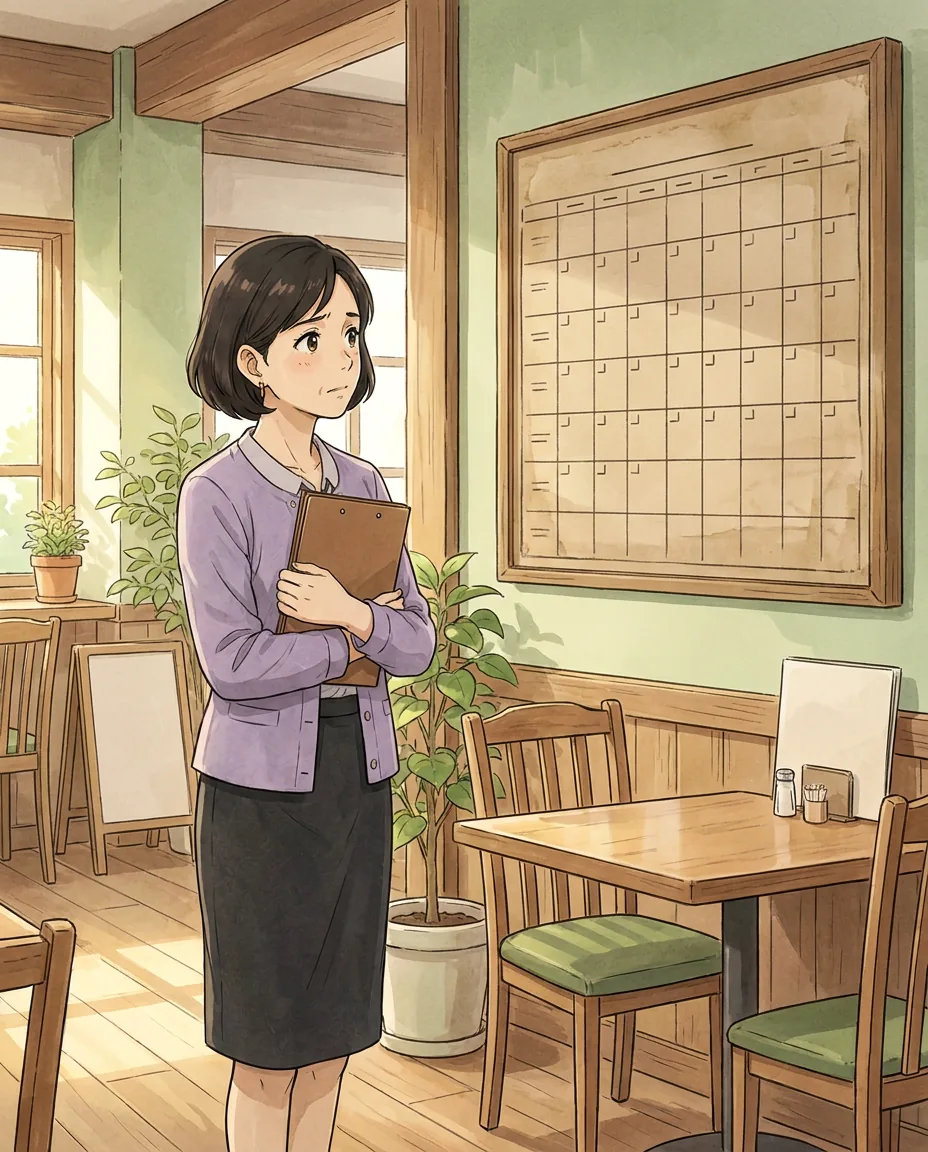
This is the most useful sentence in the sprint and it is worth learning as a whole. Asked to something you cannot or would rather not attend, 「その日は 都合が 悪いんです」 declines without giving a reason and without giving offence, because it says only that your circumstances do not fit. Japanese leans on this heavily: a refusal that names its cause invites argument about the cause, and 都合 names none. The same word does the inviting: 「ご都合は いかがですか」 asks when suits you, with the ご of w10 attached because the circumstances being asked about are somebody else's. 具合 cannot substitute — that is about the state of a thing, not the fit of a schedule.
The scene itself is in the app.
Lesson one of this track is free to read in full. From lesson two on, the story, the audio and the review are part of a free account.