Illustrated Japanese
Vocabulary Sprints
The N5 and N4 words, twenty at a time, grouped by where you use them
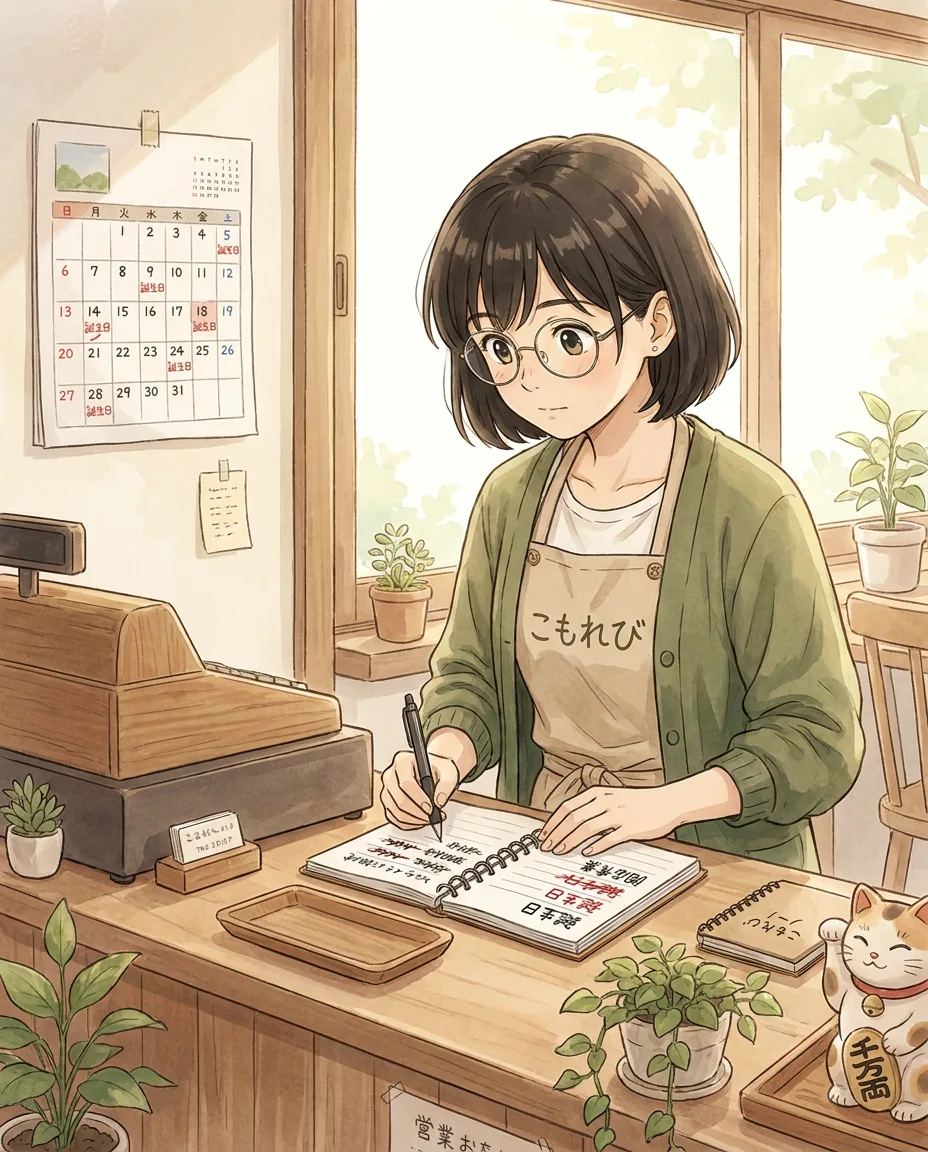
Sprints are the words the story has no room for. Each one takes about twenty words that belong to the same corner of life — the days of the week, what is on the table, what breaks and who fixes it, how you get across town — opens on a scene at Komorebi House where those words are the whole problem, then checks them with matching and gap-fills. Forty sprints cover the N5 and N4 lists.
Who it's for
- —You follow the story lessons and want the surrounding words to catch up
- —You are sitting N5 or N4 and want the word lists in situations rather than alphabetically
- —You would rather learn twenty words that belong together than two hundred that do not
Free preview — lesson 1
Vocabulary Sprint 1 — days and dates
After this lesson you can
- Name any day of the week, and say which day something is on.
- Say the day before yesterday, the day after tomorrow, last year and the year after next.
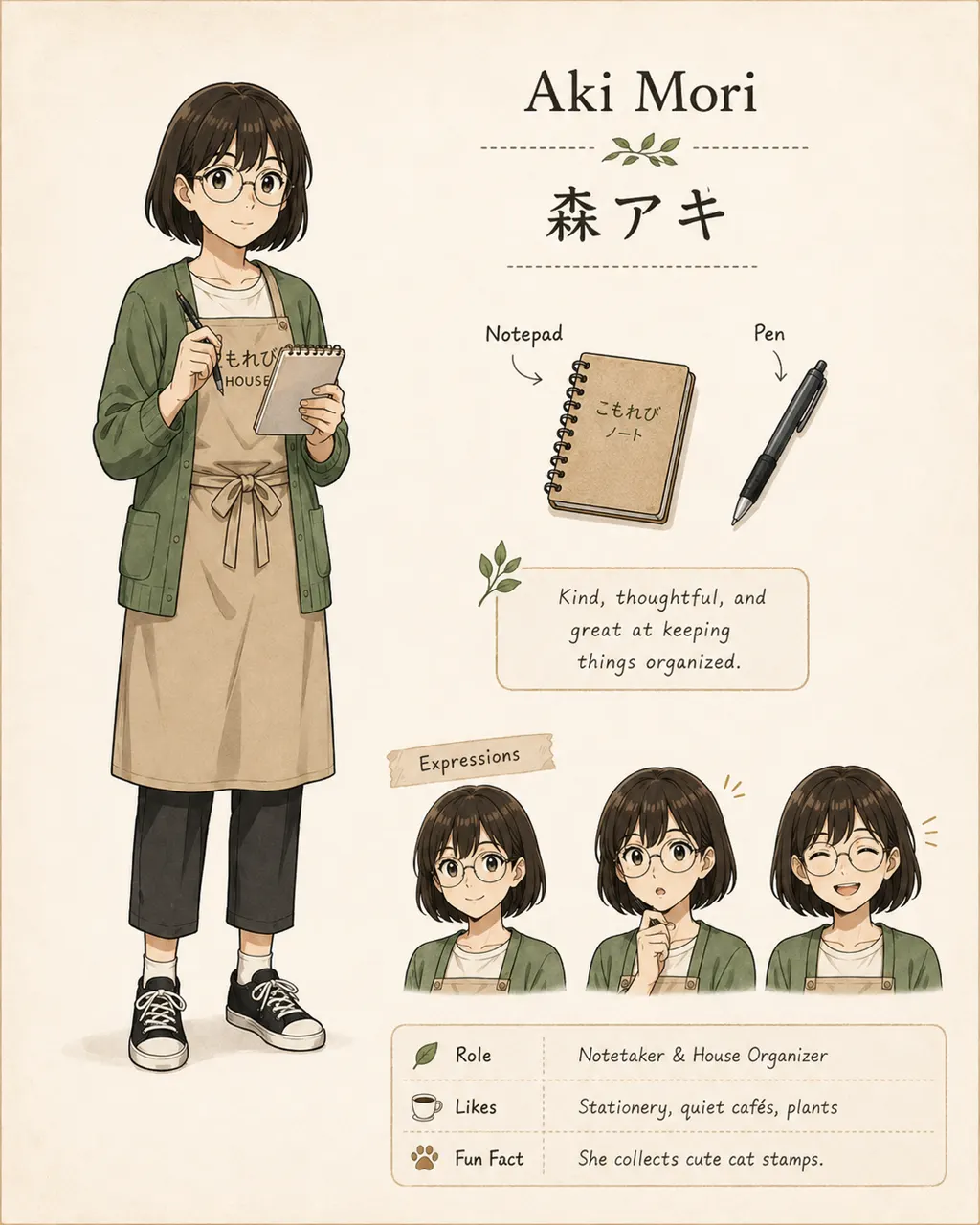
Aki keeps a paper calendar taped beside the register and copies every date onto the shop notebook a second time, in pencil, in case the first pen fades. Today's page already has three birthdays and one closing shift she has mixed up twice.
Aki
A date only counts once it is written down somewhere you will actually look. Mine goes down twice — the notebook, and my head — because my head is the one that loses.
Words this lesson teaches
- 火曜日
- Tuesday — fire day
- 水曜日
- Wednesday — water day
- 金曜日
- Friday — gold day
- あさって
- the day after tomorrow
- 一昨日
- the day before yesterday
- 一昨年
- the year before last
- さ来年
- the year after next
- 去年
- last year
- 誕生日
- a birthday
- 二十歳
- twenty years old — read はたち, not にじゅっさい
- 二十日
- the twentieth of the month — read はつか
- 夏休み
- the summer holiday
- 夕方
- early evening, around dusk
- カレンダー
- a calendar
This is the reading half of lesson one.
The interactive version adds the vocabulary check, the pattern noticing step and the spaced review that keeps the words. It's free with an account.
Play the full lessonAll 40 lessons
1. Vocabulary Sprint 1 — days and dates
8 minName any day of the week, and say which day something is on.
2. Vocabulary Sprint v02 — the table, and why rice means dinner
12 minBuild 朝ご飯, 昼ご飯 and 晩ご飯 from ご飯 and a time of day.
3. Vocabulary Sprint v03 — clothes, and why a hat is not worn
12 minChoose 着る, はく, かぶる, する or かける for a given garment.
4. Vocabulary Sprint v04 — the house, and three words for a room you need
10 minAsk for the トイレ or お手洗い, and not for the お風呂.
5. Vocabulary Sprint v05 — the town, read from its last character
10 minRead a place name from its final character — 館, 局, 院 or 屋.
6. Vocabulary Sprint v06 — this way, that way, and which way
10 minPlace こっち, そっち, あっち and どっち in the system you already know.
7. Vocabulary Sprint v07 — your family and everybody else's
12 minSay 母 about your own mother and お母さん to her and about somebody else's.
8. Vocabulary Sprint v08 — the desk, and a stamp that is not a ticket
12 minChoose 切手 for a letter and 切符 for a train.
9. Vocabulary Sprint v09 — this, that, and the word that means both yes and no
12 minMake 結構です unambiguous by putting はい or いいえ in front of it.
10. Vocabulary Sprint v10 — size and speed, and two words for はやい
10 minChoose 早い for time and 速い for speed, and say why 遅い serves both.
11. Vocabulary Sprint v10b — how it feels, and two words for やさしい
10 minTell 易しい from 優しい, and say what decides which in speech.
12. Vocabulary Sprint v11a — the day's verbs, and knowing as a state
12 minSay 知って います and 知りません, and say why they are not symmetrical.
13. Vocabulary Sprint v11b — did somebody do it, or did it happen?
12 minChoose を for つける and 消す, and が for 開く and 閉まる.
14. Vocabulary Sprint v12 — a complete pair, and the を that is not an object
12 minUse 並ぶ with が and 並べる with を, having been given both.
15. Vocabulary Sprint v13 — understanding takes が, and two verbs that became nouns
12 minSay 日本語が 分かります, and name three more words that take が the same way.
16. Vocabulary Sprint v14a — weather and creatures, and two words for かぜ
10 minSay 風邪を 引きました, and tell 風 from 風邪.
17. Vocabulary Sprint v14b — being well, and one adjective that breaks the rule
8 minSay 同じ本 rather than 同じな本.
18. Vocabulary Sprint v14c — home and colour, and the end of the list
12 minSay 赤い かばん and 茶色の かばん, and say why they differ.
19. Vocabulary Sprint w01 — whose action is it?
12 minChoose the honorific or the humble verb according to whose action it is.
20. Vocabulary Sprint w02 — what broke, and who broke it
12 minChoose between the verb that takes を and the one that takes が.
21. Vocabulary Sprint w03 — what happens, and what you do
12 minName the partner of a verb you are given, and say which one takes を.
22. Vocabulary Sprint w04 — how it feels, and who is allowed to say so
12 minSay how you feel with a plain adjective, and how someone else seems without claiming to know.
23. Vocabulary Sprint w05 — getting about, and four words to recognise but not use
12 minSplit a welded verb into its two halves, and say what the second half contributes.
24. Vocabulary Sprint w06a — what you did, and how it came out
12 minReport an errand and its outcome, choosing を for the first and が for the second.
25. Vocabulary Sprint w06b — hands, heat and two kinds of crying
12 minChoose に for 触る and を for 踏む and 噛む, and say why they differ.
26. Vocabulary Sprint w07 — school words, mostly assembled from parts you have
12 minRead a two- or three-character school word by reading its parts.
27. Vocabulary Sprint w08 — work words, ranks and three particles
12 minRead a job title from its suffix, and say whether a 課長 or a 部長 is senior.
28. Vocabulary Sprint w09 — machines, rooms, and English you cannot hear
12 minRecover the English behind a clipped loanword, and clip a new one yourself.
29. Vocabulary Sprint w10 — three words for a gift, and five suffixes for a place
12 minChoose between プレゼント, 贈り物 and お土産 according to the occasion.
30. Vocabulary Sprint w11a — the shop floor, and verbs wearing nouns' clothes
10 minFind the verb inside a noun like 売り場, 金持ち or 昼休み.
31. Vocabulary Sprint w11b — how it fits, how it sits, how it comes out
10 minRead 具合, 都合 and 割合 through the 合 they share, and say 都合がいい.
32. Vocabulary Sprint w11c — twelve short words, read by their parts
10 minGuess at an unfamiliar character by naming the taught characters inside it.
33. Vocabulary Sprint w13 — when, on one line from 昔 to 将来
10 minPlace a time word on the axis from 昔 to 将来, and pick the right neighbour.
34. Vocabulary Sprint w17 — verbs built from parts, and なくなる twice
12 minRead 間に合う, 役に立つ and 思い出す by naming the verb inside each.
35. Vocabulary Sprint w12 — the people around you, and five words to recognise but not say
14 minRecognise 彼, 彼女, 君 and 僕, and say why a name is safer than any of them.
36. Vocabulary Sprint w14 — adverbs that decide the end of the sentence
12 minFinish a sentence that opened with 決して or ちっとも, and say why the ending was fixed.
37. Vocabulary Sprint w15 — な or い, and the word that means both a thing and its opposite
12 minPredict whether an adjective takes な or い from where the word came from.
38. Vocabulary Sprint w16a — public words, and する and な
10 minTurn a two-character noun into a verb with する or an adjective with な.
39. Vocabulary Sprint w16b — the body, the building, and かたい three ways
10 minChoose between 堅い, 硬い and 固い for a given thing.
40. Vocabulary Sprint w16c — a day off, and why アメリカ is a country
10 minUse アメリカ for the country and 南アメリカ for the continent.
The recurring cast
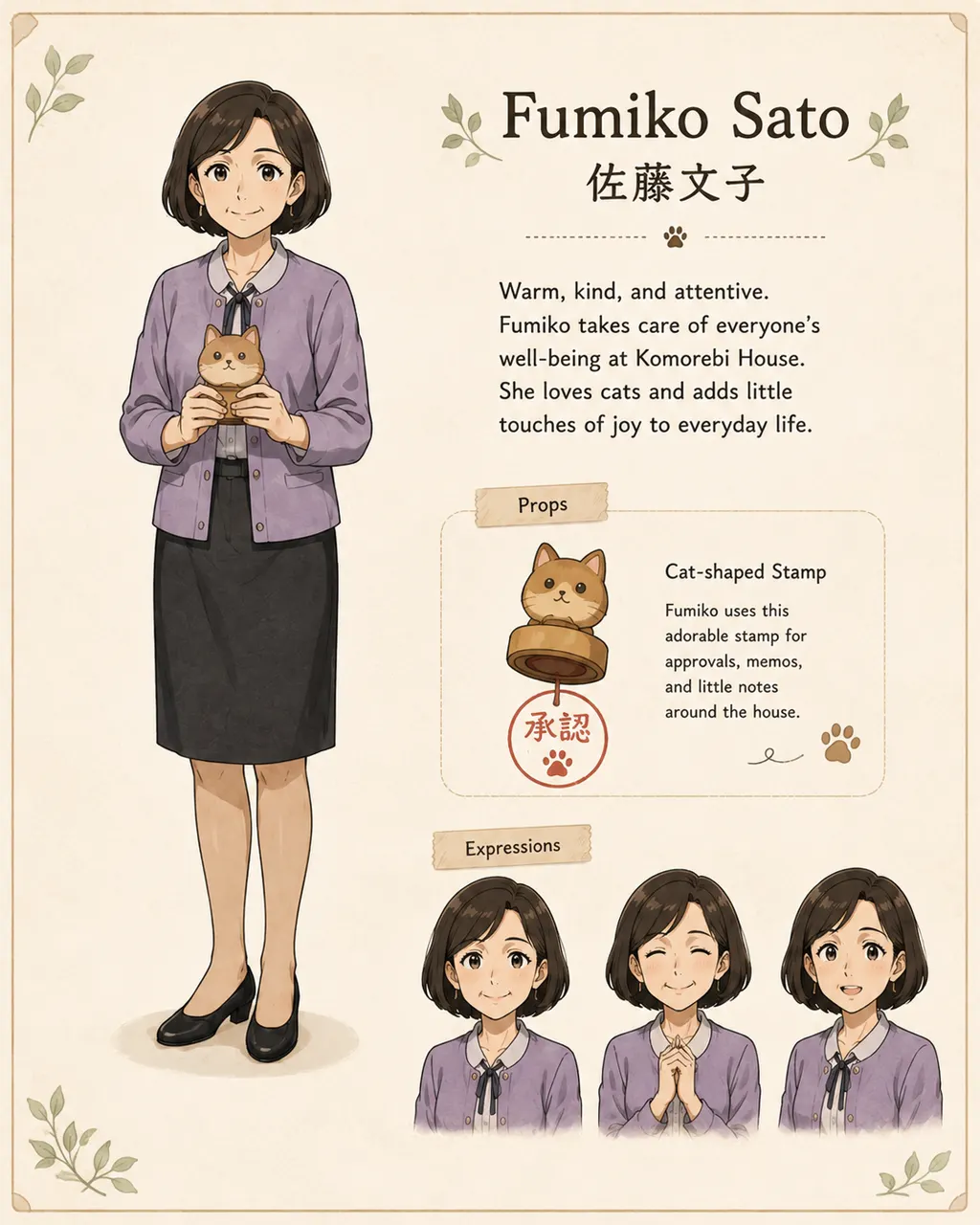
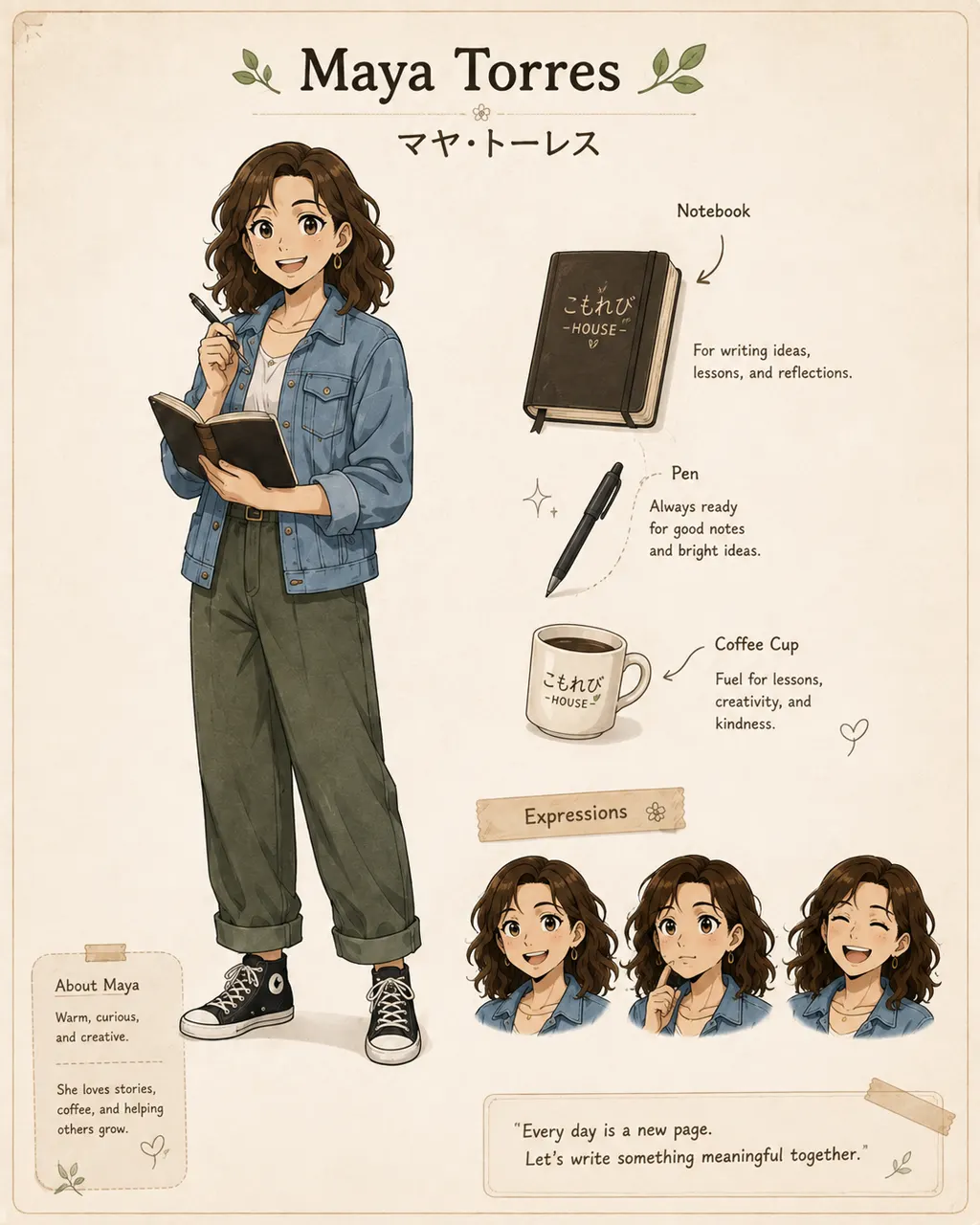
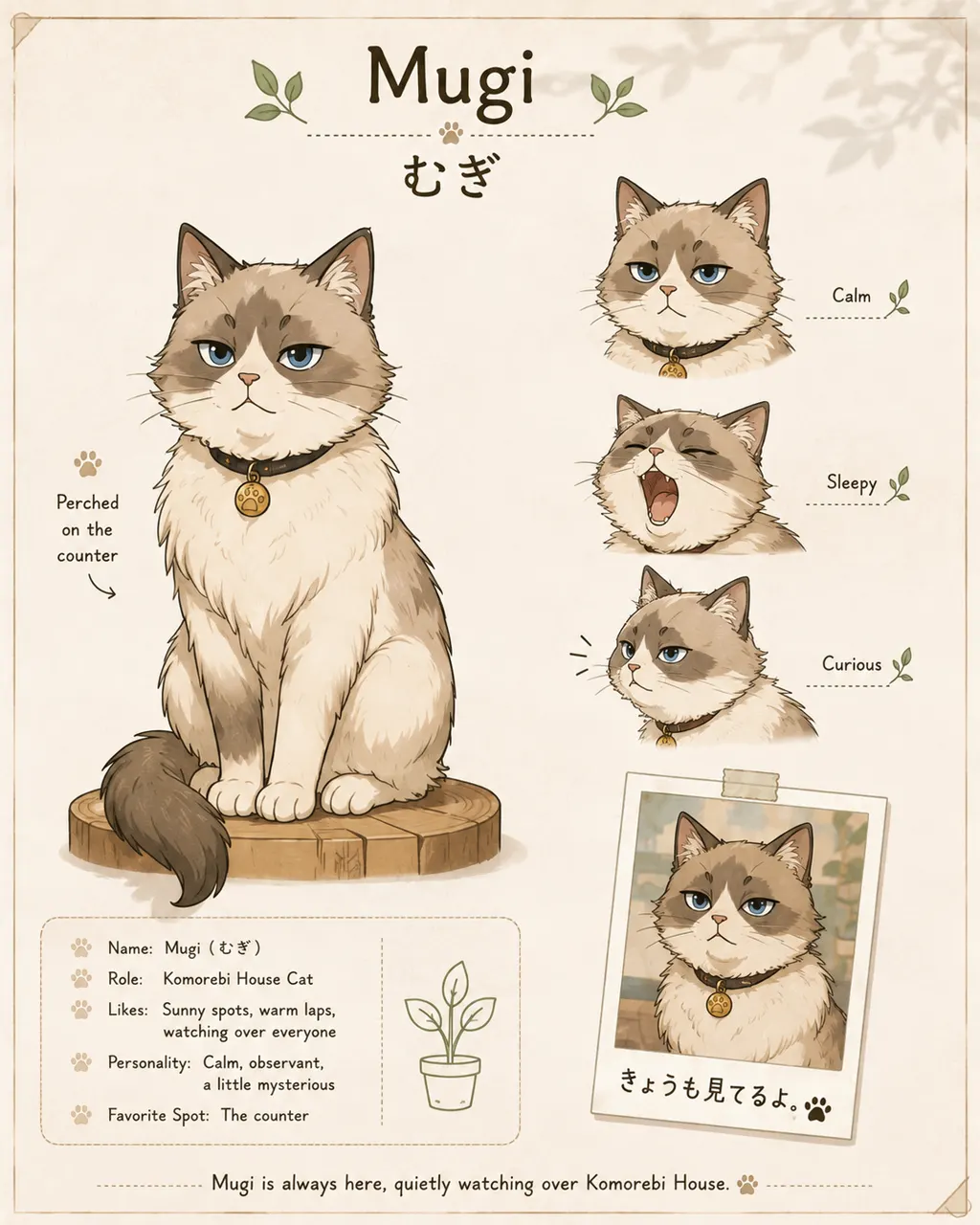
Questions
Do I need to do these in order?
No. Each sprint stands alone, so take whichever group of words you need next.
Do they replace flashcards?
They feed them. Words you meet here go into your review deck, so the spacing does the remembering.
Other tracks
Japanese Foundations
Your first Japanese, told as one story in a small café
Japanese N5
The whole JLPT N5 syllabus as an illustrated story arc
Japanese N4
The JLPT N4 arc: favours, conditions, plain form and polite distance
Kana Sprints
Short sprints that turn hiragana and katakana into reading
Grammar Labs
Second-pass labs for the patterns that need one
Kanji Units
The N5 kanji, taught through words you already say
Also useful: JLPT N5 vocabulary and kanji, the hiragana chart and printable worksheets.