Lesson 32 of 40
Vocabulary Sprint w11c — twelve short words, read by their parts
about 10 minutes
After this lesson you can
- Guess at an unfamiliar character by naming the taught characters inside it.
- Say why 舟 is not the word for a ship.
Words this lesson teaches
- 林
- a wood, a stand of trees — two 木 from unit 3; 森 is three and is bigger
- 島
- an island — a 鳥 from unit 25 above a 山 from unit 7
- 雲
- a cloud — 雨 from unit 7 sits on top, as it does in every weather character
- 棚
- a shelf, shelves — 木 at the left, because that is what it is made of
- 石
- a stone — and the left half of 砂, below
- 砂
- sand — 石 beside 少, few or small: small stones
- 草
- grass, a weed — one word for the lawn and for what you pull out of it
- 坂
- a slope, a hill in a road — what w03's 下りる goes down
- 舟
- a small boat — a rowing boat or a punt; a ship is 船, the larger word
- 糸
- thread — the character taught in unit 20, and the left half of 絹
- 絹
- silk — 糸 at the left, so a kind of thread; the same radical as 紙 and 線
- 毛
- hair, fur, wool — of an animal or a jumper; hair on a head is かみ
What it explains
One character, one native word, and usually one syllable or two
石, 草, 糸, 毛, 舟, 島, 雲, 坂, 砂, 棚, 絹, 林 — いし, くさ, いと, け, ふね, しま, くも, さか, すな, たな, きぬ, はやし. These are old words, in the language before Chinese reading came to it, and that is why they are short and why they are read by their kun reading rather than their on. Compare w07's 学校 and w08's 経済, which are compounds of Chinese origin and read on: がっこう, けいざい. The rule is not absolute, but it is a good first guess — a lone character in running text usually wants its native reading, and a pair of characters usually wants the Chinese ones. That single expectation resolves a great many readings before you have to look anything up.
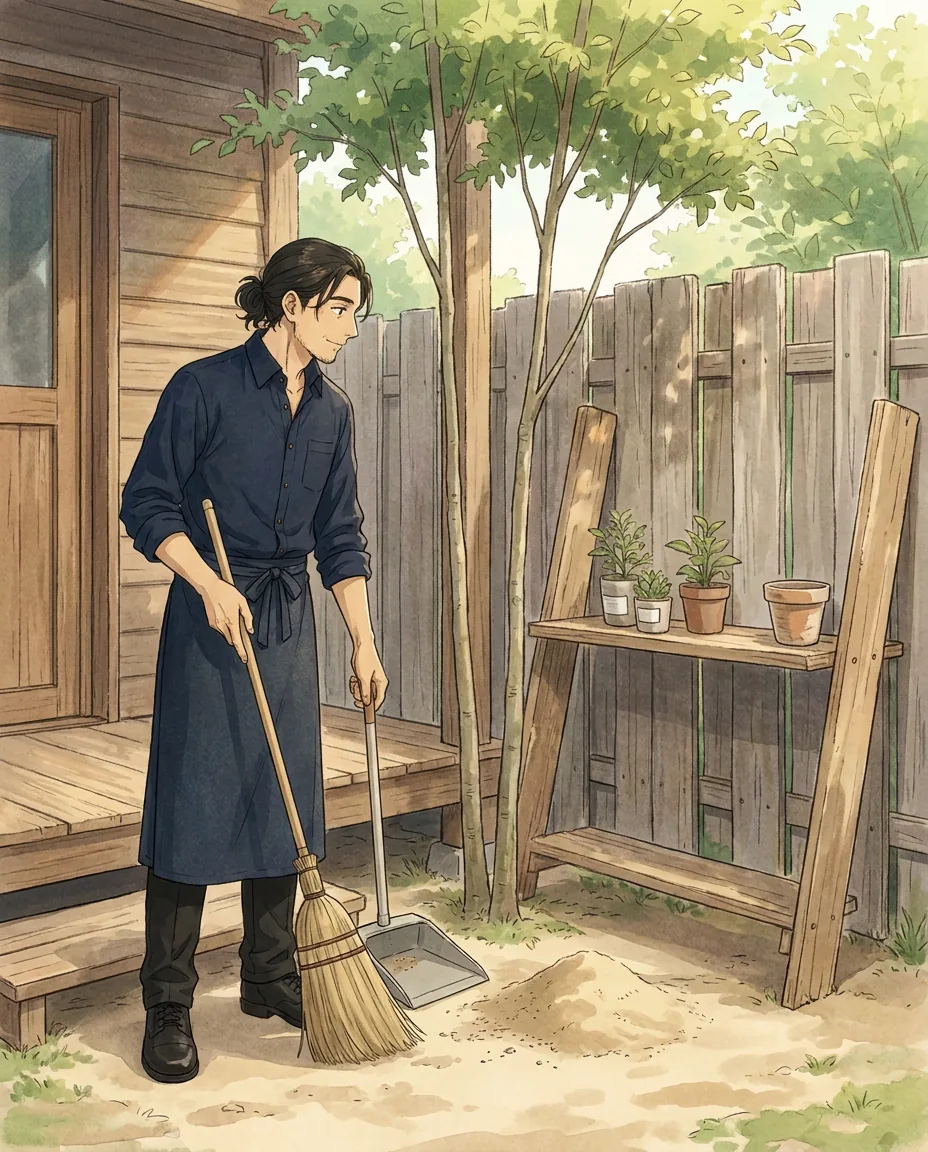
The scene itself is in the app.
Lesson one of this track is free to read in full. From lesson two on, the story, the audio and the review are part of a free account.