Lesson 35 of 40
Vocabulary Sprint w12 — the people around you, and five words to recognise but not say
about 14 minutes
After this lesson you can
- Recognise 彼, 彼女, 君 and 僕, and say why a name is safer than any of them.
- Use 夫 and 妻 of your own family and ご主人 and 奥さん of somebody else's.
Words this lesson teaches
- 彼
- he — and, just as often in speech, a boyfriend; use the person's name
- 彼女
- she — and a girlfriend; the same warning as 彼
- 彼ら
- they — written Japanese, chiefly; speech would name them or say nothing
- 君
- you — from a senior to a junior, or between close friends; never upward
- 僕
- I — male, and casual; わたし is the form that is safe everywhere
- 息子
- my son — somebody else's is 息子さん
- 娘
- my daughter — somebody else's is お嬢さん or 娘さん
- 夫
- my husband — somebody else's is ご主人
- 妻
- my wife — somebody else's is 奥さん
- 祖父
- my grandfather — somebody else's, and how you address your own, is おじいさん
- 祖母
- my grandmother — the same rule, with おばあさん
- 客
- a guest, a customer — お客さん to their face and about them in a shop
- 市民
- a citizen, a resident of a city — 民 is the populace, as 市 is the city
- 運転手
- a driver — 手 makes an agent of a skill, as it does in 歌手, a singer
- 看護婦
- a nurse, in the obsolete gendered form — the title in law is now 看護師
- 歯医者
- a dentist — 歯 tooth plus 医者; 者 makes a person of a calling
- 警察
- the police — the institution; one officer is a 警察官
- あかちゃん
- a baby — the everyday word, usually written 赤ちゃん
- 赤ん坊
- an infant — the same thing, held at a little more distance
- ちゃん
- an affectionate suffix — for small children of either sex, close friends and pets; not female
- 指
- a finger, or a toe — one word, and 足の指 for the foot
- 背中
- the back — of a body; the back of an object is 裏 or 後ろ
- 血
- blood — one syllable, and a native word, as w11c would predict
- お見舞い
- a visit to somebody ill — a noun, not an adjective as the syllabus has it
- 皆
- everybody, all — みんな in speech, and 皆さん when addressing them
- お宅
- your home — and, by extension, a polite you; 宅 is a dwelling
What it explains
看護婦 was replaced on purpose
婦 means woman, so 看護婦 is a woman who nurses, and there was a matching 看護士 for men. Japanese law was amended in the early 2000s to replace both with 看護師, which names the profession and not the sex of the person in it. So this is not a word that merely drifted out of use like w05's 汽車; it is one that was retired, and using it now reads as either very old or careless. The N4 list still carries it, and the honest instruction is the one w05 gave for four words: recognise it in older writing, and say 看護師. The same 師 appears in 教師 and 医師, and it is the suffix to prefer wherever a profession is named.
手, 者, 民, 師 — four ways to name a person
運転手 is a driver and 歌手 is a singer, so 手 turns a skill into the person exercising it. 歯医者 and 医者 use 者, which turns a calling into a person, and it also gives 学者 and 記者. 市民 uses 民, the populace, which gives 国民 and 住民. 師 is the one above, the professional title, which gives 教師 and 医師 and now 看護師. Add them to 長, 員 and 社 from w08 and you can read most job words on sight, which matters more than it sounds: a Japanese business card is almost entirely suffixes, and so is the organisation chart on the wall behind it.
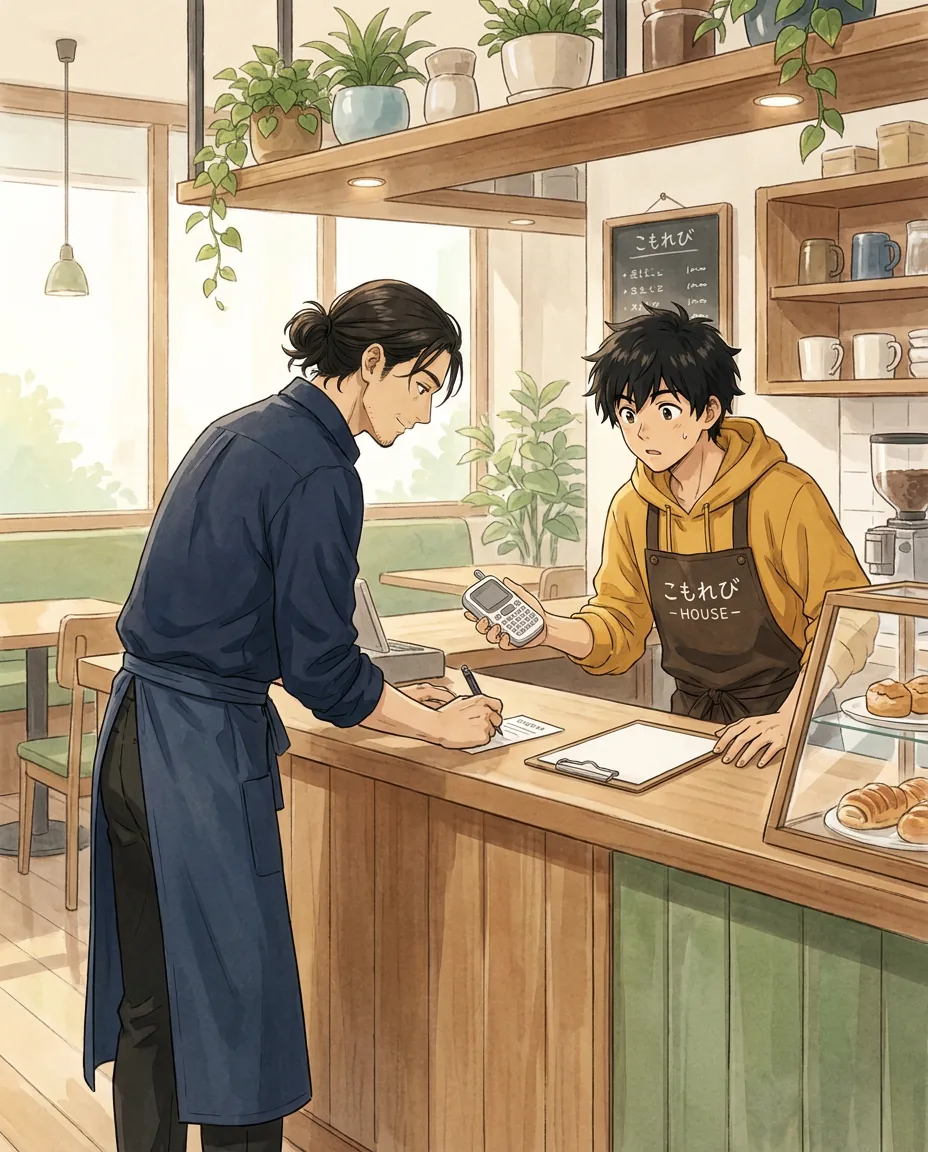
The scene itself is in the app.
Lesson one of this track is free to read in full. From lesson two on, the story, the audio and the review are part of a free account.