Lesson 9 of 16
Good Coffee, Bad Map
about 12 minutes
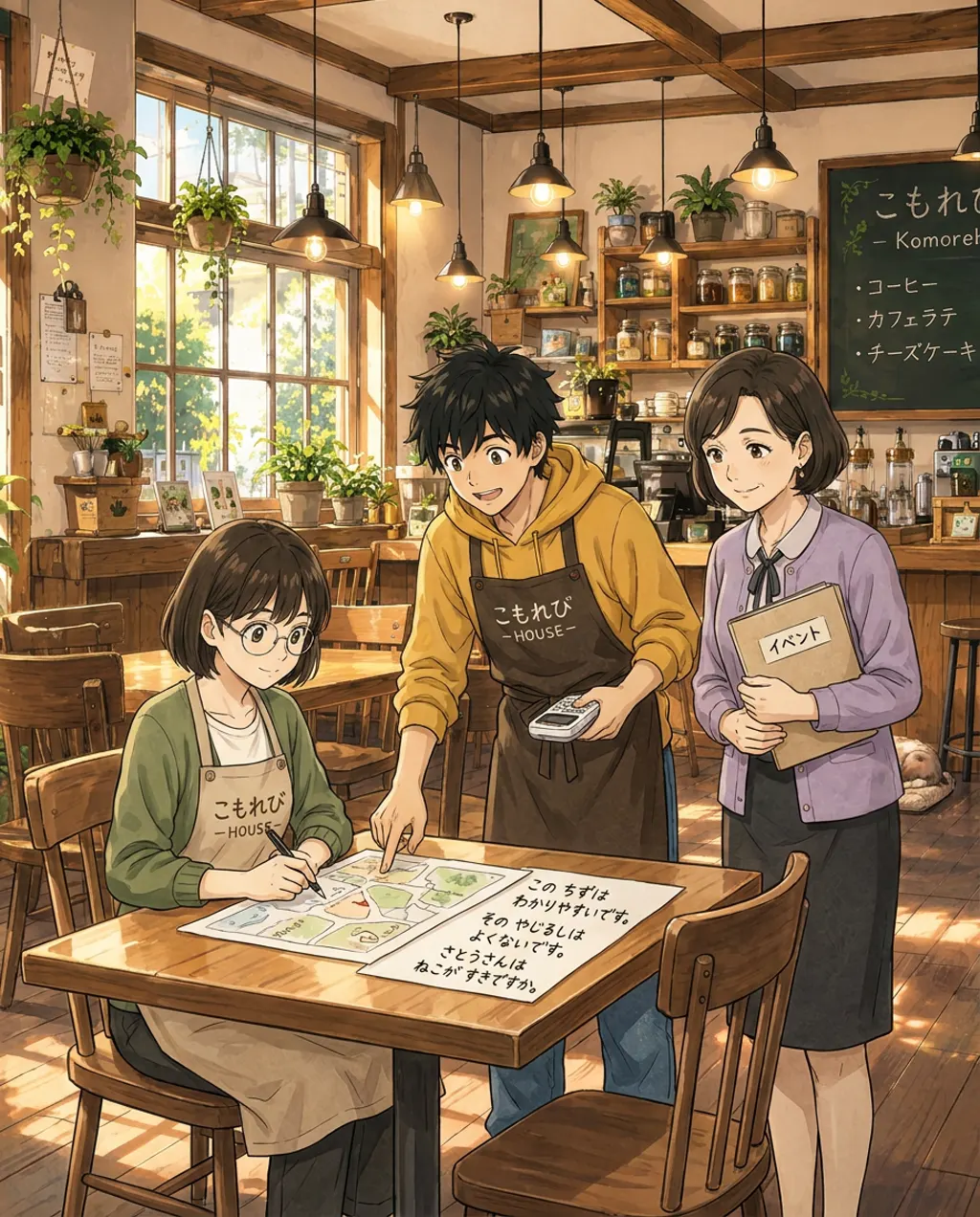
After this lesson you can
- Describe something as good, bad, big or small, and say what you like.
Words this lesson teaches
- いい
- good
- おおきい
- big
- ちいさい
- small
- ちかい
- near
- わかりやすい
- easy to understand
- しずか
- quiet
- すき
- liked, a favourite
- ちず
- map
- やじるし
- arrow
What it explains
い adjectives change their own ending
おおきいです is big; the negative drops い and adds くない — おおきくないです. This is the surprise: the adjective conjugates, not です. いい is the one irregular: it becomes よくない, never いくない.
な adjectives behave like nouns
しずかです is quiet, and the negative is しずかじゃありません — the same ending you learned for nouns in F3. They are called な adjectives because they take な when placed before a noun: しずかな カフェ.
X が すきです
すき is not a verb. It is an adjective meaning liked, so the thing you like is marked with が rather than を: ねこが すきです is closer to cats are pleasing than to I like cats. That is why を is wrong here even though English makes it feel like an object.
The scene itself is in the app.
Lesson one of this track is free to read in full. From lesson two on, the story, the audio and the review are part of a free account.