Lesson 8 of 16
Where Is the Cat?
about 12 minutes
After this lesson you can
- Ask where something or someone is, and describe where it is in relation to something else.
Words this lesson teaches
- どこ
- where
- つくえ
- desk, table
- いす
- chair
- はこ
- box
- うえ
- on top of, above
- した
- under, below
- なか
- inside
- となり
- next to
- ドア
- door
What it explains
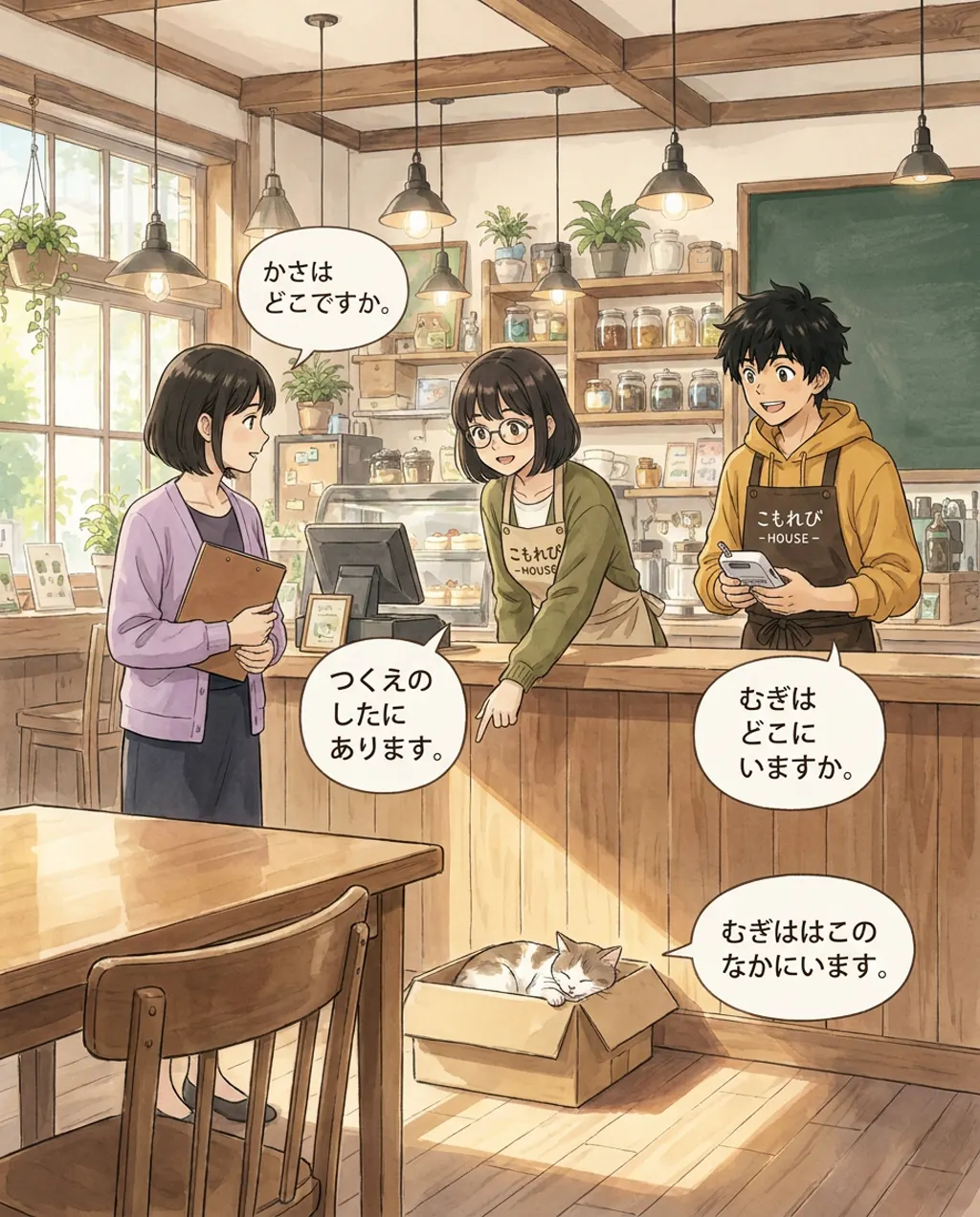
あります and います
Both mean there is. います is for things that move themselves — people and animals. あります is for everything else. A cat takes います; the bag it is sitting in takes あります. English has no equivalent split, so this is one to expect getting wrong for a while.
に marks where something is
つくえの したに あります. This is the に you met for times, doing a related job: a fixed point. Compare で from last lesson — で is where an action happens, に is where something simply is. こもれびで しごとを します against こもれびに います.
うえ, した, なか, となり
These are nouns, not prepositions, so they attach with の and come after the thing they relate to: つくえの した is literally the table's underside. That word order is the reverse of English and is worth saying aloud a few times.
The scene itself is in the app.
Lesson one of this track is free to read in full. From lesson two on, the story, the audio and the review are part of a free account.