Japanese Foundations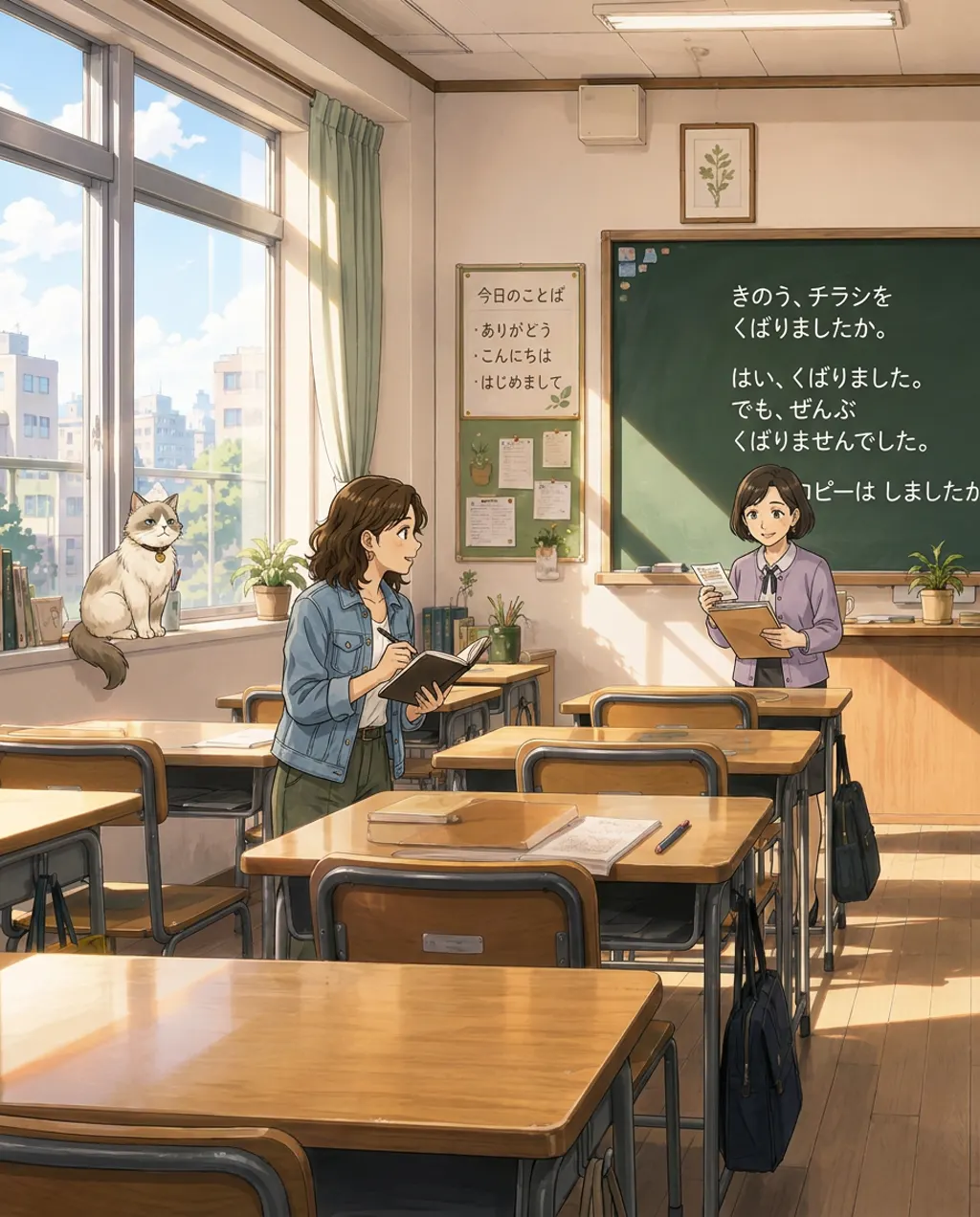
Lesson 13 of 16
What Didn't Happen
about 12 minutes
After this lesson you can
- Say what you did and did not do yesterday.
- Answer a yes-or-no question about a task honestly, in the negative.
Words this lesson teaches
- きのう
- yesterday
- チラシ
- flyer; handbill
- コピー
- a copy; photocopying
- ぜんぶ
- all of it; the whole lot
- きょうしつ
- classroom
- 〜ませんでした
- did not do (polite past negative)
- まだ
- not yet; still
What it explains
One verb, four endings
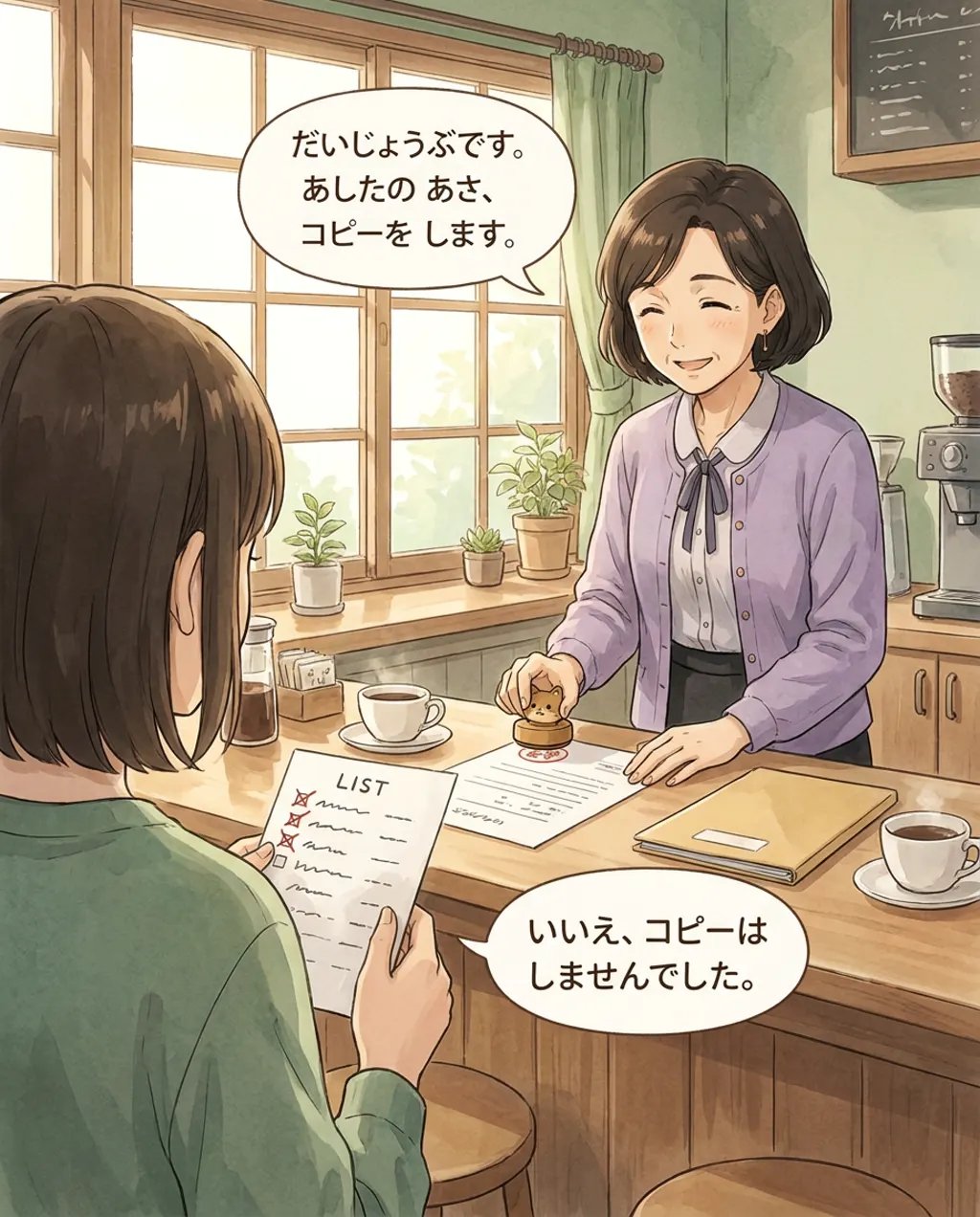
Take the polite verb you already say — します — and the four things you can do with it are all at the end: します now or later, しました done, しません not doing, しませんでした not done. Nothing before the ending moves. くばります becomes くばりませんでした the same way, and so does every other polite verb in the course.
Saying no to a task is not saying no to the person
A short しませんでした, given straight away, is easier to work with than an explanation. Sato is counting piles, not assigning blame, and the pile she can see already told her the answer. What she needs from you is which pile it belongs to.
The scene itself is in the app.
Lesson one of this track is free to read in full. From lesson two on, the story, the audio and the review are part of a free account.