Lesson 6 of 16
The Schedule Has Three Mondays
about 11 minutes
After this lesson you can
- Ask what time something starts, and say when something happens or how long it runs.
Words this lesson teaches
- なんじ
- what time
- いつ
- when
- げつようび
- Monday
- もくようび
- Thursday
- どようび
- Saturday
- カフェ
- café
- はじまります
- starts, begins
- やすみ
- day off, closed
What it explains
time に
に marks the point at which something happens: 10時に はじまります. It attaches to clock times, dates and days — but not to vague words like きょう or あした, which take no particle at all. That exception catches almost everyone once.
から and まで
から is from, まで is until, and they work for both time and place. 9時から 5時まで covers the whole range; either half can stand alone, which is why 5時までです is a complete sentence.
いつ and なんじ
なんじ asks for a clock time. いつ asks when in general and accepts a day, a date or next week as an answer. Asking なんじ when you meant いつ gets you a very precise answer to the wrong question.
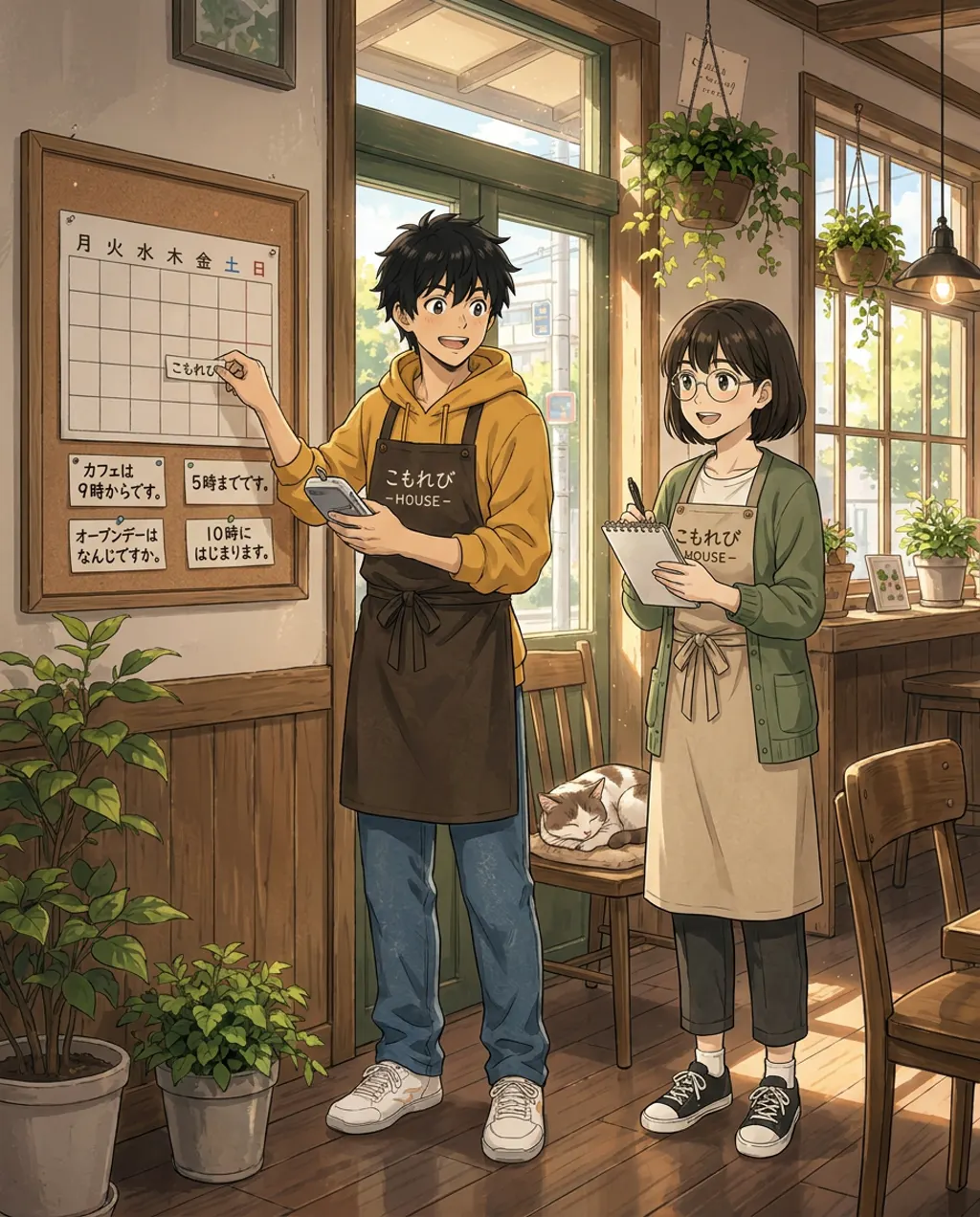
The scene itself is in the app.
Lesson one of this track is free to read in full. From lesson two on, the story, the audio and the review are part of a free account.