Japanese N4
Lesson 15 of 24
Letting And Making
about 12 minutes
After this lesson you can
- Say that you let someone do something, or had them do it.
- Ask to be allowed to do something.
Words this lesson teaches
- させます
- lets or makes someone do
- はんぶん
- half
- ボード
- the board
- たんとう
- the person in charge of a part
- まかせます
- entrusts, leaves it to
- きんちょう
- nerves, being tense
- じゅんばん
- the order, the turn
- むずかしい
- difficult
What it explains
Making the causative
Group 1 shifts to the a row and adds せる: よむ becomes よませる. Group 2 adds させる: たべる becomes たべさせる. する becomes させる, くる becomes こさせる. It is the passive pattern with せ where the passive has れ, which is worth noticing once and then not worrying about.
〜させてください and 〜させていただけませんか
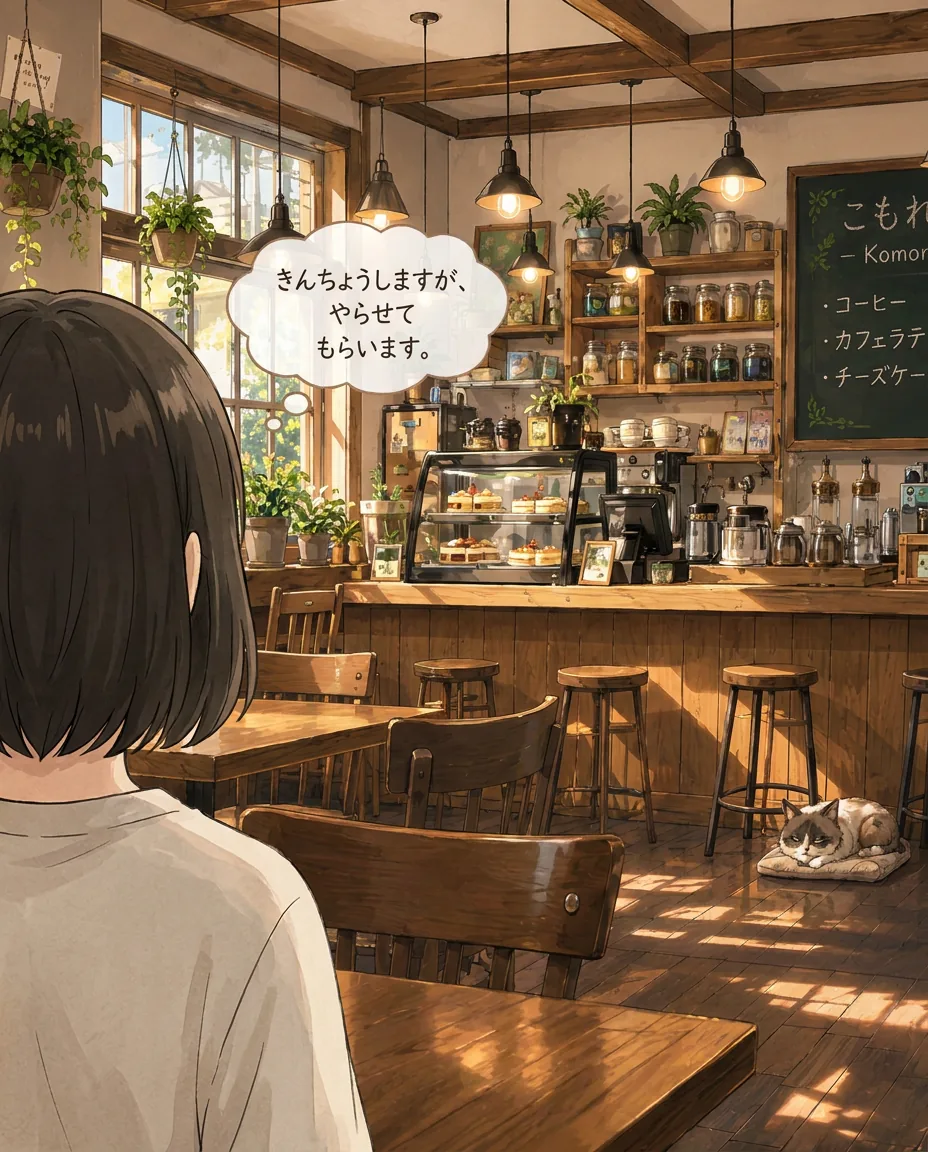
The causative's most useful everyday job is asking permission for yourself: 「やらせてください」 — let me do it. Combined with いただけませんか from module 1 it becomes the standard polite way to volunteer for something at work, which is exactly what the learner does here.
The scene itself is in the app.
Lesson one of this track is free to read in full. From lesson two on, the story, the audio and the review are part of a free account.