Japanese N4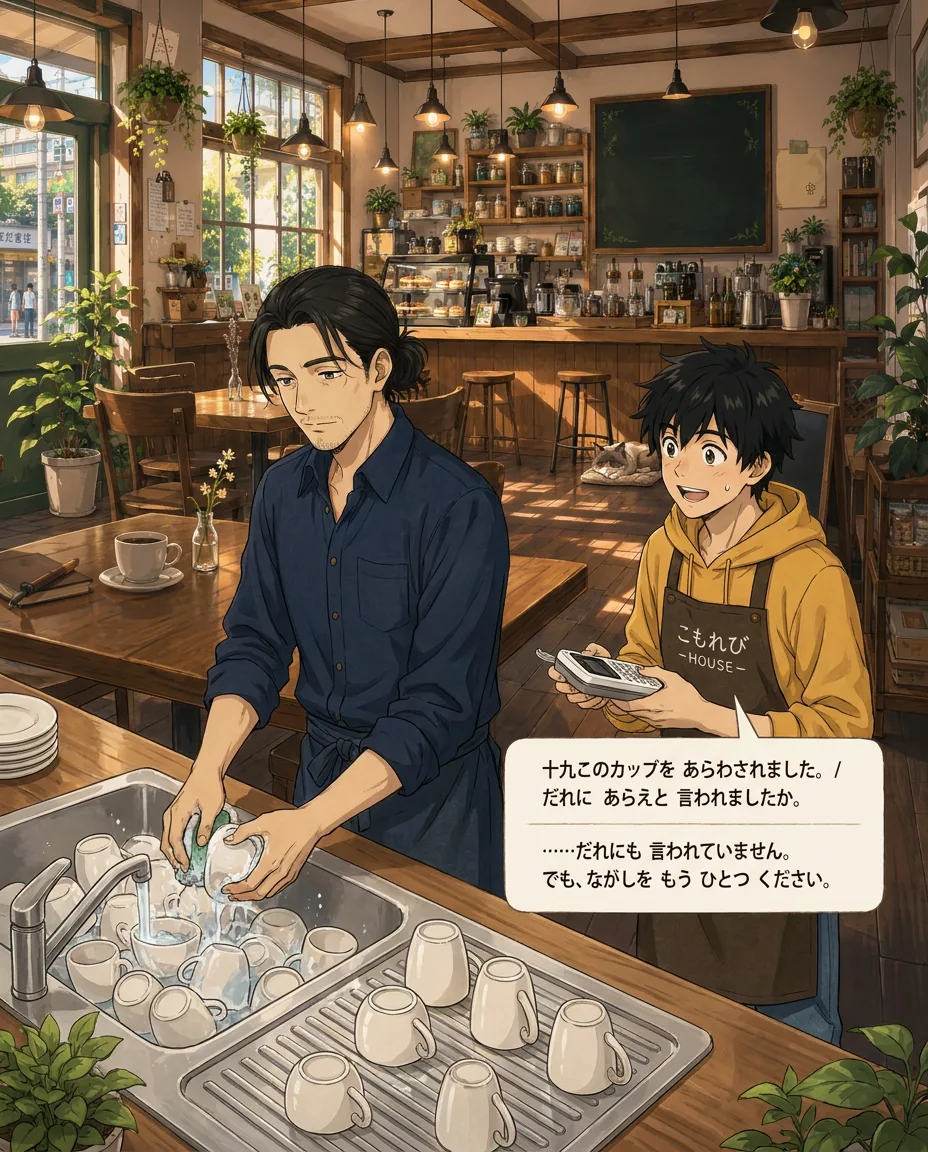

Lesson 16 of 24
Made To Do It
about 13 minutes
After this lesson you can
- Say that you were made to do something you did not want to do.
- Tell the four forms of this module apart in a single conversation.
Words this lesson teaches
- させられます
- is made to do something one did not want to do
- あらいます
- washes
- カップ
- a cup
- ながし
- a sink
- かたづけます
- clears away, tidies
- てつだいます
- helps with
- じぶん
- oneself
- もんく
- a complaint
What it explains
Causative first, then passive
Build the causative, then put it through the passive: あらう to あらわせる to あらわされる. Group 2 does the same: たべる to たべさせる to たべさせられる. The short group 1 form あらわされる is what people actually say; the long あらわせられる is correct and almost never heard.
It always carries a grievance
This form is not neutral. Saying 「はたらかされました」 states that you worked and that you resent it, in one word, and a listener will hear both. Use it about yourself when the grievance is real, and be slow to use it about a third party, which is close to complaining on their behalf.
The scene itself is in the app.
Lesson one of this track is free to read in full. From lesson two on, the story, the audio and the review are part of a free account.