Japanese N4
Lesson 14 of 24
It Was Written About Us
about 12 minutes
After this lesson you can
- Say that something was done, without naming who did it.
- Say that something was done to you, and that it was unwelcome.
Words this lesson teaches
- かかれます
- is written, gets written about
- まちがえられます
- is got wrong, is mistaken
- つかわれます
- is used
- かべ
- a wall
- ほめられます
- is praised
- しょうかい
- an introduction, a write-up
- ちいき
- the local area
- きります
- cuts
What it explains
Making the passive, and its collision with the potential
Group 1 shifts to the a row and adds れる: かく becomes かかれる. Group 2 adds られる: たべる becomes たべられる — which is also its potential. For Group 2 verbs the two forms are identical and only context separates them, and that is not a flaw you can learn around. It is simply how the language is.
に marks the one who did it
「せんせいに ほめられました」 — I was praised by the teacher. The agent takes に, the same に that marked the person in 〜てもらう. Very often the agent is simply left out, because the point of the passive is usually the person it happened to.
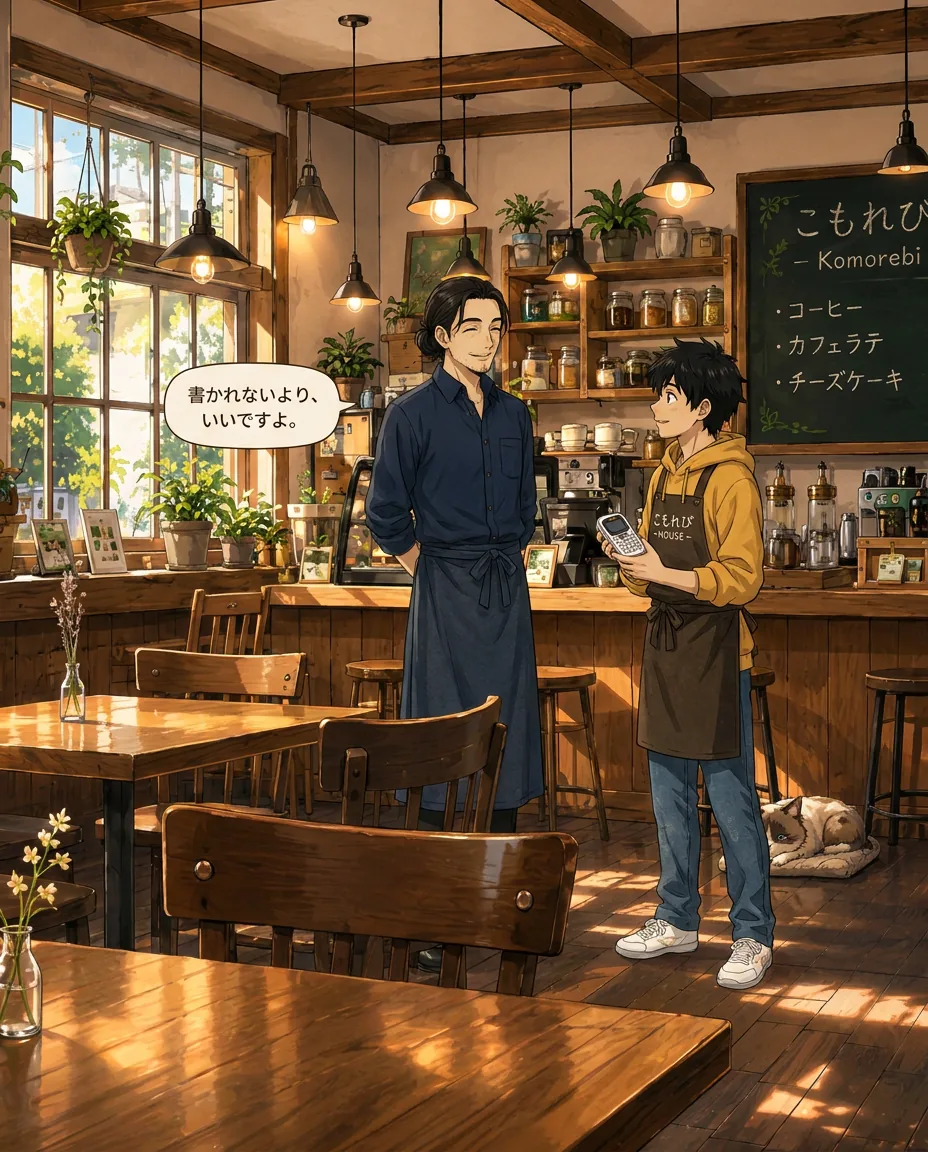
The scene itself is in the app.
Lesson one of this track is free to read in full. From lesson two on, the story, the audio and the review are part of a free account.