Kana Sprints are short, take-them-when-you-need-them lessons. Each one puts a handful of characters into something worth reading — a menu, a station board, a price tag — so recognition comes from use rather than from repetition of a grid.
Who it's for
- —You keep half-learning the kana chart and forgetting it
- —You want to read menus, signs and prices rather than recite an alphabet
- —You are already in another track and the script is what slows you down
Free preview — lesson 1
Kana Sprint 1 — the five vowels

After this lesson you can
- Read あ, い, う, え and お on sight.
- Read a short word made only of vowels.
Closing time at Komorebi. Ren has lined five paper cards along the counter and is squinting at them like a man reading a map upside down.
Ren
Five sounds. That is all. Aki says if I get these five, the rest of the alphabet is just these five wearing hats.
Aki
He has been saying that for a year. Your turn — read them in order, and do not rush the last one.
Words this lesson teaches
- いえ
- house — i-e
- うえ
- above, on top — u-e
- あお
- blue — a-o
- あい
- love — a-i
What it explains
Five sounds, and they never change
Japanese has five vowel sounds and they stay the same wherever they appear — unlike English, where the a in father, cake and about are three different sounds. Once you know あ, it is あ every time. Keep them short: いえ is two beats, ee-eh, not the drawn-out ee-yay an English reader reaches for. Length matters in Japanese and a long vowel is written differently, which is Sprint 9.
Two shapes worth separating now
う and お are the pair that gets confused, because both are a small stroke above a curve. お has a cross-stroke and a tick on the right; う has neither. If you learn them as different now it stays learned. あ and お also look related and are not: あ has a loop crossing itself in the middle.
All 12 lessons
1. Kana Sprint 1 — the five vowels
5 minRead あ, い, う, え and お on sight.
2. Kana Sprint 2 — か and さ
5 minRead the か and さ rows on sight, including し.
3. Kana Sprint 3 — た and な
5 minRead the た and な rows on sight, including ち and つ.
4. Kana Sprint 4 — は and ま
5 minRead the は and ま rows on sight.
5. Kana Sprint 5 — や, ら, わ and ん
5 minRead the や, ら and わ rows and ん on sight.
6. Kana Sprint 6 — two dots and a circle
5 minRead any voiced kana, and say which base character it comes from.
7. Kana Sprint 7 — the small ones
5 minRead a small ゃ, ゅ or ょ as part of one beat with the character before it.
8. Kana Sprint 8 — the second alphabet
6 minRead katakana for a sound already known in hiragana.
9. Kana Sprint 9 — holding the vowel
5 minRead ー as a doubling of the vowel before it.
10. Kana Sprint 10 — reading Komorebi
6 minRead every sign and name in the Komorebi story without support.
11. Kana Sprint 11 — counting out loud
6 minRead the numbers one to ten written in kana.
12. Kana Sprint 12 — how much is it
6 minRead prices in hundreds and thousands of yen out loud.
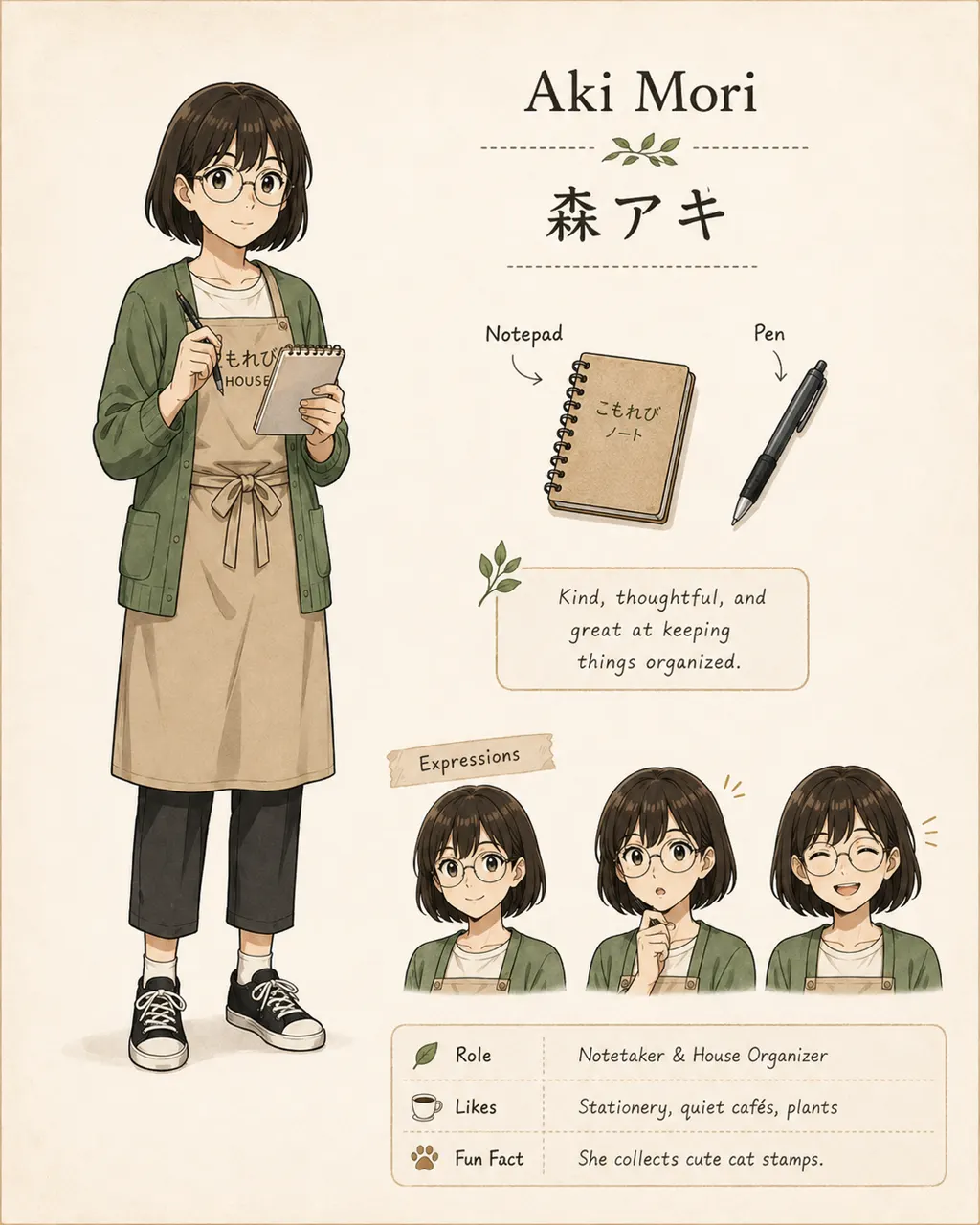
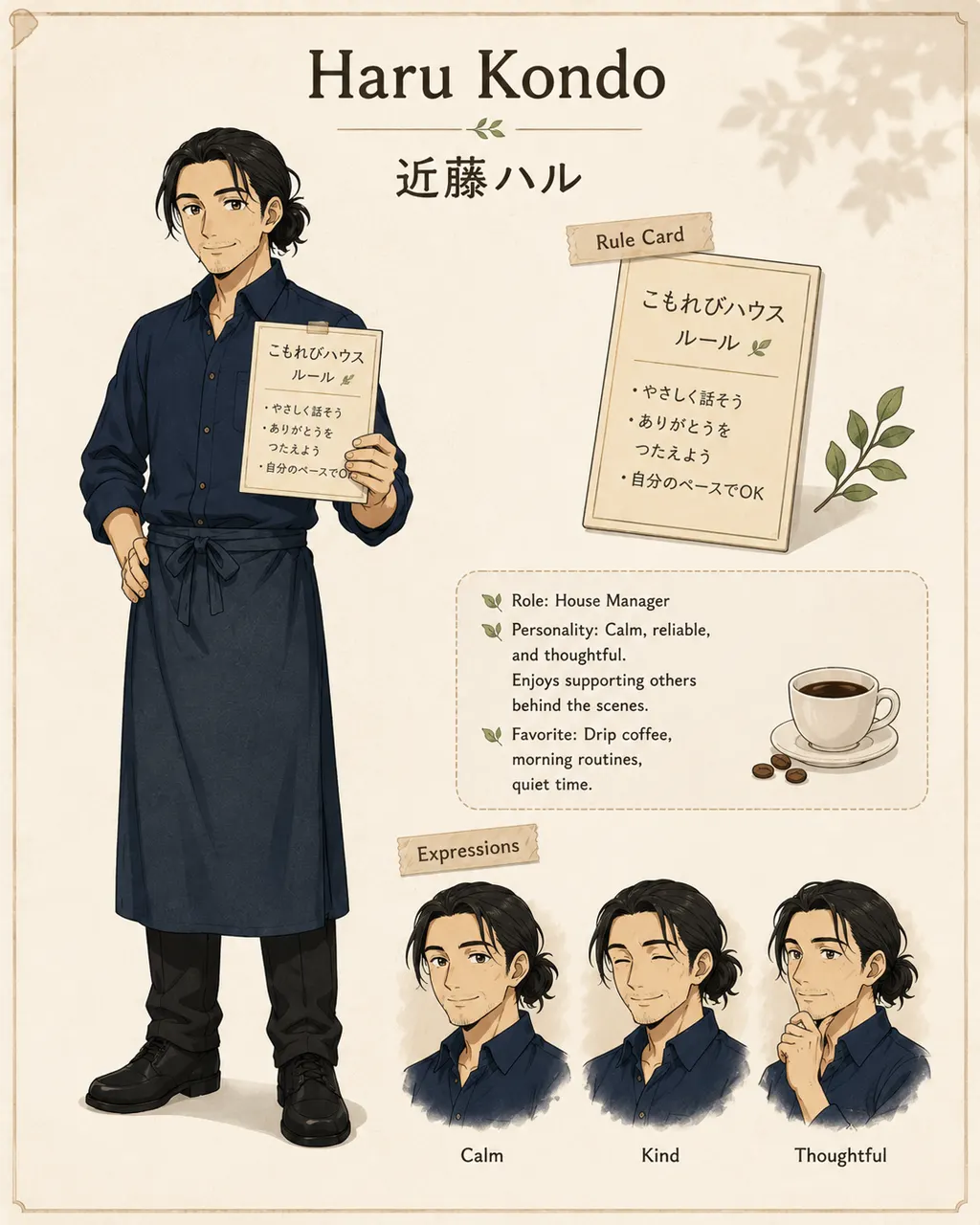
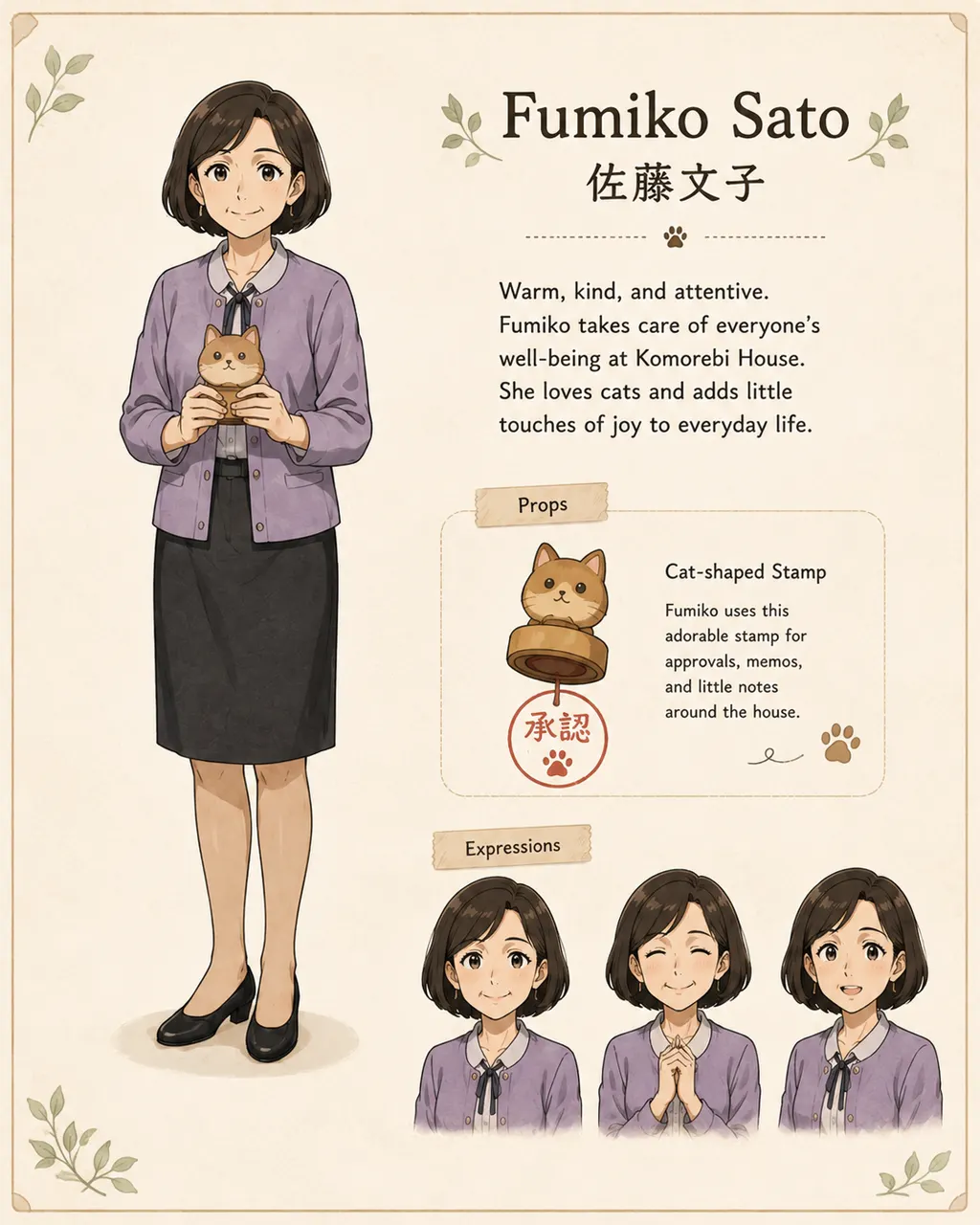
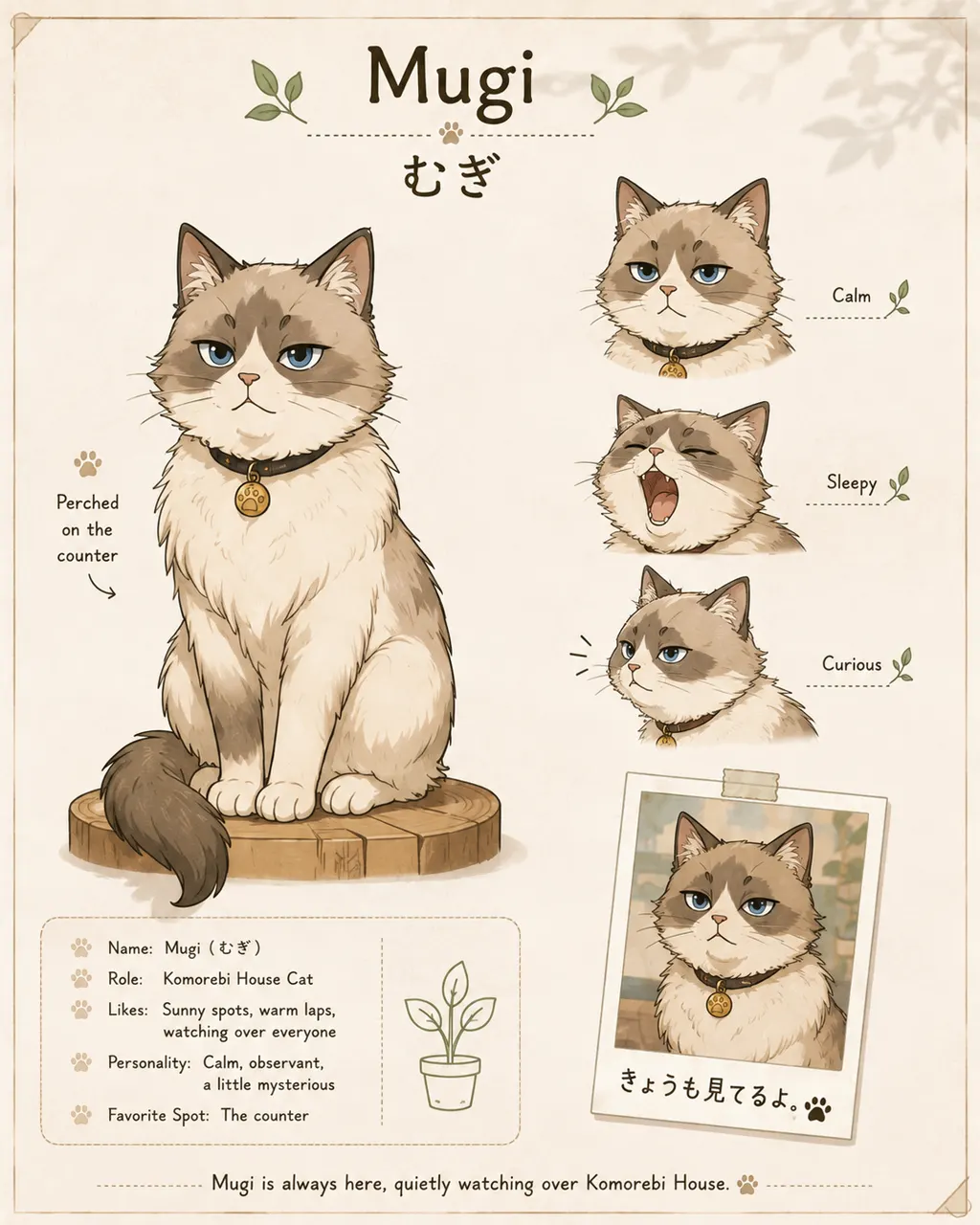
The recurring cast


Questions
Is this enough to read Japanese?
It is enough to read kana confidently. Kanji arrive gradually in Foundations and N5, with furigana while they are new.
Can I take these alongside another track?
Yes. Sprints are designed as a side path you dip into whenever the script is the thing getting in the way.